Issue 1, June 2026
Analysis
Three Frontiers of Global China
Prospects for South–South development without dependency

As the US appears to be rescinding from its position of global hegemon—stepping back from the multilateral institutions it helped to establish, waging ill-conceived military wars against its foes, and mutually destructive economic wars against its allies—the question of China’s role on the world stage has come sharply into view. Domestically, China’s economy continues to grow, and it is on the cusp of being promoted to the World Bank’s class of high-income status countries. Having consolidated its position as the world’s manufacturing superpower, it now boasts a trade surplus of $1 trillion. Its GDP comprises 20 percent of the world’s total, and last year it accounted for almost 30 percent of global manufacturing value added. Internationally, it has emerged as a significant competitor to American power, and invocations of “the specter of China” have become the ubiquitous counterpart to increasingly vigorous handwringing about American decline.
Much of this Chinese prowess is thanks to Beijing’s global infrastructure and economic development strategy, which also continues to grow. Officially launched in 2013, the Belt and Road Initiative has to date spent a cumulative US$1.4 trillion in 150 countries, dispensing loans and investment for physical infrastructure predominantly in Asia, Africa, and Latin America. Since 2022, Beijing has pursued a new phase of the initiative, targeting the export of green technology and ramping up renewable-energy development. In 2024, Chinese domestic investment in green manufacturing reached $340 billion. Over the last three years, Chinese foreign direct investment in clean technologies has also been rapidly climbing. The scale of these investments is colossal. Mathias Larsen notes that in inflation-adjusted dollars, they are significantly greater than the $200 billion Marshall Plan. Summarizing these investment flows, Tim Sahay writes that “Chinese firms have committed over $227 billion across 461 green manufacturing projects in fifty-four countries since 2011—with 88 percent of investment occurring just since 2022.” This has been referred to by some as the Belt and Road Initiative, 2.0.
How are we to assess the phenomenon of China’s rise on the world stage? For many analysts, the main index remains the reach and scale of Beijing’s foreign investments. But China’s global project is not simply a political-economic one, and its leadership in the green transition is only one strand of a multipronged development agenda that includes normative and epistemic shifts as well. Any account of Global China will need to take in the sweep of these shifts. In addition to this, it will need to assess the kinds of relationship that Beijing has developed with those countries where it is making its investments. Many in the Western press and in the North Atlantic’s halls of government have preferred to cast China as a self-made monolith, exerting its will on the world stage, subjugating and subverting those countries receiving Chinese goods and capital. The role of the global South in China’s rise, however, is far more complex.
Instead of leaping to easy judgment that either glorifies or demonizes China’s relationship with the global South, this essay spotlights three major sites of contestation in need of sustained investigation: political-economic, normative, and epistemic. Only by looking closely at these dynamics can we begin to determine the nature of China’s relationship with the South. Is Global China’s rise a case of “decolonial development,” with the aim of bringing about more just and equitable outcomes than those achieved under European influence? Alternatively, does Global China herald a new variety of colonialism, albeit one stemming from the South, and based on renewable energy rather than fossil fuels? Should we anticipate new chains of dependency for the global South or something more liberatory? The answers to these questions can only be gleaned from a closer look at the realities of the Global China–global South development nexus.
Geopolitics of the green transition
China has emerged as the biggest player and indisputable global leader in the renewable energy transition. Its own economy is increasingly driven by clean energy, making it the world’s first significant “electrostate.” It is also the dominant clean-tech producer and exporter to Africa, Asia, and Latin America, where elites are reimagining national development predicated on Chinese-made power grids, solar panels, electric batteries, and vehicles. Most accounts of this trend emphasize China’s own imperatives and ignore the strong developmental needs and wants of governments in the developing world. The latter are crafting their own vision statements about reindustrialization, green mobility, and securitizing national contents in renewable supply chains.1The US government also emphasized “reindustrialization,” “reshoring,” and “resecuring” access to critical minerals in its 2025 National Security Strategy, but without transitioning to a decarbonized economy. Some Southern countries, such as Kenya and Bangladesh, using Chinese clean tech imports, are ahead of the West in terms of the green energy transition. Collectively, the global South is ambitious in this regard, eager to not just play catch-up with the West, but to leapfrog to another energy regime. If they succeed, the existing global political-economic order, based on petrochemicals and fossil fuels, will likely be upended—a further boon to China.
What is now being described as the green transition is a historic opportunity for Southern countries to meet their own climate and environmental goals. It is, further, a foundation for them to provide affordable energy for industries long hampered by power deficits, whilst enabling mobility and consumption for citizens longing for a modern lifestyle. Reindustrialization, or downstreaming, is high on national development agendas. Decades of neoliberalism, the privatization of mines and land, and the atrophy of state capacity and functions have led to “primarization” in many countries, dashing hopes for value addition. Now, many governments are working to leverage their natural endowments in critical minerals, not so much to integrate their economies into the global value chains spun by Western multinational corporations, but to construct their own national supply chains. This entails development beyond the extraction and processing of minerals to include the manufacturing of parts, all the way up to completing “green” final goods. If the dynamic growth of the global commodity chains in the roaring 1990s was propelled by transnational capitalist firms and the reigning ideology of neoliberalism, today’s supply-chain developmentalism has evolved out of this pattern into a distinctively state-led project, driven by geopolitics and resource nationalism. And instead of accommodating globally dispersed supply chains providing raw materials and semi-finished products to the North Atlantic, many governments are increasingly aiming to locate higher value-added processes within their national borders.
This has meant more vertically integrated production as a corporate strategy in the US as well as in China, even before Covid-19. As the struggle for value unfolds, foreign capital is still much sought after, but some Southern states are reasserting their development mandate. This is the case in Indonesia, where President Joko Widodo banned the export of unprocessed nickel products in 2020. Similarly in Brazil, the Workers Party introduced the Nova Indústria Brasil in 2024, which includes a policy for the domestic industrialization of lithium. Elsewhere, Zambia’s President Hakainde Hichilema, buoyed by the global dash for critical minerals, is anticipating a far stronger hand for African governments negotiating with investors. How Southern governments will continue to play this new advantage going forward will be decisive. If states are simply competing to offer concessionary policies such as tax holidays, free land, and permissive labor law, without getting foreign commitment to localize production and transfer technology, development outcomes of the green transition will amount to little.
In this, China occupies a contradictory position. In the past decade, I have met many officials in Zambia, Brazil, and Indonesia who greatly admire China’s record—its extraordinary breakthroughs in economic growth, wealth creation, poverty reduction, governance capacity, and technological advancement. Adding to the allure, China is offering these countries turnkey solutions, from conception to funding to actual construction of infrastructure projects. This is the tantalizing ideology of “South–South” development partnership, as opposed to the condescending “donors-recipient” relationship built into Western development aid. But it shouldn’t be forgotten that China has its own goal of vertical integration in renewable production, both within and outside its borders. As was the case in the first Belt and Road Initiative, exporting excess capacity and securing access to critical minerals, as well as local and regional markets, are key drivers. In this sense, there is a threat that China could turn out to be a predatory competitor for Southern countries aiming to secure their own national green supply chains. Will Southern countries be willing and able to enforce national content policies to compel Chinese investors to localize their operations? Or will the global South be more likely to follow the fate of the North Atlantic manufacturing economies in limiting their growth to assembling Chinese-made parts?
China’s record for gaining technology in exchange for market access, especially in the auto industry, may provide an adaptable template. Researchers have found Chinese foreign investment with state backing to be quite responsive to local demands. My own research in Zambia also shows that Chinese state capital’s encompassing definition of “profits”—which entails not just financial returns but also access to local minerals as well as political influence—makes its firms less footloose than foreign capital, and therefore more willing to negotiate with the host state. Will developing countries with large domestic markets and control over critical minerals be able to leverage this moment of supply chain geopolitics to rebalance their relation with China? This is not just a question of the bureaucratic capacity of countries receiving Chinese investment. The power and interest realignment of entrenched domestic classes will have a decisive impact on Southern states’ engagements with China. In Indonesia, for instance, researchers report that “oligarchic interests, which are being enriched and empowered by the Chinese-dominated nickel boom and consequently have little interest in tightening ESG safeguards, have found allies in the wider state apparatus.” The ways in which political-economic elites in other countries strategize their country’s role in the green transition is still poorly understood.
In all of this, there is a need for greater understanding of labor’s role, too. Should workers anticipate greater or less bargaining power in this new political economy of decarbonized reindustrialization? Reports from Indonesia’s Morowali Industrial Park, a major hub of the country’s nickel downstreaming project, with heavy Chinese investment, suggest an all too familiar story of labor degradation, fatal accidents, and unrest in both mining and processing. In Bahia, northeastern Brazil, the country’s Ministry for Labor and Employment reported “conditions analogous to slavery” at the construction site of BYD’s new EV plant, where the company was also asking manufacturing workers to sign letters of opposition against the Brazilian autoworkers’ union. How this compares to workers’ power at Ford, which has left Brazil altogether, remains to be seen—as does the possibility of labor struggle at BYD’s plant in Indonesia, where construction is expected to be completed later this year.
In any case, politics at the point of production is shaped by the political apparatus of production. One thing is clear: in the wake of the global precarization of labor, Southern labor movements will likely need the backing of their own governments in order to achieve a more equitable balance of class power in the green transition. Many studies have pointed to the lack of labor-law enforcement by host countries as the main source of labor degradation. We should keep an eye on whether Southern states will be compelled by electoral pressure, in the form of resource nationalism, to stand with their own working-class citizens or not. Chinese talk of South–South solidarity and win-win development may well be proven to run only skin deep, if workers’ leverage does not improve.
Rules, norms, standards
There is a less material but no less foundational area of development that is key for the growing bonds between China and the global South: the changing standards and norms of global governance. China first assumed its leadership role in North–South diplomacy at the 1955 Bandung Asian–African Conference, articulating an anti-imperialist and anti-hegemonic vision for a more just and egalitarian world order. The ascendance of China as a formidable economic powerhouse in the past three decades has finally lent it the weight in international institutions necessary to begin to change the rules of the game. From international monetary regulation and development finance, to the definition of human rights and standards of cybersecurity, China has acted in alliance with “like-minded” Southern countries to shift global norms, albeit unevenly and incompletely. In this, a paradox is hard to miss: for all its autocratic and repressive tendencies at home, China has been a team player abroad, championing what many would consider progressive changes in key areas of global governance. Let’s look briefly at a few examples and their uncertain implications.
Since the 1980s, the PRC has led the push by middle-income and developing countries within the World Bank and the International Monetary Fund (IMF) for a more balanced international financial system. China has evolved from a “rule-taker” in the Bretton Woods institutions it participates in, to become a “rule-shaker” and, more recently, a new “rule-maker”—going so far as to create alternative institutions outside those led by the West. China’s efforts to champion the long-standing demand of global South countries for more representation in the IMF have, according to Kevan Gallagher and Gregory Chin, been largely successful. Policy has changed in a number of ways: Southern members’ voting rights have been expanded; the basket of currencies that can convert into Special Drawing Rights (SDRs) has been diversified; and repayment of loans can now be made in commodities, natural resources, or energy supplies from the borrower-country instead of cash.
Competition from China’s own financial institutions has compelled the World Bank to shorten the duration of its project approvals and move more of its investment back into infrastructure. Outside of the Bretton Woods institutions, China has created, or co-created, parallel multilateral development banks. The Asian Infrastructure Investment Bank and the New Development Bank are two institutions where environmental, social, and governance standards are country-specific, rather than externally imposed. Departing from the hierarchical model of Bretton Woods, BRICS nations have agreed to grant each founding member equal voting power in the New Development Bank. Importantly, they sideline the US dollar as accounting currency. In terms of lending strategy, China-led multinational development banks are promoting a shift away from a poverty-reduction agenda and toward a “growth-based” model of international development.
In cyber governance, China has also begun to set international norms. Proactively seeking to push back at a governance model heavily dominated by Western interests, in this domain, too, it has largely been met with enthusiasm among global South governments, wary of data-colonialism as a new form of extractivism. A cluster of norms define China’s position. First, “cyber sovereignty,” as an extension of territorial sovereignty, argues for the right of all sovereign states to decide their own paths of cyber development, as well as their own models for cyber regulation and public policies for an internet without foreign interference. Second, China prefers a state-led, UN-focused multilateral approach to governing cyberspace. This comes in contrast to the cross-border, industry- and civil society-led, multi-stakeholder approach that is promoted by many Western states, which Beijing views as a threat to cyber sovereignty. A third normative position is to emphasize the balance between national security and the development of a competitive digital economy and data market. This is a push back against US-led securitization and the politicization of China’s cyber governance in the Western context. In practice, China has increased strategic staffing at established international standard bodies such as the International Telecommunications Union, the International Standardization Organization, and the International Electrotechnical Commission. At the same time, since 2014, it has been hosting its own multilateral platform called the World Internet Conference in Wuzhen, in a bid to articulate and diffuse its preferred norms among BRICS and other developing countries. Government funding has allowed Chinese companies to draft strong standards proposals to many standards-developing organizations, such as the UN International Telecommunication Union. The Chinese-led Digital Silk Road project, which now involves eighty countries, allows Beijing to promote its cyber norms and preferred technical standards (for example, the IPv6 next generation protocol for internet services).
Within the United Nations, China is attempting to reform the logic, substance, and power dynamics of multilateralism. In contrast to most Western states, China approaches the UN as an intergovernmental platform for world governance, preferring reduced autonomy for the UN bureaucracy and marginalization of nongovernmental organizations. China and its like-minded allies have increasingly led the criticism against the UN conception of a liberal global order based on the pillars of security, human rights, and development. Instead, China has pushed for the protection of state primacy—nation states taking the primary responsibility to protect their citizens—rather than relying on the UN to fulfil that role, as with the 2005 World Summit’s “Responsibility to Protect” (R2P) norm that China perceives as a justification for Western interventionism. In 2023, China signed a letter with the “Group of Friends in Defense of the Charter of the United Nations” that described R2P as “controversial and divisive.” In the realm of human rights, China has successfully engineered, again with the support of a “Like-Minded Group” of about fifty, mostly global South countries, the passage of a resolution endorsing the position that human-rights standards should be pluralistic and relative. Specifically, the new definition now includes the collective right to economic development, not just an individual’s political, social, and civil rights, as emphasized by the West.
In the overall power dynamic of the UN, global South member states actively seek to participate in China-sponsored UN schemes and generally support China’s expanding engagement (or are unwilling to voice their criticism). Key among these China-sponsored schemes at the UN is the Global Development Initiative, the first of Xi Jinping’s “Three Major Initiatives” announced in 2021. Under it, eighty UN member states have joined the “Group of Friends of the GDI,” which seeks to use UN funds for development projects in the global South.
As Washington’s disengagement from the multilateralist system sets in, and as developing country engagement grows, a revamped UN with Beijing as leader would mean a major change. Outside of the UN, the other two of Xi’s three initiatives indicate the possible direction of this change. Announced in 2022, the Global Security Initiative entails expanding the global outreach of China’s internal security agencies to Southern partners and establishing a bilateral and multilateral architecture for police and law enforcement training and cooperation. It is a concerted diplomatic push in nonmilitary security, propagating China’s preferences for “an alternative to the Western-led security order,” in part by avoiding competing with it. The third and newest initiative, the Global Civilization Initiative, was announced in 2023 and so far entails such soft-power programs as youth-exchange and increased visas.
In short, China is on its way to becoming a revisionist power in the world order. It is promoting sovereignty (as opposed to US hegemony), state primacy (rather than stakeholder-multilateralism), growth-led development (rather than poverty reduction and empowerment), Southern alternatives (as opposed to Western norms), and pluralism (as distinct from universalism). Amid all this, there is a question as to whether the “alternatives” offered by China will actually produce better outcomes for those involved. As the Global Security Initiative shows, this is not a matter of simple yes or no answers. Many would doubt that this Chinese security model is an improvement on the US-led status quo.
Epistemic struggle
In addition to these political-economic and normative agendas, we can glean an emerging regime of knowledge production, sponsored by China but with active input by scholars in the global South. The large number of area studies institutions, research centers, international networks, and conferences—both within and outside of China—are producing new narratives of global development, purportedly from a decolonial perspective rooted in a South–South alliance. Together, these represent an implicit challenge to the West’s coloniality and the existing epistemic hierarchy privileging Western knowledge.
China’s “world writing” project has, since its founding in 2011, prompted the establishment of 450 area and regional studies programs in nearly 200 universities, deploying 20,000 faculties with the aim of developing and teaching the Chinese understanding of the world. Coinciding with major diplomatic events, such as the Forum for China–Africa Cooperation and the UN Sustainable Development Goals Summit, Beijing launched research institutes devoted to international studies. Specific disciplines, including geography, international relations, and development studies, are at the forefront of centering Chinese knowledge production on the world stage. Historically, development studies had been a feature of Western institutions during the period of Cold War decolonization. The West invented the subject, the technique, and the practices of “development” and the “developing world.” Now, Chinese scholars are seeing the Belt and Road Initiative as China’s moment to create its own knowledge and narrative of development. Flagship institutions in this new era include: the Institute of South–South Cooperation and Development at Peking University’s National School of Development (founded by Justin Yifu Lin, a former World Bank chief economist) and the Center for International Knowledge on Development based at the Development Research Center of the China State Council. Below these national-level institutions are those of the second and third tiers, affiliated with ministries, universities, and policy specialization. Most of these top-down, policy-driven institutions were established in the past decade or so. One researcher has described their goal as “translating Chinese experience into concrete knowledge products and contributing Chinese wisdom and Chinese solutions to global development challenges.”
Knowledge transmission to the developing world takes several forms. First, much like the World Bank and the North Atlantic great powers, which use seminars and workshops to disseminate their vision, China provides its own training programs to encourage adaptation to Chinese practices. Between 1981 and 2009, according to one investigative report, Beijing hosted 120,000 trainees from the global South, with 4,000 programs across twenty areas. Between 2013 and 2018, this dramatically expanded to more than 200,000 trainees in around 7,000 programs. Lasting as long as sixty days, and often including all expenses paid trips to China, the programs have covered a wide spectrum of Chinese governance practices: waste and drinking water systems, port management, international application of BeiDou (the Chinese global navigation satellite system), blockchain and information security technologies, the role of think tanks for implementing the Belt and Road Initiative, national policy on ethnic minorities, new-media affairs, population management, university management, welfare, and smart cities. Whatever the topic, the CCP’s ideology and authoritarian governance are emphasized as contributing to its effectiveness.
Knowledge production has other means as well. China co-sponsors large-scale annual or biannual international scholarly conferences, alongside academic institutions from Central Asia, India, or Latin America. There are now several book series, published in English academic-trade presses, that explicitly emphasize perspectives of China, South-South cooperation, the Belt and Road Initiative, and even “Xi Jinping Thought.” For instance, the Academic Network of Latin America and the Caribbean on China (Red ALC-China) and Remin University are jointly offering a 10-hour online course on the “Global Implications of Socialism with Chinese Characteristics in the New Era,” with the explicit goal of deepening understanding of Xi Jinping’s thought.
Few are in a position to assess the theoretical novelty and validity of this new body of knowledge. This hasn’t stopped some from prematurely celebrating the Chinese contribution. Closely aligned with official ideology, but published in respectable academic outlets in English, some researchers maintain that the Belt and Road Initiative is an instance of “inclusive globalization.” China’s “harmony diplomacy” is described as the crux of a Chinese theory of international relations in which the traditional Chinese political concept of tianxia (all under heavens) points toward “the decolonized, post-racial world envisioned by decolonial thinkers of the global South.” The questions we should ask of these propositions are the same we should ask of all scientific research: are the claims based on valid conceptualization, empirical evidence, and rigorous methodologies?
Decolonial hegemony: reality or ideology?
These three key elements of China’s power project—material, normative, and epistemic—map nicely onto Gramsci’s concept of hegemony: domination based on the concession of material interests, as well as moral and intellectual leadership. That China is developing these three elements of its project, not over the heads of, but with the participation of, global South countries, may well speak to the strength of this hegemony. Nonetheless, there is much work to be done in order to assess the character of Global China today. As a representative of the global South, Beijing would like to characterize its project as a decolonial one, but whether or not that is so remains an open question. Hailing from the South is, of course, no guarantee against new forms of coloniality, as the examples of India in Kashmir, Russia in Ukraine, and China in Xinjiang and Hong Kong make clear. Adopting the language of decoloniality, appealing to one’s former victimhood at the hands of Western imperialism, or making claims of indigeneity and alternative epistemology does not preclude new forms of dependency. Indeed, the identity of Southernness might even act as a convenient cover for a new model of coloniality.
When assessing the character of Global China today, it is essential to look not just at the flow of investments, nor the claims of politicians, pundits, and elites. Since its inception two decades ago, the field of Global China Studies, where I have since the beginning been a participant-observer, has shown a conspicuous lack of scholarly attention directed toward documenting and assessing the development outcomes for those peoples and communities around the world affected by China’s rise. This absence perhaps speaks to Beijing’s discursive power, which manages to impart a “state primacy” perspective, which is the same principle it champions in its developmental cooperation practices and global institutions of governance.
Development outcomes need to be measured not just in terms of GDP or the agendas of state elites, but in terms of how those living through the changes assess their benefits and constraints. Only then can we start deciphering what kind of hegemon the new Global China has become—that is, whether it is capable of mitigating the various inequalities that persist, both within global South countries and between the global South and North, or whether China’s emerging renewable-energy hegemony will reinscribe the all-too familiar dynamics of dependency.
Further Reading
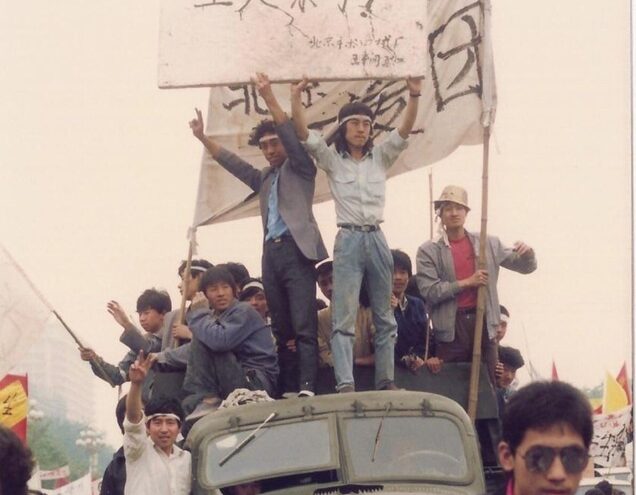
The State and Its Workers
China’s class politics after 1989
China’s rapid rise as a global power has been accompanied by an internal shift in industrial politics and a process of class recomposition. 1989 marked...

What Future for the Global South?
Brazil’s leading diplomat on navigating global instability
Lula’s Chief Advisor discusses the assault on Iran, the concept of multipolarity, and how Brazil can defend its sovereignty in an age of imperial conflict.

Arms Markets
A look at the world’s largest military industries
The US is far and away the world’s largest military spender, military producer, and arms exporter, accounting for more than a third of global military...