March 12, 2026
Analysis
The Venezuela Illusion
The limits of “regime management” in Iran
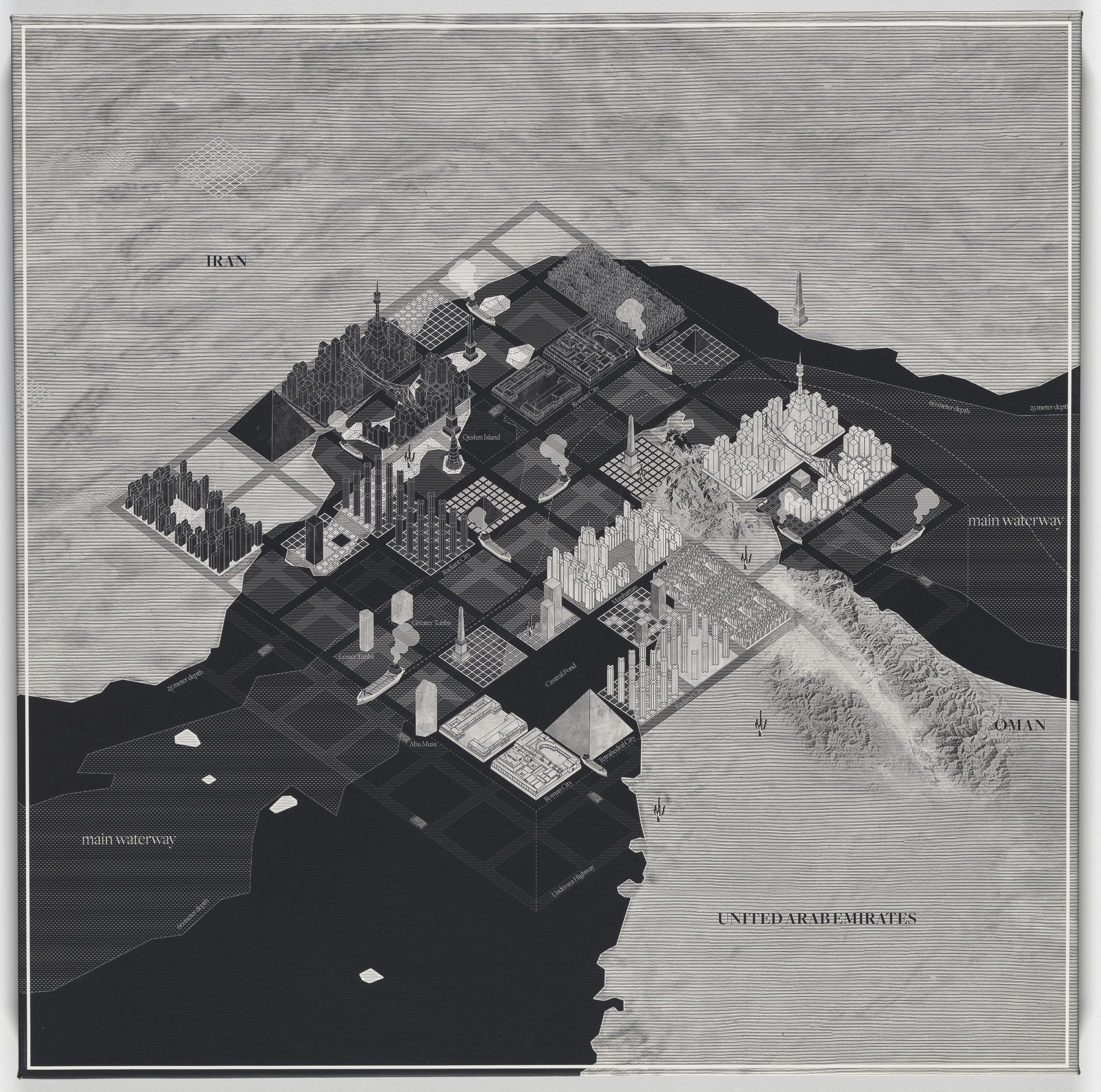
At first glance, the strategic rationale for the US-Israeli offensive in Iran seems elusive. While President Trump has described the campaign in the familiar idiom of democratic liberation, promising to topple the Islamic Republic, Secretary of State Marco Rubio has presented it as a pre-emptive strike. Pentagon chief Pete Hegseth joined Rubio in claiming that the core objectives are the destruction of Iran’s nuclear and missile programs and the degradation of its naval capabilities—not exactly regime change, but counter-capability coercion.
Yet the US war aims should not be sought in the Trump administration’s official briefings but in the long-term changes in American statecraft. Since the early 2010s, Washington has increasingly pivoted away from large-scale occupations towards the use of airpower, financial instruments, diplomatic pressure, and targeted removals of key adversaries. It has sought to impose its will on other states while limiting the domestic and geopolitical costs associated with prolonged military presence, in what amounts to a model of remote political engineering.
The Venezuelan episode marked the culmination of this approach, demonstrating how a strike against an individual leader, combined with the application of intense external pressure, can create political change without the burdens of territorial control. This, it seems, is the same scenario that Washington would like to play out in Iran. When Trump followed up his assassination of Ali Khamenei with the avowal that the Ayatollah’s son, Mojtaba Khamenei, would be an “unacceptable” successor, he explicitly invoked the Venezuelan precedent: “I have to be involved in the appointment, like with Delcy.”
But can Washington simply impose its favored leader on Iran, as it did after the capture of Maduro? The evidence suggests that it cannot. The Islamic Republic has a complex architecture of rule and a cohesive ruling-class coalition. Over three decades, Ali Khamenei transformed the office of the Supreme Leader into a sprawling bureaucratic and security apparatus embedded in a dense nexus of military, clerical, and economic institutions. This “military-bonyad complex,” as I have called it elsewhere, cannot be defeated through a strategy of mere decapitation. The most likely outcome of the US-Israeli campaign will be to reinforce securitized coordination across the state while risking wider conflict across the region.
Regime Management
The US’s current approach to Iran has a long prehistory. The financial instability caused by the 2008 crash, along with mounting domestic opposition to the occupations of Iraq and Afghanistan and growing competition with China, prompted a reorientation of imperial strategy. In lieu of costly attempts at regime change and state-building abroad, Washington now sought to gain leverage over existing institutions in target countries—from the state bureaucracy to the judiciary to the media—while preserving the bandwidth for longer-term Great Power conflict across Eurasia and the Indo-Pacific.
The NATO bombing of Libya in 2011, which aimed to remove Muammar Gaddafi and resulted in the deaths of 50,000 Libyans, signalled this new approach. Even as American statesmen continued to use the discourse of democracy and humanitarianism, their dreams of wholesale political transformation gave way to a narrower foreign policy repertoire: stabilization, counterterrorism, alliance management, and the protection of energy corridors. Trump has continued in this vein while largely abandoning the language of democracy and the rules-based order that was once the moral grammar of American power.
One pillar of this post-2008 turn was the expansion of financial and trade warfare as a substitute for ground interventions. Sanctions are no longer a marginal policy tool but a central instrument for reorganizing a target state. Their objective is systemic rather than tactical: restricting access to finance, procurement networks, insurance markets, shipping routes, and settlement systems, thereby forcing third parties to choose between participation in the US-centered order and commercial ties with the sanctioned country.
Economic sanctions were one of the main weapons of the Obama administration, which Trump later supplemented with tariffs: a blunt instrument to generalize economic friction, raise transaction costs, and discipline supply chains, often operating alongside export controls, investment screening, and financial restrictions. This combination of sanctions and tariffs has strengthened the infrastructure of economic coercion, expanding the levers that Washington can use to punish, deter, or compel certain forms of political behavior.
Another pillar is shifting responsibility for external coercion onto allied states: encouraging them to absorb greater frontline costs while the US provides the escalation umbrella, intelligence, logistics, and high-end capabilities. NATO offers the clearest illustration. America’s strategic turn has been accompanied by sustained pressure on European partners to raise defence spending as a share of GDP, which is less of a discrete demand and more of a structural sign that US commitments have become conditional on allies carrying a greater share of the burden. Here, too, there is more continuity than rupture from Obama to Trump, even if Trump tends to express the same logic in more abrasive terms.
Yet this reorientation extends beyond Europe. Across the globe, Washington seeks to preserve strategic dominance while redistributing operational responsibilities outward and downward, allowing it to freely exercise coercion without getting entangled in open-ended campaigns to ensure stabilization. “Leading from behind” thus becomes an operational necessity. In the Middle East, the US has spent the past decade encouraging regional allies to police their own neighborhood in a way that advances American interests. This was especially apparent in the aftermath of the Arab Spring, when the Saudi-led Gulf bloc helped to suppress or neutralize popular upheavals and forge a regional order aligned with both Gulf and American priorities. The redistribution of responsibility also expanded Israel’s room for manoeuvre, as American backing for Israeli aggression, particularly since October 7th, has remained broadly consistent across the Biden and Trump administrations.
“Regime management” thus presents itself as an attractive solution to a recurring strategic dilemma, in which Washington feels it can no longer secure its desired outcomes—the compliance, realignment, or neutralization of hostile regimes—through full-scale wars of regime change. This template has been used in Venezuela and elsewhere to engineer a more favorable political situation within a target state while preserving its existing administrative machinery. The standard protocol is to remove the apex, keep the bureaucracy intact, and then deploy sanctions relief, greater access to assets and markets, and diplomatic recognition to discipline the successor elite into a settlement.
The State Within the State
The distinct features of Iran’s political economy pose a fundamental problem for this strategy. Since assuming the position in 1989, Ali Khamenei has systematically institutionalized the Office of the Supreme Leader. Khamenei always lacked the charisma of his predecessor, Ayatollah Khomeini, and his clerical standing was more contested from the outset. His response to this deficit of legitimacy was to transform the Office into the regime’s commanding height: a dense bureaucratic complex with parallel capacities across the spheres of administration, politics, finance, communications, security, culture, and the seminaries. What was previously a modest coordinating secretariat of roughly twenty staff evolved, under Khamenei, into something far more expansive: a state within the state, a shadow apparatus comprising thousands of personnel with extensive extra-legal reach and the ability to override or marginalize the elected branches. The aim of this institutionalization was to ensure that the system could function without relying on the personal authority of the Supreme Leader as a singular strongman.
This institutional expansion took place alongside a deeper restructuring of the ruling bloc from the early 1990s onward, which culminated in the rise of the military-bonyad complex: Iran’s current ruling-class coalition. By appointing key figures to unelected institutions, and by overseeing the state’s coercive apparatus, key foundations, and strategic economic sectors, the Office of the Supreme Leader increasingly functions as the institutional expression of this coalition’s interests. In other words, the apex of the regime is not merely a person but a governing nexus that reproduces a particular configuration of power.
This bloc began to take shape through intra-elite struggles that followed the turn toward neoliberalization in the early 1990s. Under the presidencies of Rafsanjani and Khatami (1989–2005), a Western-oriented technocratic current gained prominence in Iran, promoting privatization, deregulation, and reintegration into global markets as the route to postwar reconstruction. Such policies produced a landscape of semi-private enterprises; increasing power and wealth flowed to entities such as bank affiliates, pension funds, and quasi-governmental organizations that were officially private yet had strong ties to state ministries and political elites. In this context, a new stratum of commercially oriented bureaucrats and politically connected managers gained greater influence. They promoted a foreign policy based on détente with Europe and eventually the US, in the hope of securing capital inflows, technology transfers, and access to global markets.
Yet this project was always deeply unstable. The election of Mahmoud Ahmadinejad as president in 2005 marked the ascent of a different mode of neoliberal state formation. Ahmadinejad effected a large-scale transfer of state assets to networks linked to the Islamic Revolutionary Guard Corps (IRGC) and major revolutionary foundations—among them the Mostazafan Foundation, the Execution of Imam Khomeini’s Order (Setad), and the Imam Reza Shrine Foundation. They were thus transformed into sprawling conglomerates that combined profit-seeking activity with the rhetoric of national development and charitable missions. While privatization continued apace, its beneficiaries were now increasingly embedded in the security state.
By the late 2000s, this process of elite restructuring had produced a new dominant fraction of the ruling class. Politically represented by the Principlist movement, the new military-bonyad complex was anchored in absolute loyalty to the Supreme Leader, a new strategic orientation toward China and Russia, and resistance to integration with Western capital.
This coalition came to operate not merely as an economic bloc but as Iran’s entire governing architecture. Its component institutions—the Office of the Supreme Leader, the IRGC and associated security bodies, the major revolutionary foundations, the judiciary, and the Guardian Council—are all insulated from electoral accountability. Their leadership is reproduced through appointment chains under the ultimate authority of the Supreme Leader, while the Guardian Council’s supervisory authority covers both legislation and candidate eligibility for elected institutions such as the presidency and parliament. Power within this system rests on the fusion of coercive capacity with economic command, including preferential access to state resources, opaque transfer mechanisms, contracting monopolies and channels to circumvent sanctions. It is adept at converting conditions of crisis into political rents. Far from weakening this bloc, the West’s external pressure and sanctions have often reinforced its dominance.
Parallel Armies
Iran does not have a single army whose members could potentially defect. Its coercive architecture is much more complex: a layered system of parallel forces, overlapping intelligence organs, and differentiated command structures, designed to secure the regime against both external assaults and internal power-grabs. The American strategy of trying to remove the apex and reorient the bureaucracy is therefore inapplicable. Alongside the regular army (artesh), the IRGC is tasked not merely with territorial defence but with safeguarding the political order itself, via the regime’s core deterrent capabilities (missiles, drones, key elements of strategic airspace defence). The development of this dual-armed-forces arrangement was a deliberate attempt at coup-proofing the state. Institutional parallelism may create redundancy, but it also generates mutual constraint: no single command structure has the authority to switch the coercive apparatus from loyalty to defection.
Even the IRGC is not a unified actor, however, but a federation of semi-autonomous power centers, including the Aerospace Force, Ground Forces, Navy, Quds Force, Basij, and multiple intelligence and security units, each with its own operational mandate, internal hierarchy, and institutional interests. This fragmentation raises the transaction costs of coordinated defection. When intra-elite conflict occurs, it tends to take the form of high-level negotiation, bargaining, redistribution of institutional powers, and reordering of internal priorities, rather than any organizational rupture. The Guards have complex ties of vertical loyalty and mechanisms of horizontal coordination which make it extremely risky for any of its internal forces to challenge the power structure or act unilaterally.
Iran’s security apparatus also operates through duplication and overlapping jurisdiction. The IRGC Intelligence Organization functions alongside the Ministry of Intelligence, while additional Guard-affiliated bodies oversee internal monitoring and counter-intelligence work. Crucially, the appointment and oversight of leadership figures runs through the Office of the Supreme Leader. What might appear as a cluttered bureaucracy is therefore a deliberate technique of governance. Institutional overlap helps to guarantee the surveillance of the surveillers: minimizing conspiratorial coordination, raising the probability of detection, and discouraging collective action outside of authorized channels.
At the operational level, Iran’s command-and-control arrangements are similarly able to thwart Washington’s objectives. The methods of coordination across forces help to ensure continuity when the structure comes under attack, through dispersed command nodes and the preservation of retaliatory capacity. Even if the enemy manages to decapitate or degrade the apparatus, this does not by any means guarantee organizational collapse. The system is built so that none of its single nodes has the authority to surrender the whole, making it particularly shock-absorbant.
These structural features, in turn, shape elite incentives under conditions of conflict. When external pressures intensify, Iranian political actors are naturally inclined to protect the governing coalition—and the system that guarantees their authority, wealth, and security—rather than defect from it. Internal disagreement tends to play out through succession bargaining and deal-making rather than the capitulation of any single bloc to US demands. The paradox, then, is that the more Trump administration tries to remake the Iranian power structure, the more cohesive it becomes. Survival becomes its organizing principle. Its coercive apparatus—not a conventional military hierarchy, but a regime-protective architecture built to prevent precisely to deflect this kind of threat—makes any repetition of the Venezuelan scenario exceedingly unlikely.
Exporting Costs
Iran differs from Venezuela in another decisive respect. The country’s deterrence doctrine has long rested on the premise that any major confrontation will not be confined to Iranian territory. This does not mean Tehran is powerful enough to dictate the course of escalation. Yet the the Islamic Republic’s strategic capabilities give it the ability to impose dispersed and persistent costs across the Gulf and the Levant.
This capacity is the cumulative result of more than two decades of regional power projection, stretching back to 2003. The American invasion of Iraq ruptured the regional balance and created opportunities for Iran to expand its influence through aligned parties, militias, and armed networks. Over time, these relationships coalesced into what is commonly known as the Axis of Resistance: a loose but adaptable coalition of state and non-state actors capable of activating multiple fronts and complicating adversaries’ operational planning.
Since 2023, this network has come under sustained pressure. Israeli operations against Iranian-aligned forces across the region, combined with the collapse of Assad’s government in Syria, have degraded parts of the axis and diminished its logistical depth. Yet it has not been eliminated entirely. Its infrastructure of partnerships, armed groups, and political linkages remains partially in place, meaning that Iran’s prospects do not rely on a single decisive confrontation. Instead, it can apply pressure across multiple fronts.
Missile and drone forces are the second pillar of this strategy. Iran’s deterrence posture has been built around stand-off strike capabilities: the ability to reach American bases across the Gulf and wider region, to threaten Israel and to place allied infrastructure at risk without matching Western airpower platform for platform. In Iranian doctrine, these systems are not auxiliary assets but compensatory instruments designed to offset conventional inferiority and impose costs on any adversary contemplating sustained air operations. This has direct implications for the Venezuela model, since it undermines the assumption that escalation can be neatly contained. A campaign intended to decapitate leadership and degrade the coercive apparatus from the air can instead activate the retaliatory logic it seeks to avoid: calibrated regional strikes, mobilisation of partner networks and an expanding theatre in which the coercer’s political steering capacity erodes more quickly than its ability to destroy targets.
A third lever is geoeconomic, centred on Tehran’s long-standing capacity to threaten disruption of the global energy market through maritime chokepoints. The Strait of Hormuz occupies a pivotal position here. As the narrow passage connecting the Persian Gulf to the Gulf of Oman and the Indian Ocean, it serves as the principal maritime outlet for Gulf oil exporters and a conduit for a significant share of global energy flows. According to the US Energy Information Administration, roughly twenty million barrels of oil per day passed through the Strait in 2024, around one fifth of global petroleum liquids consumption. This makes Hormuz the world’s most consequential oil transit chokepoint. Even partial disruption can drive prices up, strain insurance and shipping markets, and transmit inflationary pressures into Asia and Europe. These wider economic externalities give Iran the kind of systemic leverage that Venezuela lacked.
Protracted Contestation
While these instruments do not guarantee strategic success for Tehran, they nonetheless give it multiple pathways to raise the cost of coercion and widen the circle of actors who are affected by its fallout. The Islamic Republic is not Venezuela. It is an institutionalised system built to absorb disruption, manage succession, and resist external pressure. Decapitation does not dissolve this architecture; it activates it.
For Washington, the attraction of the “regime management” technique is obvious, in promising political transformation without the burdens of state-building. Yet the very conditions that make it appealing also make it flimsy. Iran’s governing coalition, security structure, and capacity to export costs ensure that the US will struggle to contain the escalation or determine its political consequences. Washington’s attempt to bring about a controlled transition may therefore turn into something else entirely: a protracted contest that generates increasing instability rather than quick compliance. The selection of Mojtaba Khamenei as the new Supreme Leader underscores the point: the system has not yet been ruptured; it has reproduced itself.
Further Reading
War and Succession
The Islamic Republic's new Supreme Leader
The appointment of Sayyid Mojtaba Khamenei reflects the shifting balance of power in wartime Iran.

What Future for the Global South?
Brazil’s leading diplomat on navigating global instability
Lula’s Chief Advisor discusses the assault on Iran, the concept of multipolarity, and how Brazil can defend its sovereignty in an age of imperial conflict.

Mosaic of Deterrence
Iranian resilience in the face of US-Israeli assault
The US-Israeli war on Iran has foregrounded a question that has become increasingly urgent since the onset of the genocide in Gaza: how should we...