June 24, 2026
Analysis
Uncategorized
Missing Links
Will July's USMCA review promote true regional integration in North America?
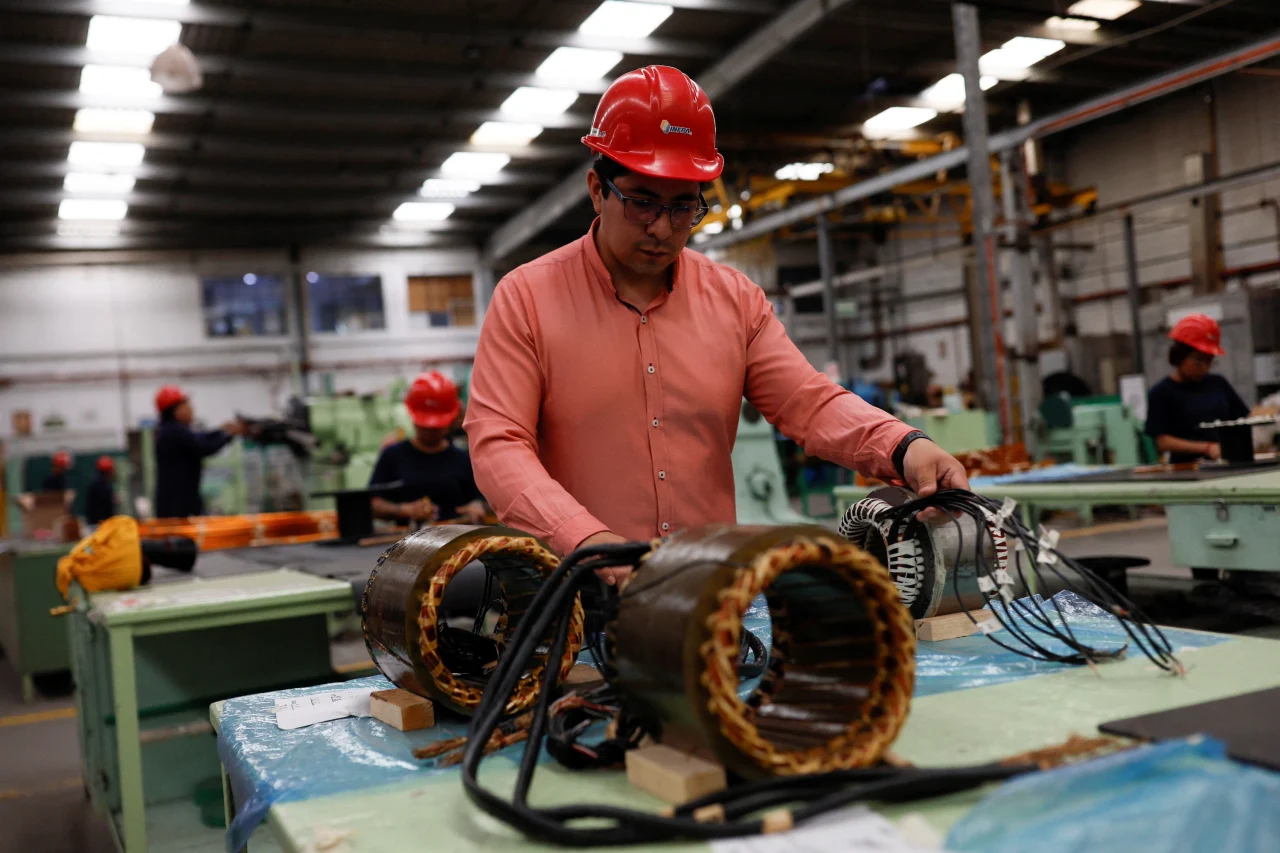
Since 2024, North America has seen a surge in industrial investment. Mexico, the United States, and Canada—the three signatories to the USMCA, the free-trade agreement that replaced NAFTA—have announced tens of billions of dollars in spending for the construction of battery gigafactories, semiconductor plants, and new automotive assembly lines. However, the true impact of this investment wave depends on the bloc’s ability to build an ecosystem around these plants that is capable of supplying them with parts. This ecosystem determines whether a region merely assembles products or actually manufactures them.
The USMCA’s joint review, scheduled to begin on July 1 of this year, is expected to result in tightened regulation intended to exclude any export components from countries outside of the bloc. But any such changes will not be experienced evenly across the three nations, or across industrial sectors. Jamieson Greer, the US Trade Representative, has argued that the review must assess whether the “rules of origin”—which determine if goods qualify for preferential tariff treatment depending on the source of their materials—promote actual regional integration. Marcelo Ebrard, Mexico’s Secretary of Economy, has accepted stricter requirements for rules of origin, but only on the conditions of a phased approach and verification mechanisms shared between countries. Currently, final goods from Mexico’s industrial sector flow to the US with high USMCA preference, but the inputs used to produce them come mostly from outside the bloc.
From March 2025 to March 2026, the percent of Mexican exports claiming USMCA preference rose from 44.8 percent to 88.7 percent, according to data from the Mexican Tax Administration Service (SAT) and US Customs and Border Protection (CBP).1Author’s calculation based on data from SAT (Mexico) and CBP (US), 2024–2025. But the jump does not reflect a productive transformation—rather, it is a result of changing incentives. On March 6, 2025, President Donald Trump exempted USMCA-certified goods from the 25 percent tariffs he had imposed on imports from the country, which made it economically irrational to export without certifying origin. The paperwork changed, not the supply chain: the underlying structure remained intact.
This can be seen clearly in the automotive sector, where granular data is available. Mexico is home to 2,135 auto parts companies: 60 percent are Tier 1 suppliers—direct suppliers to automakers—while only 39 percent manufacture the components that those suppliers integrate. The pyramid is inverted: there are more companies closer to final assembly than in the preceding stages. In such a structure, complying with rules of origin adds between 1.4 percent and 2.5 percent in tariff-equivalent costs, according to Federal Reserve estimates.2Board of Governors of the Federal Reserve System, “Trade Compliance at What Cost? Lessons from USMCA Automotive Trade,” FEDS Notes, July 18, 2025. While there is not a border tax, companies carry the burden of maintaining documentation, certification, and traceability requirements for at least five years. According to testimony gathered by the Office of the US Trade Representative, some suppliers prefer to declare their parts as “non-originating” rather than complete the verification process, even when they might qualify.3Office of the United States Trade Representative, 2022 USMCA Autos Report to Congress and 2024 USMCA Autos Report to Congress. Testimony from the Motor & Equipment Manufacturers Association (MEMA) on the administrative burden of origin certification.
The projects announced by Mexico, Canada, and the US over the past two years have names, locations, and secured investments. But the details of the supply chains connecting these projects remain vague. Supply contracts, technical qualification procedures, and traceability systems among suppliers rarely appear in investment announcements. The question is not whether North America can build megafactories, but rather whether it can build what is missing between them.
To accurately measure the gap in Mexican exports and inputs, we must move from aggregates to individual links. The following analysis focuses on two cross-cutting goods—liquid pumps and industrial valves—that are used in energy, water, and industrial processes. Their supply chains include electric motors, static converters, control circuits, rubber seals, wiring, and structural parts. Each subsystem has its own production geography and its own vulnerability.
Much of the existing analysis treats the use of foreign materials in Mexican exports as a singular problem: dependence on extra-regional inputs. In reality, there exist three distinct problems: coordination failures, geographic concentration of production, and a lack of technological development. Each issue requires a specific instrument to address it. A one-size-fits-all solution will not resolve any of these problems and may in fact exacerbate them.
The Gap
The magnitude of the asymmetry in trade relations can be seen in the trade flows of 2024. That year, Mexico exported $1.16 billion in liquid pumps and $3.13 billion in industrial valves. Ninety-four percent of those exports were destined for the United States or Canada. To manufacture these pumps and valves, the three countries import six critical subsystems: electric motors, static converters, integrated control circuits, vulcanized rubber seals, wiring harnesses, and parts for processing equipment. For all six, the majority of imports come from outside the free trade bloc.
In aggregate, Mexico exported 94 percent of its pumps to the bloc in 2024, but only 24 percent of the associated inputs came from USMCA partners. For the US, the asymmetry was equally pronounced in industrial electronics: 99 percent of its imports of processor circuits and 84 percent of converters came from outside the bloc. The figures vary in magnitude between countries, not in direction. This does not describe a supply chain under construction. It describes asymmetric integration: the final good has become regionalized, but the intermediate link has not.
However, the six subsystems are not stalled for the same reason, and confusing them leads to ineffective policy. For electric motors, regional capacity in North America exists but is not connected. The problem is that qualifying a regional supplier requires customer-by-customer audits, lot-by-lot traceability, and certifications that are not portable between buyers. Each new contract repeats the qualification cost from scratch. As long as that cost exceeds the tariff differential, the assembler keeps its already-qualified non-regional supplier.
Trade data confirms this disconnect.4All trade data comes from the (<)a href='https://oec.world/en'(>)Observatory of Economic Complexity(<)/a(>)), with primary sources from the Mexican Ministry of Economy, the US Census Bureau, and Statistics Canada. HS6 classification, year 2024. Mexico imports $1.66 billion in electric motors, 87 percent of which are of extra-regional origin, even though at least five internal states in the bloc (Michigan, Indiana, Illinois, Tamaulipas, Chihuahua) have significant export specialization in this subsystem. Jalisco is one of Mexico’s leading exporters of parts for processing equipment and static converters, but exports of these components to the northeastern Mexican states where pumps and valves are assembled are minimal relative to Jalisco’s installed capacity. The physical distance between these Mexican states is less than 1,200 kilometers. What separates the input from the assembler is not geography: it is the non-amortized verification cost.
When it comes to static converters, the region has production capacity, but supply is restricted to a few hubs. Mexico imports $4.06 billion worth of converters, with 83 percent coming from outside the region. Production is concentrated in a few hubs: Jalisco, Tamaulipas, and Nuevo León in Mexico; Indiana, Illinois, and Ohio in the US. Outside these six states, export capacity for converters is minimal. When any of these hubs are disrupted, assemblers turn to pre-qualified extra-regional suppliers as a backup. This geographic concentration turns a redundancy issue into structural dependence.
The regional production of processor circuits faces technological constraints. Mexico imports $18.76 billion in processor circuits, with 96 percent coming from outside North America; the US imports $28.25 billion, with 99 percent coming from outside the region. No internal state in the bloc has significant export specialization in this subsystem. Investments under the CHIPS Act will not generate trade volume in mature industrial semiconductor hubs before 2027–2028. Tightening origin requirements in this subsystem in July 2026 penalizes imports without offering an alternative.
Public statements from leading manufacturers of pumps, valves, and control equipment confirm the structural pattern shown by trade data. Pentair, one of North America’s largest manufacturers of pumps and water treatment systems, reports in its 2024 10-K that its major materials include “electronic components (including drives and motors)” procured on open markets, and acknowledges the challenges of sourcing “outside the United States and from countries or regions with diminished infrastructure.”5Pentair plc, Form 10-K, February 25, 2025, fiscal year 2024. Item 1 (Business): key materials; Item 1A (Risk Factors): external supply risks. SEC EDGAR, CIK 0000077360. Parker Hannifin, the bloc’s largest manufacturer of motion and control systems, reports an annualized tariff exposure of approximately $375 million (3 percent of its cost of sales) and explicitly identifies trade restrictions with China as a material risk.6Parker Hannifin Corporation, Form 10-K, August 22, 2024, fiscal year ended June 30, 2024. Item 1A (Risk Factors): Tariff Exposure and Restrictions with China. SEC EDGAR, CIK 0000076334. Illinois Tool Works operates with approximately 40,000 active suppliers in fifty-five countries; its top ten suppliers account for only 22 percent of total procurement spending. 7Illinois Tool Works Inc., Form 10-K, February 2025, fiscal year 2024. Item 1 (Business): supplier base and concentration. SEC EDGAR, CIK 0000049826. This deliberate geographic dispersion is in itself evidence that the industry cannot find sufficient scale within the North American bloc for its electronic and control inputs.
Trade flows and corporate disclosures converge on the same diagnosis: extra-regional dependence on electronic and control components is neither accidental nor specific to individual firms. It is a sector-wide condition.
The Geography of Decoupling
Will it be possible for Mexico to decouple from extra-regional inputs in the wake of increased tariffs? Here, too, we can examine the main nodes of manufacturing and exports: anchor goods that are exported as final goods, such as pumps and valves; and critical electronic inputs such as motors, converters, and integrated circuits.
We can analyze these goods through their regional value contents (RVC), which allows us to see the percentage of inputs originating in North America, as well as through the Revealed Comparative Advantage (RCA) Index.8Revealed Comparative Advantage (RCA) indices are calculated at the subnational level(<)em(>).(<)/em(>) The RCA Index presents a subnational state’s share of national exports of a product divided by that product’s share of total national exports. An RCA above one indicates relative specialization in that product, while values above ten signal significant concentration. Unlike the conventional Balassa index—which compares countries against the world—this calculation compares states against their own country. Accordingly, RCA values can be high: a state highly specialized in a specific product may register RCA values of 30, 50, or more. The data are from 2024, obtained by the OEC from official sources in each country.
Indiana recorded a RCA of 45.4 for pumps, 48.7 for motors, 51.0 for converters, and 44.9 for wiring. It is the only American state with a competitive RCA across all three relevant electrical subsystems. Tamaulipas and Michigan share variations of this profile, though their RCAs across this sector are not as competitive. A tightening of rules of origin requirements for motors and converters would not generate immediate substitution costs in these nodes, as they are integrated.
Ohio, on the other hand, is an example of an assembly node with an electronics dependency. The state exported $124M in pumps (RCA 31.0) and $524M in valves (RCA 35.3), with a predominantly metalworking base: integrated circuits at RCA 0.6. Coahuila, Nuevo León, and Illinois share variations of that profile: strong assembly, no electronics. A tightening of rules of origins requirements for industrial electronics would raise costs in these nodes without offering an immediate alternative source.
Jalisco is the clearest example of a disconnect between upstream and assembly, with an RCA of 42.7 for data processing equipment parts, 32.0 for converters, 22.0 for integrated circuits accompanies an RCA of 0.2 for pumps and 1.1 for valves. Production capacity for critical inputs exists; qualified supply contracts with northeastern assemblers do not. The constraint is transactional, not productive, resulting in a case of stranded capacity. Meanwhile, Ontario in Canada is an example of an emerging hub: the province exported $880M in valves (RCA 2.4). The Windsor-Toronto corridor’s industrial manufacturing is integrated with the US, but Canada’s USMCA utilization rate reached only 53 percent in 2025.
If the USMCA negotiations in July uniformly tighten rules of origin across industrial electronics, we can expect to see higher costs in Ohio and Coahuila, no new contracts in Jalisco and Nuevo León, and no change in Ontario’s RVC. Each different scenario responds to a different policy instrument, depending on the current state of manufacturing and assembly. Significantly, these scenarios vary within and across Mexico, Canada, and the United States, such that subnational states would experience differentiated effects from a USMCA renegotiation.
Who Captures What?
So far, our analysis has focused on production. The next question is distribution: who gains when the structures of the USMCA persist? The USMCA’s tariff preference translates into higher margins and stable volumes for large suppliers, and prioritizes contractual access. Qualifying requires documentation: traceability of inputs, process audits, compliance records. That cost is largely fixed. Documenting a $500,000 export can cost the same as documenting a $50 million one. Those who can spread that cost over large volumes capture the preference; those who cannot either export without it or are left out.
Fixed costs are compounded by switching costs. Once an original equipment manufacturer invests in auditing and validating a supplier, replacing that supplier requires repeating the process: a new audit, new documentation, and a new qualification period. The result is a relational barrier that protects incumbents and discourages the evaluation of alternatives, even when they are competitive in price and quality. Verification not only raises the cost of entry; it creates contractual lock-in. For a new supplier (a small or medium enterprise in Jalisco with expertise in mechanical seals, a workshop in Querétaro that manufactures engine components), the obstacle is not manufacturing. Rather, it is demonstrating to each potential client that their product meets standards that are not recognized across the region. That cost arises before volume is achieved and is repeated with every buyer.
The political consequences are direct. The actors best positioned in the renegotiation of the USMCA rules are not the suppliers trying to enter the market, but the companies that have already internalized the system. Concentrated benefits, dispersed costs: a politically stable combination that favors adjustments to the value of existing preferences without expanding who can access them.
But the cost of that structure is not merely distributive: it is cumulative. Industrial capabilities are built through repetition: production cycles, quality iterations, feedback between supplier and assembler. Every qualified supply contract that is not established is a learning cycle stunted. The converter manufacturer in Jalisco that never secures a contract with an assembler in Nuevo León does not merely lose a sale: it fails to accumulate the production runs, tolerance adjustments, and process experience that would make it a more competitive supplier over time. The non-portability of verification does not merely block trade; it blocks the “learning by doing” mechanism that is the primary pathway for accumulating capabilities in intermediate manufacturing. The result is a self-reinforcing cycle: the persistence of a capability gap justifies continuing to purchase from outside the bloc. The USMCA review scheduled for July 2026 is the institutional juncture in which that cycle can be broken or consolidated.
Actions for 2026
The July 2026 review has a limited mandate: to confirm or modify the rules of origin for specific categories of industrial goods. It cannot create productive capacity or finance a new territorial base. But the treaty provides three distinct institutional avenues for the three failures identified in this analysis.
The first is the portability of verification, which could address coordination failures. In electric motors, capacity exists on both sides of the border. The appropriate instrument would be a system of supplier certification that can move within the bloc: a registry jointly administered by SAT, CBP, and Canada Border Service Agency (CBSA) in which the eligibility of a regional supplier, once audited by one buyer, is recognized by subsequent buyers without repeating the entire process. The mechanism reduces the marginal cost of regional substitution without requiring new productive investment. The Jalisco-Nuevo León corridor could be the most direct pilot: upstream with a RCA exceeding twenty in three subsystems, assemblers within 1,200 kilometers, and no verifiable supply links in trade data. This instrument can be adopted as a harmonized procedure under the USMCA Trade Facilitation Committee, without reopening the treaty text.
Second, the USMCA review could address the problem of geographic concentration, which creates structural dependences within the bloc. For static converters, raising the regional content threshold exacerbates the problem, forcing the assembler to rely on a territorial base that is already narrow. The proper instrument is a preferential qualification mechanism for investment in converter capacity in states currently absent from the map (Coahuila, Ohio, Ontario) that expands the base before the origin requirement makes it mandatory. That mechanism can be structured as a sectoral action plan under Article 32.10, which is the phase-in that Mexican Secretary of the Economy Ebrard made a condition of the review in January 2026.
The third path could be geared towards addressing technological dependencies and strategic gaps. In industrial processor circuits, no node in the bloc has scale-level capacity. Applying a regional content threshold in 2026 penalizes imports for which there is no alternative. The correct approach is to explicitly exclude industrial processor circuits from any tightening of rules of origin requirements until verifiable regional production exists, with an automatic review clause linked to a production threshold, not a calendar year. This requires an interpretive note in Annex 4-B, to be negotiated bilaterally between the US and Mexico.
What are the prospects for these changes in July’s negotiations? Portable certification is the instrument facing the least resistance because it imposes no costs on any party. Meanwhile, the phased approach for converters would require a new bilateral Mexico-US agreement. Confronting the technological gap by excluding semiconductors from rules of origin requirements would face the least substantive opposition because the three governments share the problem.
Ultimately, a trade bloc that integrates the assembly but not the middle link pays a cost that goes beyond trade to a country’s broader productive capacity and industrial policy. In the chain of pumps and valves, electronic control subsystems (power converters, control modules, integrated circuits) are designed, iterated, and maintained at facilities in Shenzhen, Penang, and Hsinchu. Workers at assembly plants in Monterrey or Ciudad Juárez interact with the finished subsystem, not with its failure modes or design cycles. The technical learning that drives total factor productivity remains where the component is manufactured, not where the product is assembled.
A wave of industrial subsidies supported by the governments of the US, Mexico, and Canada could spur the creation of large-scale assets. But if a CHIPS Act semiconductor factory operates in Arizona while industrial pumps in Ohio continue to import their control circuits from Taiwan, the multiplier effect is diluted: direct employment is created, but backward linkages are not. This makes the subsidies politically fragile. Without regional intermediate links, the subsidies buy installed capacity, not an ecosystem.
North America’s dependence on processor circuits and converters is not merely a trade statistic. It is a strategic variable that determines the region’s ability to sustain its integration model in the face of external and geopolitical pressures. A bloc that exports final goods but depends on another for the subsystems that support them is vulnerable in any economic and political negotiation.
The 2026 review of the USMCA is therefore not a mere formality. It comes at a time when subsidies have already been allocated, capital expenditure has already been deployed, and bottlenecks in critical inputs remain unresolved. The mechanisms to address part of the problem exist within the treaty; so do the actors with the mandate to negotiate them. The window to use them closes in July.
Further Reading

Capturing Production
The USMCA and the automotive industry in North America
The implementation of the USMCA in July 2020 heralded major changes for the North American automotive industry, with increased regional content and fundamental labor rights...

Driving Capital
The USMCA, the IRA, and Mexico’s electric vehicle boom
Since President Biden signed the Inflation Reduction Act (IRA) into law in August 2022, the Mexican auto assembly and parts industries have been booming. Tesla...
The Tariff Threat
Mexico's fragile supply chains and North American trade policy
Mexico's current model of integration is vulnerable to external shocks. In order to protect its industrial base and establish sovereignty over its economic development, and...