October 10, 2026
Interviews
Brazilian Crossroads
The 2026 elections reveal a new balance of power in Brazil between the Workers’ Party, the anti-democratic right, and the Centrão
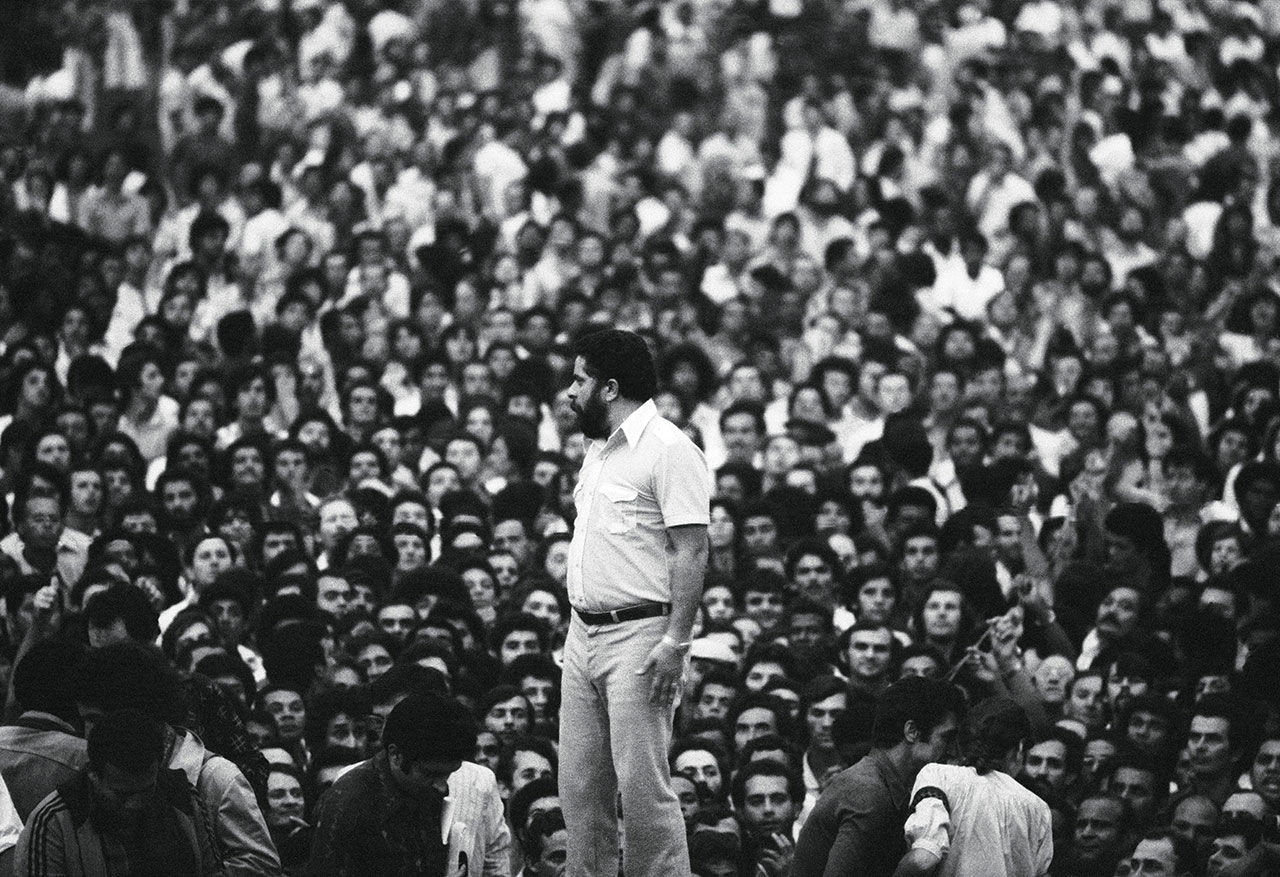
Brazil is, once again, facing extraordinary elections. The Workers’ Party (PT) suffered a blow in the first round of Presidential elections, with President President Luiz Inácio Lula da Silva receiving 45 percent of the votes to Flávio Bolsonaro’s 47 percent. Given Lula’s narrow 2022 victory over Flavio’s father Jair Bolsonaro as well as the pre-election polling, a close first round was expected. But more startling were the down-ballot results, which saw the Bolsonaro-aligned Liberal Party sweep congressional, senate, and gubernatorial elections to secure the largest share of single-party representation since Brazil’s return to democracy in the 1980s. No matter the final result of the second round presidential vote on October 25, the balance of power in Brasília is decidedly in favor of the far right.
As a wave of victories for right-wing parties sweeps across the Latin American continent—bolstered by the openly imperialist “Donroe Doctrine” emanating from Washington—it is critical to grapple with the particularities of Brazilian political life over the past three decades. The singular history of Lula and the Workers’ Party has taken place alongside enormous structural transformations of the Brazilian economy and a reorganization of its political system in favor of the increasingly powerful transactional parties known as the Centrão.
To explore just how Brazil has arrived at these crossroads, PW editor Daniel Souza Pavan interviewed political scientist Marcos Nobre, professor of political philosophy at the State University of Campinas, researcher at the Brazilian Center for Analysis and Planning, and director of the Center for Critical Imagination (CCI).
In the conversation, Nobre revisits his study of pemedebismo, the modus operandi of the dominant parties in Brazilian politics. He discusses the historical role of the PT since the country’s redemocratization, the achievements and limitations of Lula’s third administration, the formation of what he calls the “Bolsonarist Digital Party,” and the challenges this new configuration poses to Brazilian democracy.
An interview with Marcos Nobre
Daniel Pavan: Observers of Brazilian politics since redemocratization often make note of the Centrão (or “big center”), the ideologically loose and highly transactional group of elected representatives who make up the majority in Congress, and therefore the coalitions that must be managed by any given ruling President. You refer to this arrangement as pemedebismo, in reference to the Brazilian Democratic Movement Party (PMDB), which has long been a crucial part of the Centrão. What is the Centrão, what is pemedebismo, and why are these phenomena so important for understanding Brazilian politics today?
Marcos Nobre: In the late 1980s, political scientist Sérgio Abranches coined the term “coalition presidentialism” to describe Brazil’s prevailing arrangement of a strong presidency with a fragmented, multi-party congressional system. In my view, this notion stopped short of accounting for some essential aspects of the organization of the Brazilian political system. There were two questions that seemed central to me: Why does any government need a supermajority in Congress and such a broad governing coalition? And why do the vast majority of parties, after campaigning for their preferred candidate, end up joining the government regardless of the election results?
To understand these peculiar dynamics, we must go back to the formation of the Centrão. The Centrão has its origins in the Constituent Assembly of 1987 and began as a coalition that, having supported the military dictatorship, remained politically organized after redemocratization. It formed out of a defensive strategy to combat the progressivism that it saw as gaining ground in the late 1980s. (When I say progressivism, it’s important to emphasize that I am not referring to the left per se, but to an alliance between sectors of the left and right that refused to associate themselves with the far right, the dictatorship, and authoritarianism. These were the battle lines.)
The 1989 election of the right-wing Fernando Collor to the presidency helped raise the Centrão’s hopes that it might soon return to power, especially as the administration plunged into crisis, prompting early elections. But following Collor’s impeachment in 1992, the presidency returned to the progressive side, this time in the form of Itamar Franco. In response, the Centrão entered a sort of hibernation period; its aim in the 1990s was simply to survive politically. Its position was, essentially, as follows: we will accept this leadership as long as we are able to continue reproducing ourselves within the Brazilian state. This meant continuing to get the resources necessary to get its congresspeople and senators elected, as well as state governors, and so on.
At that time, the Centrão did not yet have the organic character it has today. But its basic strategy of selling its parliamentary support to whichever government was in power was clearly coming into view. This strategy is what I mean by the concept of pemedebismo. The PMDB, which gives the pemedebismo (PMDB-ism) phenomenon its name, is the successor to the Brazilian Democratic Movement (MDB), a party that opposed the military dictatorship. Few of its members were part of the original Centrão (which, again, was largely comprised of political forces that had supported the dictatorship) but this changed over time. After the 1994 election, the PMDB not only joined the Centrão but became a model for the other parties that comprised it: the PMDB established itself as the quintessential example of a fully transactional party willing to negotiate parliamentary support for any government.
From 1994, the presidential race began to revolve around two poles: the Workers’ Party (PT) and the Social Democratic Party (PSDB). Whichever of the two won the election (the PSDB dominated for much of the mid-to-late nineties; the PT was hegemonic throughout the 2000s and 2010s) would then incorporate into its governing coalition the group of parties situated between them—that is, the Centrão.
DP: The Centrão played a pivotal role in the political crises that plagued President Dilma Rousseff’s administrations, which you’ve identified as a turning point for the broader political arrangement. What has changed since then in the relationship between the executive and legislative branches?
MN: The PT’s string of presidential victories, beginning in 2002, presented the Centrão with a problem: its bargaining power depends to a large extent on the possibility of a change in executive leadership. After all, these parties that comprise the Centrão are part of any government, regardless of who wins the elections, but it is precisely the competition between different political forces that allows them to expand their room for negotiation.
These parties that adhere to the pemedebismo strategy depend on two fundamental conditions: access to public funds and protection from the actions of the judiciary and the police so that their corrupt practices are not investigated or indicted. The high point of pemedebismo between 1994 and 2014 was also the period in which various oversight and regulatory bodies were created and strengthened. While in government, the PT expanded these mechanisms, increasing the risk that the police and the judiciary would come knocking on the corrupt Centrão’s door.
During the 2010s, the PT was absolutely hegemonic. The parties of the Centrão had become increasingly subordinate to the PT’s leadership, and had lost their ability to exert leverage. By Dilma Rousseff’s second term, which began in 2015, there was a growing sense of crisis: a recession and the onset of the Lava Jato corruption investigation that roiled the Workers’ Party. The Centrão was growing increasingly dissatisfied with the PT leadership, which was departing from the rules established by the PMDB-led pact.
The neoliberal agenda that Fernando Henrique Cardoso, one of the founders and leading figures of the Social Democratic Party, introduced to Brazil in the 1990s had established the limits of government action and consolidated a coalition of supportive economic forces led not by the manufacturing sector, but primarily by agribusiness. Manufacturing continued to be part of this coalition, but in a subordinate position. Other sectors, such as the finance, mining, and livestock farming, were also aligned with agribusiness, exercising a hegemony that was not only economic and political but also cultural. It was possible to declare opposition to neoliberalism, to criticize it, and to propose alternatives, but any government had to operate—in policy and in politics—within the rules of that order. The room for maneuver was quite limited.
Dilma’s reindustrialization project, launched in 2011, sought precisely to alter this balance of power by strengthening the manufacturing sector and reducing the dominance of agribusiness and its associated sectors—challenging the leadership of the neoliberal coalition, which experienced Dilma’s administration as a threat to its dominant position. I am not arguing whether Dilma’s industrial policy had the potential to succeed or not. For this analysis, what matters is understanding its political significance: Dilma’s attempt to escape agribusiness’s hegemonic role was one of the factors that led to her impeachment in 2016. The Centrão proceeded to pursue a strategy to not only throw the PT out of government, but to also remove them from future races for power.
When Rousseff was finally impeached, the Centrão took direct control of the executive branch: Michel Temer, vice president under Rousseff and former-PMDB national president, was inaugurated in August of that year. The Centrão’s aim was to remove the left from government and put forward a viable presidential candidate from its own ranks for the next election. But there was a fundamental contradiction. The PMDB’s modus operandi of pemedebismo has always been to sell parliamentary support, rather than to govern. This helps explain the resounding failure of the Temer administration, whose approval rating hovered around 9 or 10 percent on the eve of the 2018 election.
Even so, the Centrão believed it had succeeded in sidelining the PT and hoped that, Temer’s unpopularity notwithstanding, one of its candidates might still win the 2018 election. They were wrong. The two lead candidates came from outside their ranks: Fernando Haddad from the Workers Party, and the far-right Jair Bolsonaro. This was an unexpected turn of events for the Centrão. After all their effort to remove the PT from government, the party nonetheless remained one of the country’s main electoral forces. Faced with this reality, the vast majority of the Centrão parties ended up backing Bolsonaro—not because they shared any natural affinity with him, but because the desire to isolate the PT was so strong.
During Rousseff’s second term, the Centrão had been growing better coordinated and more autonomous. This coordination continued and deepened during Jair Bolsonaro’s presidency, which began in 2019. It didn’t take long for the possibility of impeachment to present itself, and so Bolsonaro struck a deal with the Centrão in a bid for protection. This included important changes to budget negotiations. Expanded budget amendment processes, and reduced requirements for budget transparency had the effect of granting the legislature more autonomy from the executive branch—and ultimately more power. This was a win for the Centrão: Bolsonaro granted them a degree of autonomy that these parties had never had before. In the process, the Centrão began effectively acting as a strong and united negotiating bloc, a practice that continues to this day. Of course, the parties that make up the coalition still compete with one another, especially during elections. But once the electoral contest is over, they come together to jointly negotiate the distribution of power.
Daniel Pavan: By the end of his first term in 2022, Bolsonaro and an openly anti-democratic bolsonarismo movement had already been established as a central force on the Brazilian political scene. In the election that year, as this year, we saw a competition between the PT and bolsonarismo, behind which stood an emboldened Centrão. What are the implications of this configuration for the functioning of the Brazilian political system?
Marcos Nobre: The political landscape today is quite distinct from that which characterized the classic period of PMDB dominance between 1994 and 2014. Today, on one side, we have the PT, a traditional mass party, deeply rooted in Brazilian society, with a voting base that amounts to about one-third of the electorate. On the other side, we have bolsonarismo, which can be best described as a kind of digital mass party, led by the far right, and representing approximately a quarter of the Brazilian electorate.
At first glance, one might imagine that the Centrão has simply found two new poles between which to negotiate parliamentary support, replicating the earlier dynamic. But a fundamental transformation has taken place. First, polarization has been replaced by a starker division. The metaphor of polarization imagines a single magnetic field with two opposing poles, but what we have today are two distinct fields with irreconcilable and incompatible orientations to democracy and government. It is very different from the rivalry between the PT and the PSDB that once structured Brazilian politics.
The second difference is that the Centrão, as we just discussed, has now gained a high degree of autonomy from the executive branch; this did not exist under the previous arrangement, in which the forces in the legislative branch truly relied on the executive to ensure their political survival. Of course, the Centrão will continue to negotiate with whoever wins the elections, but this relationship is no longer one of subordination. It is now a negotiation between forces that are more independent of one another.
This dynamic became evident during Lula’s third term. As a result of the parliamentary coup against Dilma, today any president must secure, from the outset, a sufficient number of votes to prevent their removal from office. The PT government’s parliamentary base was therefore a safeguard against impeachment. In the Chamber of Deputies, this means securing at least 172 votes, which requires 190 to 200 deputies. But this support is insufficient even to pass a bill by a simple majority.
What we observe, then, is a dynamic in which the government can rely on about 190 or 200 votes, but in order to garner 390 or 400 votes for certain proposals, it requires additional support. This difference reveals the role of a relatively coordinated Centrão. Where the executive branch used to negotiate with individual parties or lawmakers, it must now deal with a much more cohesive bloc of parties, capable of coordinating positions and negotiating collectively. There are now three relatively distinct forces in the Brazilian political system: the anti-democratic right, the pro-democracy Workers’ Party, and the Centrão.
Given these three forces, how might a new political realignment take place? If Brazilian democracy survives and the political system undergoes a new reorganization, it will necessarily have to build upon these existing elements. Clearly, the existence of a mass party led by the far right poses an enormous risk to democracy itself. But even if it is possible to politically isolate the far right, the problem of institutional reorganization will remain, because the conditions that allowed for the stabilization of the previous political system no longer exist.
DP: You have described the Centrão’s overt efforts to render the PT politically unviable. How do you explain the PT’s electoral resilience in the face of these challenges?
MN: The PT is a unique case globally: a mass party that emerged in 1980, at a time when parties around the world were becoming bureaucratized, transforming themselves into electoral organizations almost exclusively focused on winning votes. And yet, the PT was a party built from the ground up that, in just fifteen years, became the leading force in Brazilian politics.
It is extraordinary not only that the PT emerged under these conditions, but that it managed to consolidate itself, establish deep social roots, and achieve such prominence in so short a time. In fact, it is possible to trace the entire history of redemocratization and Brazilian democratic politics from the 1980s onward through the party’s trajectory. Anti-PT sentiment itself is an expression of this centrality: the PT became the primary reference point against which all other political actors position themselves, whether in favor or against.
Throughout the 1980s, the PT’s project was to build a party from the bottom up. From an electoral standpoint, this also meant forming legislative majorities through a process of popular organization and mobilization. But this model was effectively abandoned after Lula reached the second round of the 1989 presidential election. From that point on, the PT began to focus its efforts on winning the presidency, which entailed a reversal of its political strategy: instead of building majorities from below, it now sought to reorganize Brazilian politics from the top down. This shift in orientation occurred at precisely the moment when the party established itself as the leading force in national politics.
Lula got to the second round of the presidential elections again in 1994, but ultimately lost to Fernando Henrique. Lula had been the favorite to win, which is ultimately what Fernando Henrique built his electoral strategy around, presenting himself as a rampart against the insurgent PT, solely capable of fighting the sky-high inflation menacing the country. His message was the following: you may be wary of me because of my intellectual background and my past association with the left, but I have a plan to combat inflation that can secure me the popular support needed to win the election. To that end, Fernando Henrique even formed alliances with parties who had supported the dictatorship, signaling to conservative sectors that his candidacy posed no threat to their interests.
From that point on, the presidential race began to revolve around the PT and the PSDB—but it was the PT that was the dominant pole that the other parties had to position themselves against. When the PT began its winning streak in the 2000s, its numerous presidents—particularly Dilma Rousseff—started to adopt practices that ran counter to the policy and governance strategies that sustained pemedebismo. But even after Dilma’s impeachment and the arrest of Lula—its main leader and one of Brazil’s greatest popular leaders of the second half of the twentieth century—the PT remained powerful, managing to reach the second round of the 2018 presidential election. This is an extraordinary capacity for political survival, owing to its social base and electoral strength.
DP: If the PT managed to preserve its electoral strength in these conditions, what explains the emergence of bolsonarismo as its main adversary? To what extent does Bolsonaro’s rise also represent the emergence of a new form of party organization in Brazil?
MN: The PT was removed from power—but not from the political arena entirely. A serious competitor, then, was required. The PT’s traditional opponent, the PSDB, for example, could hardly present itself as a mass party. It was a party whose major decisions—including those regarding candidates—could be made during meetings at restaurants. There was nothing resembling the PT’s party conventions, ideological debates, and internal conflicts, in which different factions seek to influence the party’s direction.
It was Jair Bolsonaro who ultimately emerged as a viable opponent. Bolsonaro was the first Brazilian politician to recognize the potential of digital platforms and to organize his political career around them. When he ran for president in 2018, he already had the benefit of a huge base that he had been building on digital platforms since 2012. Once in power, he further strengthened this digital base, to the point of transforming it into what can be called the “Bolsonarist Digital Party.”
We are witnessing the emergence of a new kind of mass party. Describing the bolsonarismo movement this way often provokes a great deal of resistance. After all, we are talking about an organization that functions as a party without formally existing as such, and which is very much online. It is very difficult for a traditional party—even a mass party like the PT—to understand how a digital party functions. Traditional parties tend to view the digital environment as a tool, an instrument for carrying out the activities they already perform more efficiently. But I argue we are talking about something entirely different: another form of political organization, which operates according to its own logic.
There is also a historical irony in this characterization. When the first clandestine mass parties emerged in the nineteenth century, they were anti-capitalist organizations that had neither legal recognition nor formal registration. Even so, they were mass parties, with an intense internal life and a permanent presence in the daily lives of their members. They organized local associations, ran schools, theater groups, newspapers, and, later, radio stations. This was the model for left-wing mass parties for much of the nineteenth and twentieth centuries. The digital mass party establishes a similar type of relationship with its social base, as a structure that continually mobilizes and engages, becoming integrated into people’s daily lives. And this presence is not limited to politics in the strict sense. It can manifest itself in parenting support groups, communities of the unemployed, religious associations, and countless other social spaces. These are functions that mass parties performed in the nineteenth century and that are now, to a growing extent, carried out by a far-right digital network.
DP: What advantages does this digital party model offer bolsonarismo over traditional parties?
MN: It creates an asymmetric competition. Bolsonarismo‘s activity on social media is constant and marked by a severe lack of transparency. We do not know how much money circulates within this structure, what negotiations take place outside the public spaces of the platforms, or how its internal relations are organized. But while it is organized digitally, bolsonarismo also operates within the traditional party system, thanks to the alliances it forges with the Centrão parties, especially the Liberal Party (PL). And it is not limited to the PL. It has candidates spread across various Centrão parties, who can switch from one party to another according to their political convenience.
Thus, bolsonarismo combines the advantages of both organizational models: through traditional parties, it has access to electoral funds, party funds, and the resources associated with parliamentary seats; and in the digital sphere, it has its own mechanisms for engagement, mobilization, cohesion, organization, and hierarchy. How can one establish a level playing field between a traditional mass party like the PT, and another that operates according to this digital logic? The heterogeneity of the dominant forces in Brazilian politics therefore poses a serious organizational challenge for the Brazilian left.
DP: How would you respond to claims that these far-right communication networks are primarily misinformation channels, rather than new forms of political organization?
MN: Much of the existing literature on digital parties tends to interpret these organizations in terms of manipulation: the leadership manipulates its base. Our research at the CCI, however, shows that the Bolsonarist Digital Party relies on much more conventional party strategies, albeit located largely in the digital world. This does not mean it is horizontal, or decentralized. A hierarchy exists, but it functions differently from that of traditional parties. Any member can challenge a leader and attempt to mobilize the rank and file against a particular position. If the challenge gains momentum, the leadership may back down, which is interpreted as a demonstration of humility and a willingness to listen. If they fail to gain sufficient support, those who challenged the leadership must acknowledge their mistake and reaffirm their loyalty. Otherwise, they risk being “canceled”—the digital equivalent of expulsion from a political party.
Therefore, it is neither an organization entirely controlled from the top down nor a spontaneous grassroots movement. It is a hierarchy subject to constant challenge. While in traditional parties leaders are elected for fixed terms, in the Bolsonarist Digital Party leadership positions must be continually reaffirmed. This helps explain why its political activity is ongoing, rather than restricted to election periods.
DP: After more than a decade out of power, Lula returned to the presidency in 2023, finding a profoundly transformed political system. How do you assess his third administration in light of the new balance of power in Congress and growing market pressures? And what does this experience tell us about the 2026 electoral landscape?
MN: I think Lula’s third administration is a miracle. And for a very simple reason: Lula governs as a minority. On paper, his coalition comprises thirteen parties, but given the advancement of the Centrão’s ability to negotiate as a secure bloc, securing concessions has become extremely difficult.
Lula won the 2022 election by a narrow margin—about 1.8 percentage points—relying primarily on two messages: the legacy of his previous administrations’ achievements and the defense of democracy in the face of authoritarianism. In the first two years, governing under the motto of “Unity and Reconstruction,” it fulfilled much of that promise. Democratic institutions responded to the coup attempt of January 6, 2023; social programs were rebuilt, and new ones were created, though without representing a break from the logic of previous policies. Following the first half of the third term, a new strategy was required, and a vision for the future beyond restoring what Bolsonaro had sought to destroy.
The problem is that reconstruction, on its own, does not offer a vision for the future. After restoration, what would come next? There was a change in slogan, but no substantively new project. From that point on, the government began to run out of steam. Its bet was that strong economic indicators would be enough to secure reelection. Previous Lula administrations had, for good reason, made the same bet: in a country marked by such deep inequalities, even modest advances in the redistribution of income and wealth represent important achievements. But this strategy seems to have reached its limit. It is no longer enough to present good economic results or to revive policies developed in the 2000s. It is necessary to offer a vision of the future—something that Lula’s third administration has not yet managed to do. And this is particularly serious because the far right, by contrast, does offer such a vision. The Brazilian left therefore faces two simultaneous challenges: an organizational one, as it remains structured according to traditional models in an increasingly digital world, and a challenge related to its capacity to envision the future, and to convey this vision to its base.
The landscape is divided between what I call the “fearless right”—unafraid of abandoning democracy, freedoms, social policies, and institutional safeguards—and a progressive or anti-authoritarian coalition. The latter remains, to a large extent, stuck in defending what existed before. We defend the Federal Supreme Court because it fulfilled its obligation to hold those involved in a coup attempt accountable. But how can we transform the defense of the Court, with all its contradictions, into a political project? Similarly, who wants to restore the political system of the 2000s? This is the left’s dilemma.
Lula’s third government achieved significant advances in taxing the superrich, expanding the income tax exemption, and creating new social programs. Above all, it restored the sense that Brazil remains a democracy. None of this is trivial, given the conditions under which the government operates. But neither is it sufficient to offer a vision for transformation.
Further Reading
Fiscal Democracy
How Lula’s third term has combined social spending, tax reforms, and fiscal stability to safeguard popular sovereignty
Drowning in Debt
Financial inclusion and financial expropriation in Brazil
Party Bus
An interview with André Singer on the right, party politics, and Brazil’s position in the world
Further Reading
Fiscal Democracy
How Lula’s third term has combined social spending, tax reforms, and fiscal stability to safeguard popular sovereignty
Lula’s overhaul of the tax system represents a challenge to the Brazilian oligarchy which goes beyond the distributive policies of previous PT governments.

Drowning in Debt
Financial inclusion and financial expropriation in Brazil
The upcoming presidential election in Brazil, set to take place in October of this year, will for a third time pit Luís Inácio Lula da...

Party Bus
An interview with André Singer on the right, party politics, and Brazil’s position in the world
While the world’s attention was focused on the United States presidential election that would deliver Donald Trump a decisive victory and a second Presidency, Brazil’s...