Issue 1, June 2026
Analysis
Monroe Doctrines
Imperialism and anti-imperialism in Nuestra América
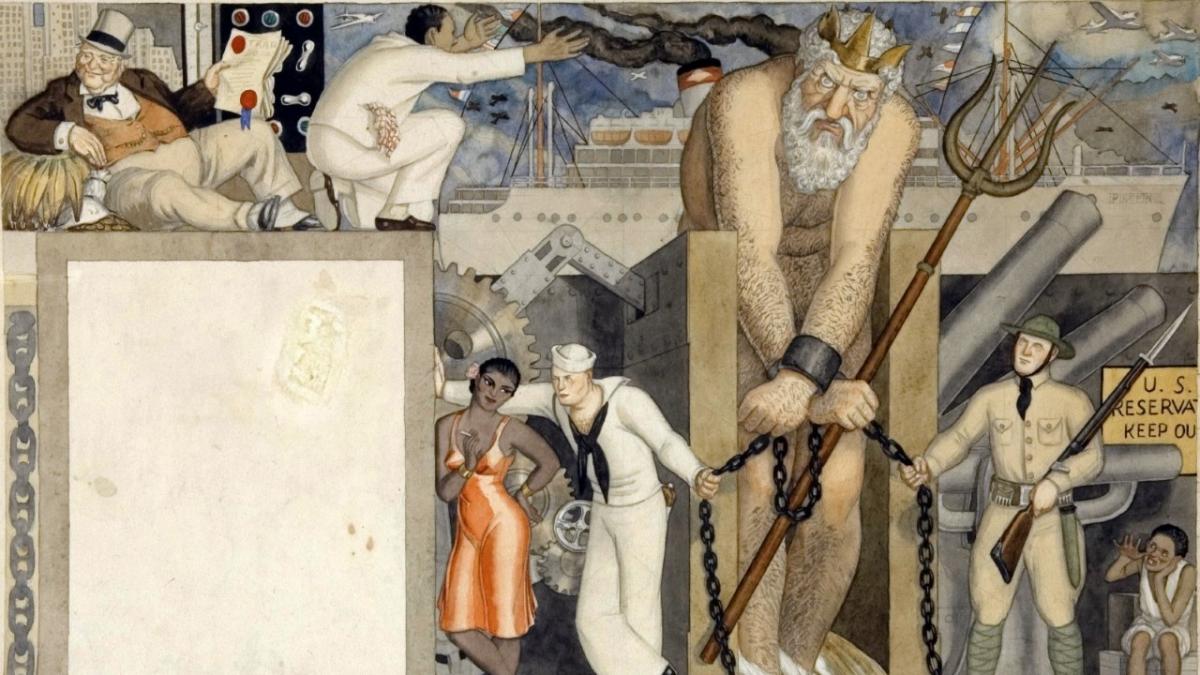
In March, Donald Trump gathered leaders from Latin America and the Caribbean at his golf resort in Doral, Miami, to stage the “Shield of the Americas” summit. The gathering sought to establish a new coalition to combat “narco-terrorism” and dismantle the drug cartels that have become a constantly evoked bugbear of the second Trump administration. Amid renewed US military aggression, the event drew twelve reactionary heads of state, eager to align with Washington’s regional agenda. In attendance were Argentina’s Javier Milei, Ecuador’s Daniel Noboa, El Salvador’s Nayib Bukele, and Chile’s José Antonio Kast, as well as the right-wing presidents of Bolivia, Paraguay, Panama, Honduras, Costa Rica, Guyana, the Dominican Republic, and the prime minister of Trinidad and Tobago.
The group reaffirmed the continental security principles of the so-called Trump Corollary, the most recent National Security Strategy, and the new Anti-Cartel Coalition of the Americas. The “Donroe Doctrine” put forward in these declarations is but the latest iteration of long-standing US claims to regional domination in the absence of hegemony—an exaggerated reformulation of the Monroe Doctrine and Manifest Destiny.
In what follows, we examine this new doctrine in light of its historical predecessors: Monroeism, the Good Neighbor Policy, Cold War counterinsurgency, and neoliberal Pan-Americanism. We argue that each of these manifestations of US imperialism has encountered sustained antagonism, rooted in a long-standing pattern of Latin American resistance, from Simón Bolívar’s integrationism to José Martí’s revolutionary anti-imperialism. This historical comparison reveals a number of substantive continuities in the nature of US imperialism in Latin America: unilateral decision-making, a logic of national security, militarization, and economic coercion have manifested in varied forms since the early twentieth century. But it also reveals an important set of ruptures: above all, a willingness to undo the very fabric of regional institutions that the US has manipulated for so long. This reflects a novelty in the composition of Latin American resistance—the limits of a coherent counter-hegemonic vision put forward by regional actors.
Together, these angles help illuminate contemporary US supremacy under the Donroe Doctrine, which marks a new period of US hemispheric imperialism. Trump’s vision of a realigned geography through a “Greater North America” revives and repurposes centuries-old ideologies central to Pan-Americanism itself. The task before us, then, is to posit how anti-imperialist agendas might claim a new horizon for “Nuestra América.”
Conflicting legacies
In 1904, Theodore Roosevelt spoke as the inheritor of a new empire. With the end of the Spanish-American War, the US solidified itself as a Caribbean Power. Roosevelt’s speech articulated the fusion of two imperial ideologies: the Monroe Doctrine and the Doctrine of Manifest Destiny (1845). The former, delivered by President Monroe in 1823, rebuffed European imperial control of the Western Hemisphere, and in so doing, claimed it for the US sphere of influence. The latter legitimized the territorial expansion of the United States as a historic mandate. The doctrinal convergence articulated by Roosevelt laid the foundations for a continental projection that combined principles of hemispheric defense with practices of domination.
After Spain lost control of Cuba amid its independence struggle, the US placed the island under military occupation. It soon after made a grab for Puerto Rico, which it established as a colonial dependency, as well as the Philippines and Guam, which it held as unincorporated territories. This period of imperialism was characterized by the overt, unilateral exercise of US aggression.
The form of imperialism reflected decades of intense resistance. In his 1815 “Letter from Jamaica,” Simón Bolívar had proposed a union of newly independent Latin American nations. By 1826, the Panama Congress, organized by Bolívar, was calling for a Hispanic American union to resist Northern domination. Meanwhile, as the first Monroe-style Pan-American Summit took place in Washington in 1890, José Martí came to prominence across the Americas. His seminal 1891 essay, “Nuestra América” (Our America), was widely read across the continent, becoming the basis for anti-colonial and popular sovereignty movements that sought to build regional unity against the new Northern imperial aggressor.
The co-constituting bind between imperialism and resistance is essential to the history of the Americas.1Pablo González Casanova, (<)em(>)Imperialismo y Liberacion. Una Introduccion a la Historia (<)/em(>)(Mexico City: Siglo XXI Editores, 1985). Jaime Preciado, “Pan-Americanismo: Un instrumento geopolítico para la implementación de la Doctrina Monroe,” in (<)em(>)La doctrina Monroe contra América Latina y el Caribe(<)/em(>) (<)em(>)(1823–2023)(<)/em(>), ed. Carlos Oliva Campos (Caracas: Monte Ávila Editores Latinoamericana, 2023). Leandro Morgenfeld, (<)em(>)Nuestra América frente a la doctrina Monroe(<)/em(>): (<)em(>)200 años de disputas(<)/em(>) (Buenos Aires: CLACSO; Batalla de Ideas, 2023). Their histories are defined by five historical periods.
Critical microhistory of imperialism and Latin American resistance
| Historical Period | Orientation of Pan-Americanism | Imperial Doctrines and Agencies | Latin Americanist Resistance |
| First Period (1776–1933) | Foundational Pan-Americanism (1776–1880) | Manifest Destiny Monroe Doctrine | Bolivarian Project: Letter from Jamaica Amphictyonic Congress of Panama |
| Imperial Pan-Americanism (1881–1933) | First Pan-American Conference Roosevelt Corollary | José Martí’s Nuestra América | |
| Second Period (1934–1953) | “Good Neighbor” Pan-Americanism | Hemispheric Solidarity Good Neighborliness TIAR: military dominance OAS: inter-American relations IDB: developmentalism and indebtedness | Developmentalist alliance of populist regimes |
| Third Period (1954–1980) | Pan-Americanism of National Security | National Security Doctrine Counterinsurgency and Anti-Revolutionary Policy School of the Americas Operation Condor Anti-Communist Containment Alliance for Progress | Cuban Revolution National Liberation Revolutionary and popular Anti-imperialism Liberation Theology Sandinista Revolution in Nicaragua Revolutionary uprisings and counterinsurgency in Central America |
| Fourth period (1981–2020) | Neoliberal Pan-Americanism | Neoliberalization Washington Consensus Summit of the Americas FTAA FTAs and subregional FTAs Northern Command | Cycle of social unrest from 1989 (Caracazo) to 2001 (Que se vayan todos) Bolivarian Revolution Zapatista Uprising World Social Forum and Continental Social Alliance Cycle of Progressive Governments |
| Fifth period (2025–present) | Unilateral Supremacy | Make America Great Again America First Trump Corollary Military intervention “Shield of the Americas” Greater North America | Brazil-Colombia-Mexico Axis World Anti-Fascist Front ALBA Movements |
US imperialism, then, is not simply a unilateral act of domination. It is always contested and reshaped by the movements that resist it.2 Correa Henao, Juan David. “Pan-Americanism versus Latin Americanism: Geopolitical and Civilizational Tensions.” (<)em(>)Analecta Política(<)/em(>) 10 (2020): 67. Pan-Americanism sometimes manifests through gunboat diplomacy—expressed in violent interventionist processes that included invasions, the overthrow of governments, and territorial annexations—and sometimes through carrot diplomacy, which relies on negotiation, treaties, and a system of indebtedness. These two faces of American imperialism constitute different tools that can be directed towards different actors, often during the same period.
A new phase of American imperialism would be launched by Franklin D. Roosevelt in 1933. With the Good Neighbor Policy, Washington sought friendlier relations, pulled back from military interventions, and initiated hemispheric cooperation, including the first multilateral bodies that would go on to form the basis for the nascent Inter-American system. With this institutional system in place, this period expanded a platform of military control through the Inter-American Treaty of Reciprocal Assistance (TIAR, 1947) and ten Pan-American Conferences held before 1954. The creation of diplomatic spaces claiming to support democratic governance, like the Organization of American States in 1948, effectively functioned as a means for anti-communist containment and the isolation of countries and movements opposed to US hegemony.
This phase of US imperialism, too, reflected a new iteration of resistance movements. It was during this period that national-popular movements emerged across Latin America and the Caribbean, positioning themselves against national bourgeoisies and oligarchies supported by the US and Europe. At the same time, a process of social integration developed, which sought to protect and strengthen social markets,3Enrique Dussel. (<)em(>)20 tesis de política(<)/em(>). (México: Siglo XXI / Centro de Cooperación Regional para la Educación de Adultos en América Latina y el Caribe, 2006), 93. or what Cardoso and Faletto termed the “developmentalist alliance” between industrial sectors and the working-class and popular sectors. The sheer strength of these movements forced a claim to multilateral cooperation, for fear of sparking even greater revolt.4Fernando Henrique Cardoso y Enzo Faletto. Dependencia y Desarrollo en América Latina. México, D.F.: Siglo XXI, 2007), 107.
But ultimately, this cooperative framework once more led to unilateral violence. With the intensification of the Cold War, US government officials could no longer risk the appearance of regional sovereignty. The 1954 coup in Guatemala was soon followed by the attempted invasion of Cuba in 1961; the recovery of the Panama Canal following the sovereignty revolt in 1964; the coup against the government of João Goulart in Brazil that same year; the military intervention in the Dominican Republic in 1965; the assassination of Ernesto “Che” Guevara in Bolivia in 1967; the coup against Salvador Allende in Chile in 1973; and Operation Condor in Argentina in 1975.
The establishment of pan-continental military infrastructure soon became a key mechanism of control. During the Second World War, the Caribbean Defense Command was key to this. Its objective was to control the Panama Canal, monitor the Caribbean, and coordinate military missions in Latin America. The School of the Americas, a training facility that laid the groundwork for counterinsurgency imperialism, was also established. By 1963, the Southern Command (SOUTHCOM) was formed to contain communism and popular revolt, and expand the counterinsurgency commitments enshrined in the National Security Doctrine.
The legacies of these agencies continue to shape today’s continental military alliances. Importantly, the Cuban Revolution’s effective resistance became an inspiration for various national liberation movements and guerrilla struggles. And it was within this insurgent landscape that the most significant anti-imperialist principles of the century—internationalism and the promotion of a revolutionary humanism—matured across broad intellectual, journalistic, and artistic spheres throughout Latin America.
It was in response to these movements that yet another period of empire arose. Ronald Reagan’s Neoliberal Pan-Americanism synthesized a “minimal” state with an emphasis on “national security.”5Gonzalez Casanova, Pablo. “La teoría del Estado y la crisis mundial”. En (<)em(>)El Estado en América Latina. Teoría y práctica(<)/em(>), ed. by Pablo González Casanova (México, D.F.: Siglo XXI Editores / Universidad de las Naciones Unidas, 1990), 19. The minimal security state justified intervention in various parts of the world, particularly in the Caribbean and Central America. Seeking to reinforce its dominance in the Americas, the George H. W. Bush administration proposed the Initiative of the Americas in 1990 and a series of biannual summits beginning in 1992 as part of the new post-Cold War agendas. The Clinton administration advanced this neoliberal turn by pushing forward the North American Free Trade Agreement (NAFTA) and the Free Trade Area of the Americas (FTAA), which George W. Bush had adopted as hemispheric priorities. Added to this were the nine Summits of the Americas held between 1994 and 2022.
Despite the emphasis on trade and markets, neoliberal Pan-Americanism was accompanied by an increasingly unilateral security agenda. In 2002, US Northern Command (NORTHCOM) was created in response to the September 11, 2001, attacks, incorporating Mexico as part of the priority security zone in the face of transnational threats, and the launch of the global war on terror and the reorganization of the fight against drug trafficking on a regional scale.6 Under this framework, the two spheres of geostrategic control defined by SOUTHCOM and NORTHCOM incorporated the continent into the global war on terrorism strategy and the conception of the United States as a unilateral power assuming the role of “global police.” It should also be noted that in 2025, Republican Congressman Ken Calver introduced a bill to exclude Mexico from Northern Command and transfer its jurisdiction to Southern Command, although it has not gained traction.
Against this backdrop, a new cycle of social protest was launched. It began in 1989 with the “Caracazo” in Venezuela, the Continental Campaign for 500 Years of Indigenous, Black, and Popular Resistance in 1990, and a flurry of anti-globalization social movements like the Zapatistas in Chiapas and the 2001 World Social Forum in Porto Alegre.7 Bringel, Breno y Cabezas, Almudena. “Geopolítica de los movimientos sociales latinoamericanos: espacialidades, ciclos de contestación y horizonte de posibilidades”. In (<)em(>)Anuario de la integración latinoamericana y caribeña(<)/em(>), ed. by Jaime Antonio Preciado Coronado (Guadalajara: Universidad de Guadalajara / University Press of the South New Orleans / Ediciones de la Noche, 2014). For more than a decade, a regional network of dissent was built, a source of social multilateralism that marked resistance to Pan-Americanism in general and to neoliberalism in particular.8The Zapatista uprising in 1994 became a global benchmark for anti-globalization resistance by opposing the North American Free Trade Agreement (NAFTA), while the Continental Social Alliance (ASC), which emerged in the late 1990s, expanded a transnational social coalition against neoliberalism and in defense of social justice. In addition, People’s Summits flourished, along with powerful indigenous, Afro-descendant, and women’s movements across the continent.
Bolivarian Venezuela, the strategic epicenter of a counter-hegemonic geopolitics oriented toward regional integration, garnered significant popular support in several Latin American countries. The implosion of the FTAA in 2005 was counterbalanced by the creation of major regional institutions autonomous from the Pan-American system, such as the Union of South American Nations and the Bolivarian Alternative for the Peoples of Our America-Peoples’ Trade Agreement (ALBA-TCP), which brought together governments and popular movements in a new regional anti-imperialist phase and a phase of “South Latin American” autonomy that substantially “weakened” the scope of the Monroe Doctrine.
This wave of resistance garnered a response from the Northern aggressor. In 2013, then Secretary of State John Kerry pronounced the end of the Monroe Doctrine, announcing the beginning of a new era of cooperation. Echoing Roosevelt’s pronouncements in the 1930s, Kerry put forward a vision of regional equality in which countries would adhere “not to a doctrine but to decisions we make as partners.” Bolivarian geopolitical projection, Brazil’s growing influence, and the rising force of regional self-determination against the prospect of US-led multipolarity initiated a new cycle of Nuestra América. In 2010, the Community of Latin American and Caribbean States (CELAC) was created, notably including Cuba. Under this political consensus, the region was declared a zone of peace.
But by the 2010s, the crisis of the political left and the rise of the far right in Latin America led to a breakdown of the integration proposed by Nuestra América. Today, we see a forceful revival of the imperialism of the 1900s: an amalgamation of the Monroe Doctrine and Manifest Destiny reminiscent of Theodore Roosevelt’s term. This iteration of imperialism represents a hegemonic power in crisis, clinging to unipolarity under militaristic supremacy. Unlike any of its previous iterations, the US’s explicit domination over the Western hemisphere today undermines the very Pan-American institutional framework that it had constructed over the past two centuries.
The fifth stage
In 2016, Donald Trump began to outline his political-ideological project under the slogan of “Make America Great Again.” With anti-immigrant and nationalist stances, Trump’s first administration rejected trade multilateralism—namely the United States-Mexico-Canada Agreement (USMCA) and the Trans-Pacific Partnership (TPP)—which it blamed for the loss of industrial jobs in the United States.9 Tovar Ruiz, Juan. “La doctrina Trump en política exterior: fundamentos, rupturas y continuidades”. (<)em(>)Revista CIDOB d’Afers Internacionals(<)/em(>) 120 (2018): 264. The shift toward an orthodox national security doctrine and rising nationalism led the administration to gradually appropriate the fundamental principles of the Monroe Doctrine to define its relationship with Latin America and the Caribbean.
In the 2017 National Security Strategy, the Western Hemisphere appeared as a relatively secondary priority within the geographical hierarchy of foreign policy, but the strategy named drug trafficking as a central priority. The document highlighted China’s growing role in the region through its state-driven investments and loans. Meanwhile, it deemed Russia’s policy of bolstering its radical allies—Cuba and Venezuela—to be failed and anachronistic.
Although the pan-American geopolitical projection during the Joe Biden administration represented a brief pause in this strategy, Donald Trump’s return to the White House marked the beginning of a phase that deepened the ideological principles of the “America First” doctrine. This internal upheaval is linked to an explicit return to Monroe Doctrine principles and a supremacist imperialist projection. The US’s 2025 National Security Strategy, unlike that of 2017, positioned the Western Hemisphere as the priority region within US strategic projection:
After years of neglect, the United States will reaffirm and apply the Monroe Doctrine to restore US preeminence in the Western Hemisphere and protect our homeland and our access to key geographic areas throughout the region. We will deny non-hemispheric competitors the ability to position forces or other threatening capabilities, or to possess or control strategically vital assets, in our hemisphere. This “Trump Corollary” to the Monroe Doctrine is a sensible and powerful restoration of US power and priorities, consistent with US security interests.
The so-called “Trump Corollary” aims to reestablish historical principles under the ambitious framework of a “Donroe Doctrine,” which has a dual objective: to recruit established allies in the hemisphere to control migration, stem the flow of drugs, and strengthen security both on land and at sea; cultivate new alliances; and reinforce the United States’s appeal as a preferred economic and security partner in the hemisphere.
This marks the beginning of the fifth stage of US imperialism, one that both exacerbates the historical legacy of the most aggressive phases of US expansionism and deviates from these earlier iterations by undermining existing Pan-American institutions, supplanting them with new, personality-driven bodies aligned with the ideological framework of the far right. This phase has sought unilateral supremacy rather than consensus or regional coordination.
The new phase of imperialism has ushered in a post-Pan-American era, in line with the decline of the tenets of neoliberal hegemony and the principles of the Washington Consensus. Its strategic approach is coercive, manifested in the complete externalization of migration and the persecution and expulsion of US immigrant communities. These domestic policies have threatened to undermine the basic foundations of US citizenship while remaining loyal to a fascist nationalism espoused by MAGA. In this fifth phase, the US acts as an illiberal superpower dismantling strategic alliances like NATO, subordinating its foreign policy to Israeli wars, and supplanting the multilateral institutional framework of the UN through entities such as the Peace Board. For instance, the Gaza Strip reconstruction plan, meant to rebuild the region after the horrors of genocide, has been promoted by business figures with close personal ties to Trump himself.
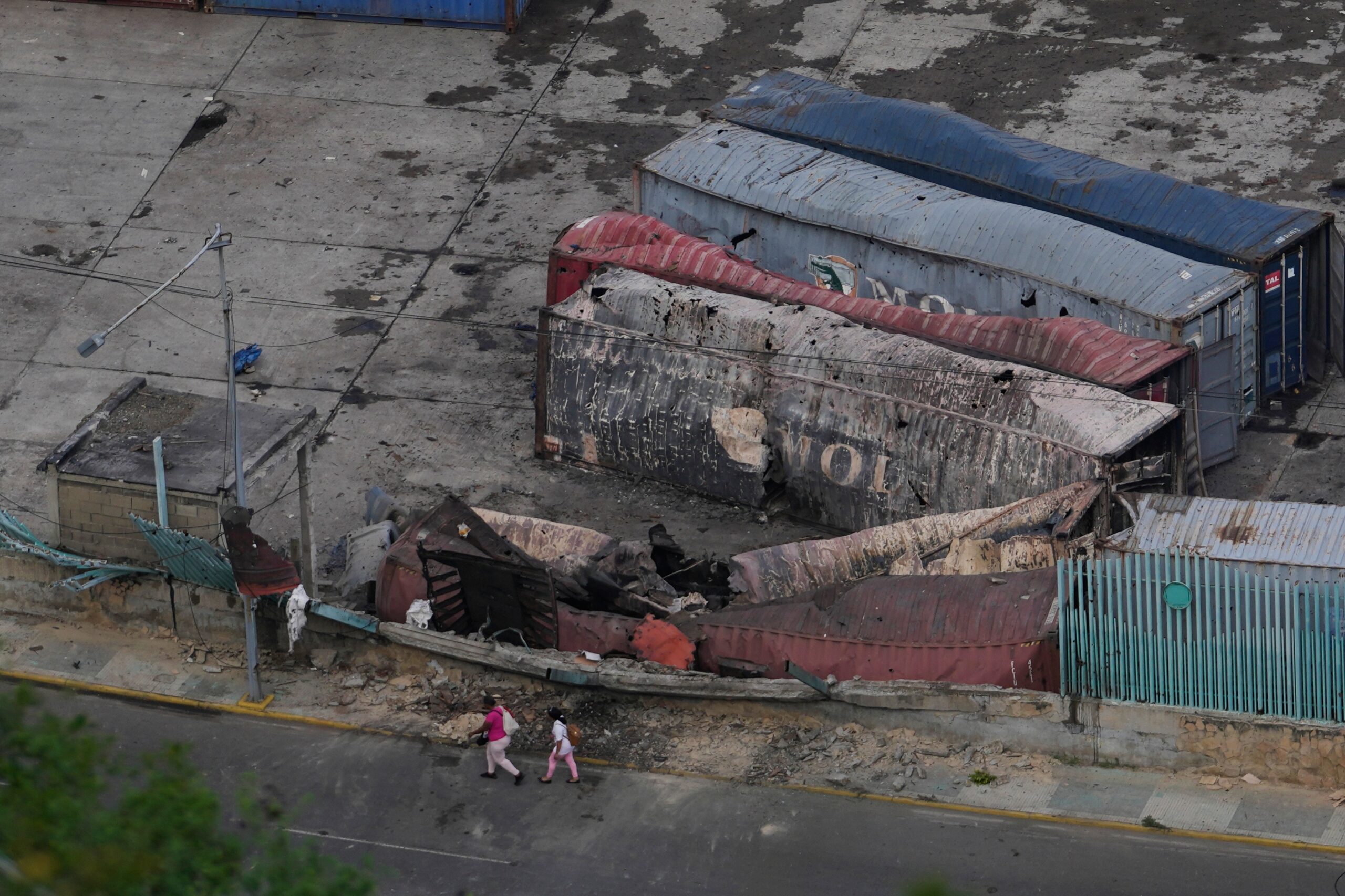
In Latin America and the Caribbean, the imperial path has been characterized by political, economic, and military siege with expansionist aspirations. The premise of the doctrine is now clear: whoever dominates the Greater Caribbean will dominate the heart of the Western Hemisphere. Venezuelan President Nicolás Maduro became the strawman used by the Pentagon to justify a comprehensive militarization of the Greater Caribbean. Bombing campaigns in the Caribbean and the Colombian Pacific destroyed over forty-five unidentified boats between September 2025 and March 2026, resulting in the extrajudicial killing of at least 150 people. Added to this was a military assault campaign focused on the seizure of oil tankers, aimed at establishing de facto control over the waters of the Caribbean and other areas of international waters along the Atlantic to disrupt energy flows between Venezuela and its main energy partners.
The military intervention of January 3 in Venezuela took place within this context, with the central objective of seizing control of the energy sector in the Greater Caribbean, redirecting oil capital from the world’s major reserves through structural reforms, containing a large-scale social uprising within the country, restructuring the government regime’s chains of command (without a democratic transition), and reversing the energy giant’s historic relations with Russia, China, and Iran. The isolation and planned collapse of the Cuban regime—culminating in the abrupt suspension of Petrocaribe—is part of a brutal strategy of energy suffocation.
The hemispheric doctrinal shift has been evident in the administration’s actions this year. During the Western Hemisphere Defense Chiefs Conference in February, US Secretary of War Pete Hegseth called on defense chiefs and senior military leaders from thirty-four countries in the hemisphere to unite to deter “bad actors.” At the first “Conference of the Americas Against the Cartels,” Hegseth referred to adversaries threatening the security and shared geography of the continent by attempting to displace “the historic ‘North-South’ relationship,” one which “excludes the United States and other Western nations, but includes non-Western powers and other adversaries.”
Hegseth outlined a strategic map that rejects the notion of the Global South in place of a Greater North America. He further claimed, “All sovereign nations and territories north of the equator, from Greenland to Ecuador and from Alaska to Guyana, are not part of the Global South. They form our immediate security perimeter in this great neighborhood in which we all live. Each of these countries borders the North Atlantic or the North Pacific.”
In this vein, Trump’s war secretary reaffirmed his fundamentalist perspective on Western geography and culture by defining Greater North America as “Christian nations under God’s protection,” laying claim to a “shared heritage.” This fifth stage of imperialism is thus rooted in an ideology of continental national security and expansionist geographical determinism. In this stage, Latin America and the Caribbean are subordinated and subjected to a global realignment.
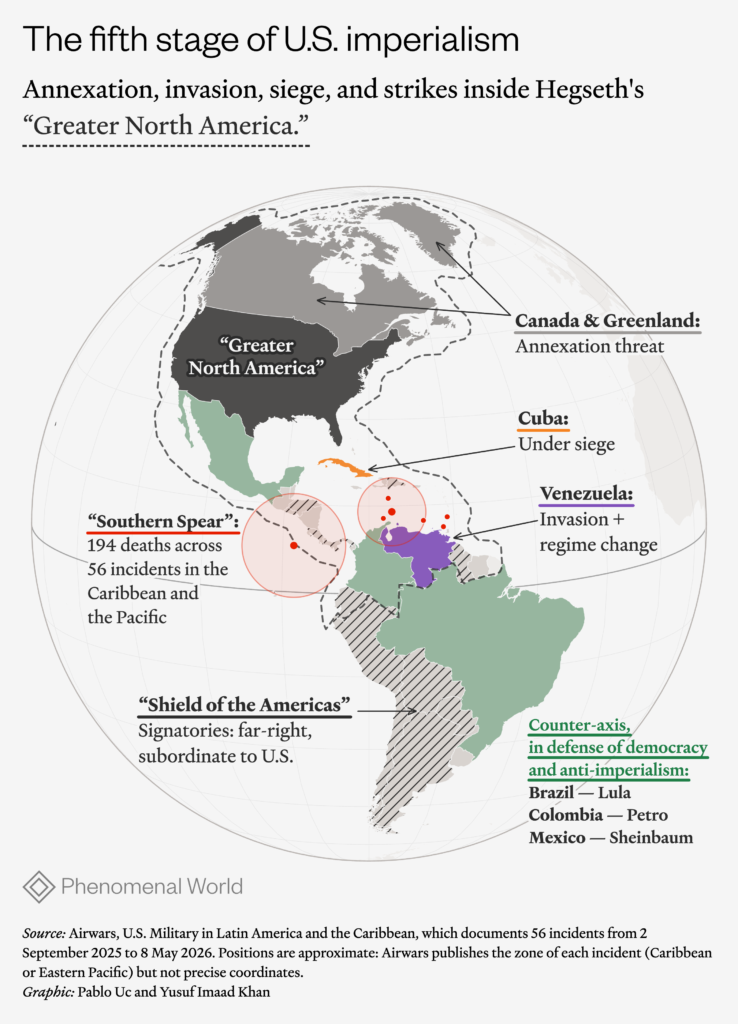
Mapping Greater North America
In this redefinition of the hemisphere as Greater North America, the Trump administration’s authoritarian nationalism has shifted toward the exercise of transactional diplomacy founded on threats and negotiation. These threats have come in the way of aggressive tax policies and debt incentives, meant to coerce military cooperation, influence electoral processes, and encourage security and anti-immigration policies. As a result, US intervention in Latin America is justified by the threat of narco-terrorism.
The new geopolitical map of Unilateral Supremacy reflects four avenues for the accumulation of US power. The first is technology and media, which have been utilized to naturalize a vision of territorial expansion that draws on the Monroe Doctrine’s legacy. Here, economic nationalism has merged with increased power held by technological and corporate oligopolies that control data, platforms, networks, and their algorithms. Major media infrastructures and their owners, often major Trump donors, drive an ideological apparatus that has upheld a discourse of an annexationist siege. Imperial geopolitical imaginaries, like the renewal of “Uncle Sam,” reflect the historical principles of expansion and intervention rooted in big stick policy and gunboat diplomacy.
The second is in the quest for control over natural resources. The Ministerial Meeting on Critical Minerals, convened in February 2026 by the US State Department, is one example. The meeting sought to redefine the terms for access to natural resources and increase control over the global market. With Panama as a strategic isthmus connecting Europe to the Pacific, the region presents a “relative potential for self-sufficiency” that could grant the hegemonic power a position of relative invulnerability. Latin America is home to nearly 20 percent of the world’s oil reserves, 25 percent of strategic metals, and more than 30 percent of the world’s primary forests.10 It holds nearly 47 percent of the world’s lithium reserves, 36.6 percent of copper reserves, 34.5 percent of silver reserves, 23.8 percent of natural graphite, 20.6 percent of tin, 18.8 percent of iron, 16.7 percent of rare earths, and 15.7 percent of nickel. It produces more than fifty percent of the world’s silver, 37 percent of copper, 36 percent of molybdenum, 37 percent of lithium, 20 percent of tin and zinc, and 16 percent of iron. Moreover, Venezuela itself holds 17.5 percent of the world’s oil reserves. The “Lithium Triangle” formed by Argentina, Bolivia, and Chile boasts the highest concentration of the world’s lithium resources.
Since 2025, both Chile and Bolivia have joined a Washington-aligned axis, presenting a possible setback for China in the region.11Chile and Peru maintain a key position as global leaders in copper, while Brazil, Jamaica, and Guyana hold a significant place in bauxite (aluminum) production and reserves. Brazil, however, has retained a strategic role that could serve as a counterweight to the strategy of imperial domination. The country boasts key nickel, cobalt, rare earths, and graphite reserves, and the sovereignist stance of Lula da Silva, Brazil’s membership in the BRICS+ bloc, and China’s role as Brazil’s main trading partner could challenge US hemispheric aims.
The third dimension of US strategy is trade. Tariffs have been weaponized as part of a diplomatic-transactional strategy to compel countries to reorient their security policies, foster internal ideological shifts, and limit access to strategic areas in the hemisphere. These transactional strategies are part of a broader “America First” discourse and war on narcoterrorism. In practice, they target China’s trade presence, investments, and infrastructure projects in the region. The Panama Canal is a case in point. Last year, the Panamanian government yielded to US pressure to revoke the concession granted to a Hong Kong-based company that had been operating two ports on the Canal since 1997.
Trump’s tariff regime has taken a particular form in Latin America. The administration has pursued negotiations with each head of state, using tariffs as a lever of political pressure to secure concessions in trade agreements and intervene in internal political affairs. In July 2025, for example, the administration threatened to impose a fifty percent tariff on imports from Brazil in order to pressure the government to drop legal proceedings against Jair Bolsonaro for his role in the attempted coup between 2022 and 2023. On the trade side, a set of agreements between the US and Guatemala, Argentina, Ecuador, and El Salvador were announced in November 2025, granting specific access to the US market.12Always subject to periodic evaluations not contingent on prior trade agreements—such as CAFTA-DR or previously signed free trade agreements. Trump has used the International Emergency Economic Powers Act (IEEPA) to readjust trade priorities according to security and immigration concerns.13A provision, incidentally, that is highly vulnerable in light of the recent (<)a href='https://www.dw.com/es/supremo-de-eeuu-declara-ilegales-los-aranceles-impuestos-por-trump/a-76065075'(>)US Supreme Court ruling(<)/a(>), which determined that the president exceeded his authority by imposing a series of tariffs that disrupted global trade.
Trump’s personal support has also manifested in the new conditional framework for borrowing through the International Monetary Fund (IMF). In Argentina, Trump openly supported Javier Milei’s party in the 2025 midterm elections under the threat of scrapping a $20 billion economic aid package through the IMF. The US also pressured the IMF to grant loans to Ecuador ($6.5 billion) and El Salvador ($2 billion), solidifying ties with strategic allies subordinate to this new scheme of hemispheric indebtedness and the neoliberal oligarchic model. Similarly, Trump expressed his support for the conservative candidate Nasry Asfura of the National Party in the 2025 Honduran elections and pressured the electoral authority to reverse the results that were unfavorable to “his candidate,” threatening to withdraw all support from the Central American country. Meanwhile, amidst the US’s extrajudicial bombings in the Caribbean, Trump pardoned Juan Orlando Hernández, the former Honduran president serving a forty-year sentence for drug trafficking and money laundering on US soil.14In April 2026, the (<)a href='https://www.diario-red.com/articulo/america-latina/exclusiva-audios-revelan-que-israel-pago-liberacion-juan-orlando-hernandez-que-trump-ayudando-regresar-presidencia-honduras/20260429021833068541.html' type='link' id='https://www.diario-red.com/articulo/america-latina/exclusiva-audios-revelan-que-israel-pago-liberacion-juan-orlando-hernandez-que-trump-ayudando-regresar-presidencia-honduras/20260429021833068541.html'(>)RED newspaper(<)/a(>) and Hodurasgate leaked information revealing a corruption and political interference operation in Honduras, with the direct involvement of Donald Trump and Benjamin Netanyahu. According to this source, the United States and Israel, through the “pardoned” former Honduran president, intend to build a new military base, force Honduras to draft a law tailored to their needs to incentivize investment in Artificial Intelligence, and gain control of the Employment and Economic Development Zones.
Finally, the fourth avenue for US power is through military alliances with subordinated but favorable governments. The focus on migration and security reflects the alarming fascist shift in the US domestic paradigm of immigration enforcement carried out through Customs and Border Protection (CBP) and Immigration and Customs Enforcement (ICE).15According to (<)a href='https://www.aclutx.org/cbp-fatal-encounters-tracker/'(>)ACLU Texas(<)/a(>), as of March 2026, a total of 367 deaths have been recorded, of which 78 were minors, 51 were US citizens or legal permanent residents; 62 were deaths in custody; 16 were caused by off-duty officers; 23 were related to the border wall; 119 resulted from vehicle chases by the Border Patrol; and 6 were due to cross-border shootings. Greater security cooperation and an increased presence of US armed forces was a core topic of discussion in the aforementioned Conference of the Americas Against Cartels and the Shield of the Americas.
These alliances draw from a long history of US imperialism and military intervention in the hemisphere. Under tariff pressure, Mexico has agreed to cooperate with the US regarding military actions against drug cartels. Although the Mexican government has sought to preserve territorial sovereignty and control over national security, it has gradually yielded to US pressure. In February 2025, Claudia Sheinbaum’s government immediately complied with the US government’s request to strengthen northern border security by deploying 10,000 National Guard and Army personnel, in addition to the 32,000 National Guard members already assigned to immigration tasks. Meanwhile, between 2025 and 2026, Mexico transferred more than ninety drug-trafficking leaders to the United States without an extradition process.
By overlaying maps of military-political deployment, US commercial expansion, and access to natural resources, we can see the dimensions of US power. Under this hemispheric framework, each territory becomes a battleground for control.
Anti-imperialist creativity
In addition to reviving old mechanisms of domination, the fifth stage of imperialism also strains the frameworks through which Latin America has historically conceived of its emancipation. Political and intellectual creativity cannot be limited to denouncing interventionism. Rather, it demands a strategic re-reading of the long Latin Americanist tradition, which, far from being a nostalgic repertoire, constitutes a living field of theoretical and practical production.
Today’s anti-imperialism must be updated in the face of new forms of power: coercive financialization, expanded extractivism, security-driven militarization, and the societal capture of digital platforms. The anti-imperialist tradition stretching from Bolívar and Martí, through to the most recent experiences of Latin American cooperation, suggests that unity is not a given, but a conflict-ridden construction. It demands organized political will, social cohesion, and an innovative institutional imagination that upholds multilateralism.
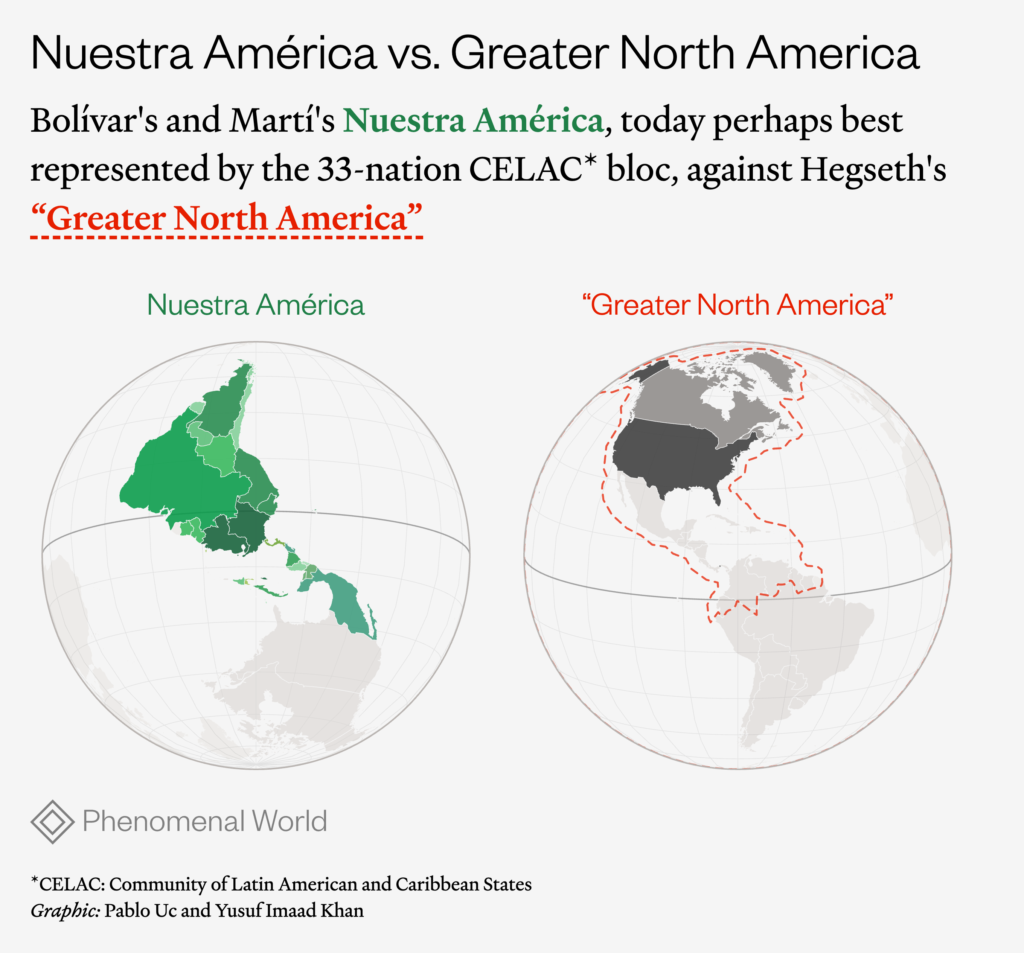
US-dominated Pan-Americanism today is clearly unable to offer a legitimate framework for hemispheric cooperation. What was historically presented as an integration model has become a mechanism of selective subordination, now radicalized under the Donroe Doctrine. This raises fundamental questions: How can we construct an anti-imperialist horizon when confronting a new form of imperialism—one not only manifested through territorial occupation, but also through financial networks, digital platforms, and global supply chains? What does “Nuestra América” mean today?
An anti-imperialist Latin American vision cannot be reduced to an identity-based abstraction. It must be translated into concrete projects of integration, social justice, and sovereignty (CELAC being one example). It must also be communicated clearly by national governments. Nicolás Maduro, Gustavo Petro, Claudia Sheinbaum, and Luiz Inácio Lula da Silva have each denounced, to varying degrees, the return of the United States’s hemispheric interventionist logic. These positions help maintain a government critique of imperialism alive and assert a vision of the hemisphere that belongs to all of us.
Unity, also, can no longer be limited to alliances between states. It must represent a movement between peoples and popular struggles, including those led by indigenous and Afro-descendent groups. The Caracas Manifesto of 2025, transnational movements like the Nuestra América solidarity convoy against the energy blockade of Cuba in 2026, and mobilizations against military interventions are expressions of anti-imperialist creativity in civil society.
These practices not only dispute the imperial imagination but also connect local struggles with global horizons of anti-imperialist and anti-fascist popular resistance. The central challenge of this renewed anti-imperialist creativity is to articulate a project capable of confronting imperialism in transformation. In this tension between memory and reinvention, between fragmentation and unity, lies the possibility of a new historical cycle for “Nuestra América”.
Further Reading
Oil Wars
An interview with Venezuela's former Minister of Energy
Analyzing Venezuela's energy resources as a site of political struggle, from the nationalizations under Chávez to the ouster of Maduro.

The Bolivarian Hypothesis
An interview with Roy Daza
Venezuela's ruling party is seeking to implement its "Seven Transformations" program amid intense pressure from the United States and an unfavorable regional balance of power.
Matrices of Empire
Explaining the assault on Venezuela
Washington's campaign to weaken Chinese influence in Latin America is crucial context for its abduction of Maduro. Will its aggression backfire?