January 29, 2026
Analysis
Southern Questions
The long history of anti-imperial resistance in Lebanon
On November 27, 2024, a little more than a year after it declared a “unity of fronts” against the Israeli war on Gaza, Hezbollah signed a ceasefire deal with its regional rival. By that time Hezbollah had lost its secretary general Hassan Nasrallah and his successor Hashem Safieddine, along with most of its military top brass and around 2,000 regular fighters. The peace agreement was heavily slanted in Israel’s favor, thanks to a slew of secret clauses negotiated by Tel Aviv and Washington. It demanded that Hezbollah cease attacks and retreat to north of the Litani River. In return, Israel was supposed to withdraw from strategic positions inside Lebanon—but so far it has failed to honor this commitment. Nor has there been any letup in Israeli air strikes, which have been carried out almost daily over the past fourteen months, while targeted assassinations of Hezbollah leaders have also continued apace.
Washington’s ultimate ambitions for Lebanon extend beyond subduing Hezbollah. Its aim is to impose a broader settlement that would pacify the restive populations—in Beirut, the East and the South of the country—that Hezbollah represents. Its partner in this endeavour is the Lebanese state. Eager to meet the brief, Beirut has set a year-end deadline to bring the region under its control, dispatching security forces to dismantle militant infrastructure and quell potential unrest. If it succeeds, it has been promised recompense in the form of a Gulf-funded reconstruction program and a fresh funding package for the Lebanese Army. With the new Syrian regime aligned with the US, and Iran significantly weakened, Washington now finds itself in an even stronger position than when the November deal was signed. Its next steps could be to push Lebanon to normalize relations with Israel, to force Hezbollah’s complete disarmament, and to launch a major attack on the group’s backers in Tehran.
Yet guaranteeing the complete pacification of Lebanon is more difficult than it might appear. This is due to the distinctive political character of the country’s South: historically a site of underdevelopment, rural immiseration, and state neglect, at odds with both the central government on one side and the Israeli occupiers on the other. Its population has a long history of resistance that will not be easily forgotten, and may yet thwart the designs of its would-be rulers. This dynamic is vital for understanding not only the future prospects for Lebanon, but also the viability of US imperial ambitions in the Middle East, as Washington tries to deal a final blow to Iran-aligned forces and normalize relations between Israel and the Gulf. To measure the full significance of Southern Lebanon—domestic and international—we must describe how it developed as an incubator for anti-imperial politics, from the independence struggle of the twentieth century to the armed campaigns of the twenty-first.
National periphery, imperial faultline
The present situation in South Lebanon has its roots in the peculiarities of its modern formation. Its Jabal Amel region, historically connected to the collection of highlands that form the Galilee, was known for the distinctive culture of its people, one of the oldest Twelver Shi’i communities in the Muslim world. At the turn of the twentieth century, it was primarily populated by smallholding peasants and landless sharecroppers who grew wheat, tobacco, and silk for the consumption of Beirut, Damascus and, increasingly, the world market. Ruling over the peasantry was a class of landowning rural notables and merchant families centred around the port cities of Sidon and Tyre. Broad cross-class opposition to Ottoman rule crystallized with the outbreak of war in 1914, with the region actively participating in the Arab Revolt of 1916. Yet competing visions for the post-Ottoman order bred both resistance and accommodation to French rule, imposed through the Mandate in the war’s immediate aftermath.
In practical terms, nationalism in Jabal Amel meant union with Syria. There was never a real consensus over the exact nature and limits of the Arab nation, but by late 1918 the commander of the Arab revolt, Faisal (son of Hussein, Sharif of Mecca), had entered Damascus and consolidated his leadership over a promised Arab kingdom, stretching from the Mediterranean to the Euphrates. Faisal’s administration quickly sent missives to Jabal Amel, only fifty miles from Damascus, who appointed members of the traditional leadership as representatives of the new Arab government. The French had other ideas, however, wanting to see a Grand Liban that would tie Beirut to neighboring rural peripheries, turning them into zones of provision while diminishing the statelet’s dependence on agricultural imports from the Syrian interior.
The French ultimately prevailed, winning a decisive victory over Faisal’s forces at Maysalun in July 1920. But colonial rule was precarious, and particularly short-lived in Syria. As the French Mandate managed to secure Lebanese separation from Damascus, Jabal Amel became South Lebanon. This process could not have taken place without the mediation of the region’s leading families, who in the 1930s succeeded in pacifying popular aspirations by leveraging personal patronage and negotiating investment from Beirut, all the while maintaining their hold on the region’s social order.1The established authority and leadership of the Asa’ads, for instance, a family which had historically collected the region’s taxes for the Ottomans, survived well into the 1970s. This class of notables is often termed feudal, but their background was in fact heterogenous, some working as sub-contracted fiscal officers for the Ottoman state (posts that had, in the 17th and 18th centuries, become effectively hereditary), others merchant capitalists from the ports of Sidon and Tyre. The confusion is in large part due to attempts to understand elites in the South in terms of hereditary authority and bondage pertaining more strictly to adjacent social formations, especially Mount Lebanon. On a broader, regional scale, Samir Amin rejects feudalism as a general characterisation of late Ottoman class relations. Amin identifies instead a (<)em(>)bourgeoisie compradore (<)/em(>)and a (<)em(>)bourgeoisie agraire latifundiaire(<)/em(>), which align broadly with the two groups in question in the South. See Samir Amin, (<)em(>)La nation arabe: Nationalisme et lutte de classes, (<)/em(>)Dakar 1975, p. 8-9. By the end of the decade, however, French rule had become untenable even for such forces that had once defended it as a guarantor of their interests. Beirut and the political class of Mount Lebanon had outgrown the wide-ranging system of public ownership and concessionary monopolies on which the colonial economy was based. Their revolt against the colonists led to the emergence of an independent Lebanon in 1943. No alterations were made to the limits of the Mandate state; the annexation of Jabal Amel by Beirut was formalized.
Since at least the start of the century, the South and its port cities had been part of the territories Zionism claimed as the Jewish national home. Israel’s frontiers, set by the Jewish Organisation at the Paris Peace Conference of 1919, included land as far north as Sidon and the southern Syrian region of the Houran. Chaim Weizmann had visited Sidon’s Jewish community in 1907, returning with a plan to develop the city’s industry ahead of its inclusion in a future Jewish state.2 Y. Mizrahi-Arnaud, “The Israelite Community Council of Sidon, 1914-1948” (<)em(>)Israel/Palestine Review(<)/em(>), 1/2, p. 463. But Britain and France were to be the ultimate arbiters of Palestine’s northern border. French pressure ultimately resulted in the lines being drawn just north of the preliminary agreement reached by Sykes and Picot in 1916; six Shi’ite villages located on the western ridge of the Hula Valley—Abil al-Qamh, Hunin, Qadas, Nabi Yusha’, Malikiyya and Salha—initially included in Grand Liban, came under British administration in March 1923. These, along with Tarbikha to the west and numerous other Palestinian villages in the Galilee, were all depopulated as part of Operation Hiram, one of the most brutal campaigns of ethnic cleansing carried out by the IDF in the war of 1948–9. Some 120,000 Palestinians, mostly from Haifa, ‘Akka, and the Galilee, were displaced north into Lebanon during the Nakba. The most fortunate—a very small proportion—were able to resettle their lives and businesses in Beirut, which proved a welcoming refuge for fleeing Palestinian capital. Around 60,000 refugees were settled in camps on the outskirts of the South’s main cities: ‘Ain el-Hilweh, Lebanon’s largest, east of Sidon; Burj al-Shemali, outside of Tyre, and inland around Nabatieh (destroyed in 1974 by Israeli airstrikes). To these were added the two former Armenian refugee camps established in the late 1930s by the French in Tyre, al-Bass in the 1950s and Rashidieh in 1963.
The establishment of Israel in 1948 permanently blocked the South’s urban industries from accessing the Palestinian markets on which they relied.3Bint Jbeil, for instance, specialized in the production of shoes primarily marketed in the Galilee. Ahmad Beydoun, “The South Lebanon Border Zone: A Local Perspective” (<)em(>)Journal of Palestine Studies(<)/em(>), 21/3 (1992) p. 50. Jabal Amel produced refugees of its own; the Nakba initiated a wave of migration to the north towards the coastal plain that was rapidly transforming into Beirut’s southern suburbs. The South’s peripheralization had been underway for some decades, but 1948 marked the onset of a crisis structured by the combination of both Lebanese and Israeli states, which progressive political forces in the South came to see as separate yet interrelated vehicles for imperial governance.
Baghdad-Bandung
A distinct vision for Lebanon’s place in the world economy coalesced in the 1950s. It was shared by the Lebanese bourgeoisie, elites in neighboring Arab states, and the region’s new imperial hegemon, the United States. Camille Chamoun, a lawyer and deputy for Mount Lebanon who had served as Minister of Finance during the Mandate period, dominated the presidency for most of the decade. The late 1940s saw the abrogation of the customs and monetary union with Syria; Lebanon’s banking sector—already robust—grew vertiginously thanks to the wave of nationalizations underway across the Arab world in the early 1950s. Between 1949 and 1954 the value of deposits in Lebanese banks doubled. The distribution of this accrued wealth was, of course, highly uneven. Half of Lebanon’s labor force remained engaged in agriculture, whilst a commercial sector which accounted for around a third of national income employed just over 10 percent of the population.4 Fawwaz Traboulsi, “Social Classes and Political Power in Lebanon”, (<)em(>)Heinrich Böll Stiftung (<)/em(>)(Beirut, 2014) p. 80.
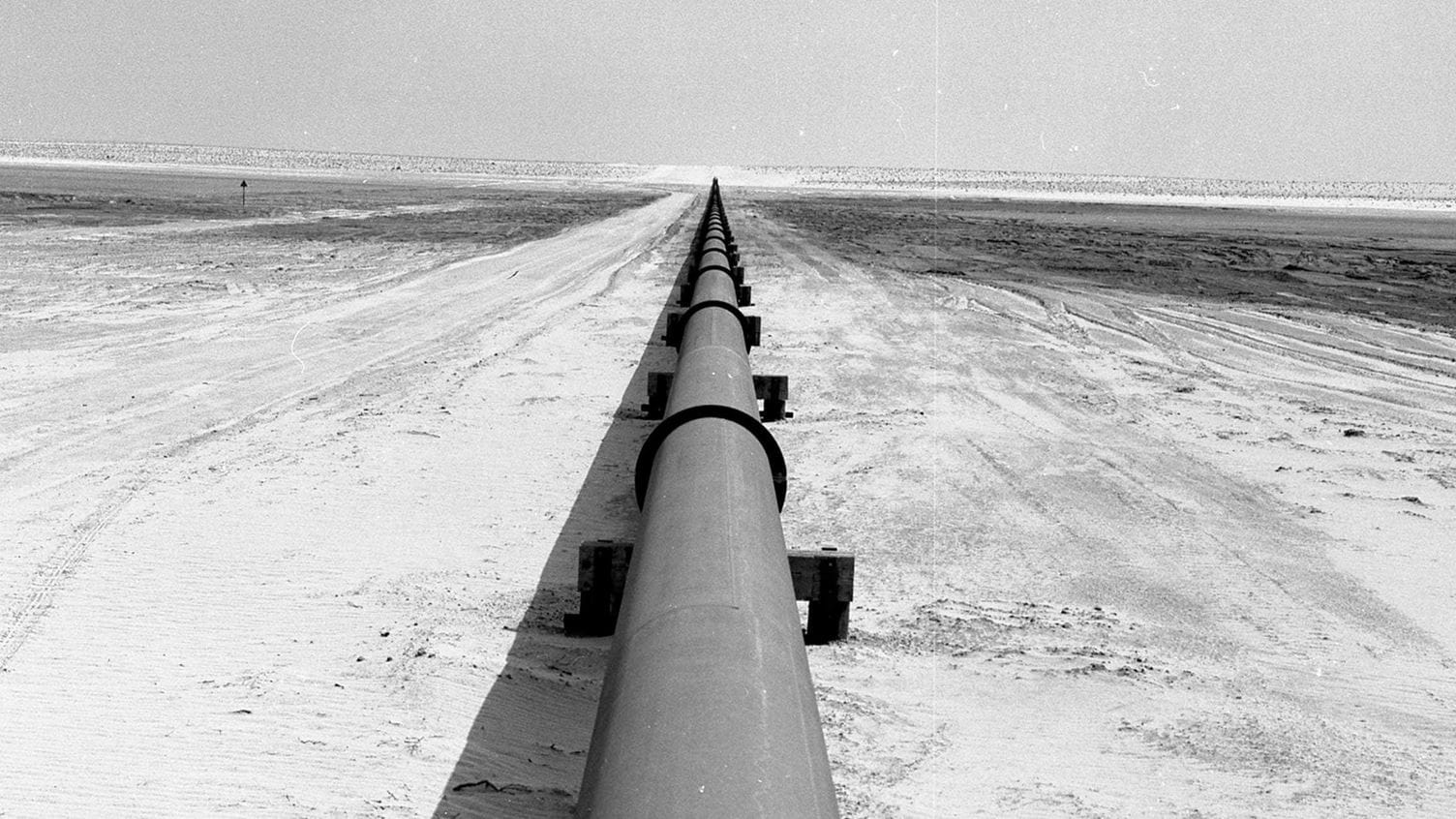
Keen to assert its dominance after the British and French withdrawal from the region, the United States moved quickly to bring Lebanon into its orbit. It was particularly interested in the South. In 1947, the construction of a pipeline began in Eastern Arabia, designed to carry Saudi oil west, via northern Jordan and the Golan Heights to the Lebanese coast. The Trans-Arabian Pipeline, or Tapline, met the sea at the Zahrani terminal south of Sidon, where it deposited up to 300,000 barrels of crude oil per day. At their height, Tapline and another terminal in Lebanon’s north supplied postwar Western Europe with over a third of its oil.5Tapline’s success was, in fact, an objective of the first ever coup in the CIA’s illustrious curriculum: the Syrian government under nationalist Shukri al-Quwwatli proved reluctant to grant the company transit rights for their project. Husni al-Za’im, the colonel that succeeded him, signed off on the company’s use of Syrian territory within days of taking power. Miles Copeland Jr., the Agency’s Damascus station chief who met with Za’im numerous times before the putsch would go on to be one of the principal architects of the Iranian coup of 1953. Revenues from transit fees, in turn, bolstered Lebanon’s burgeoning financial sector, helping to stabilize the currency and finance the state’s lenient tax regime.
Ties of dependence were also strengthened by identifying Lebanon as a privileged recipient of US development lending.6This was the case with the ultimately aborted Litani River hydroelectric dam, designed to service the capital’s demand for electricity at the expense of the local communities that lost access to their water supply for irrigation. See Owain Lawson, “Organised Abandonment in Lebanon’s Litani River Basin” in (<)em(>)Environment and Planning E: Nature and Space(<)/em(>), (2024) pp. 1-19. At the regional scale, Cold War alliances solidified in the second half of the 1950s. American attempts to recruit Gamal Abdel Nasser to the anti-Soviet cause ultimately failed, which put the Lebanese state—officially neutral, though increasingly entangled with the US—at odds with Arab nationalism, still favoured in the South. In February 1955, two months before the Bandung Conference, a defence agreement was signed in Baghdad by Pakistan, Iran, Iraq, Turkey, and the United Kingdom, in an effort to counter Soviet influence. Silent during the Tripartite Aggression of 1956, Chamoun ultimately welcomed the announcement early the following year of the Eisenhower Doctrine, which pledged American assistance to any Middle Eastern state under perceived threat by Soviet-aligned forces. The mood in South Lebanon was sufficiently wary of the central government that when, in February 1958, Nasser announced the formation of the United Arab Republic (Egypt’s political union with Syria), students and workers filled the streets in support of the move and in protest over Lebanon’s alignment, all but explicit, with the imperialist camp. The ensuing repression from the police, the army, and armed personal retinues of local notables allied to Chamoun led various groups comprising the nationalist movement in Tyre to take up arms. The city, like much of the South, soon came under the effective control of a coalition of Nasserist, Ba’athist and communist forces. By May of that year, Arab nationalists controlled two thirds of the country.
Simultaneous regional developments provided the final impetus for American intervention. On July 14, 1958, Free Officers led by Abdel Karim Qasim successfully overthrew the Hashemite monarchy in Iraq, a much despised instrument of colonial dependency and a pillar of postwar American imperialism. The next day, fearing the additional fall of Lebanon, the Eisenhower administration ordered the beginning of Operation Blue Bat. That afternoon, 1,800 Marines landed at Khalde, just south of Beirut—the first ever deployment of US armed forces in the Middle East. They faced little resistance. Their presence on the ground, supported by the Navy’s Sixth Fleet, encouraged Nasser and his Lebanese allies, Kamal Jumblatt and Rashid Karami, to enter into negotiations over a viable successor to Chamoun, by now considered a liability even by his allies. The experience the Americans gained in Lebanon, combined with their successful efforts in preventing the Iraqi coup from spreading to Jordan, would form the basis of a lasting shift in policy. Iraq was lost; Lebanon and Jordan so weak, from the American perspective, as to require active assistance to survive. Keeping them afloat had all but narrowly avoided a frontal collision with Nasser. The US had failed in its efforts to pacify and co-opt Arab nationalism through protection and funding. What it needed more than ever was a regional deputy that could wage counterrevolution on its behalf.
The crisis of 1958 is often remembered as a prelude to Lebanon’s later civil war; the origin, according to some, of rampant political violence between a Christian constituency wedded to an independent Lebanon, and a Muslim faction favouring Arab unionism. In certain parts of the country, the struggle did indeed take the form of intercommunal conflict, while in others it focused on the specific pacts regional elites had made with Beirut decades prior. But a far more meaningful faultline was the one between a sectarian bourgeoisie, at the helm of the state and client of American empire, and forces aligned with Nasser’s project to transform the regional order. In the southern city of Tyre, the fundamental struggle for nationalists was not against Christians, but against long-established Shi’i notables—the Khalil family, most prominently—which the Lebanese state relied on to govern the South. These families would survive the upheaval of the late 1950s, but by the end of the next decade their legitimacy and authority had finally faltered.
Southern anti-imperialisms
Founder and commander since independence of the Lebanese Armed Forces, Fouad Chehab emerged as Chamoun’s successor in 1958. His candidacy was the expression of a stalemate between the US and Egypt in the wake of the crisis; the US may have imposed its will through force, but Arab nationalism was far from a defeated cause in Lebanon. Neither an Arab nor a Christian nationalist, Chehab’s antidote to “factionalism” was to strengthen the state, both in terms of repression and provision; enlarging the army and secret services, as well as establishing new ministries with expanded portfolios.7 Important research on this period of state-led development has emerged in recent years. For a timely history of Lebanon’s central bank, founded in 1964, see Hisham Safieddine’s (<)em(>)Banking on the State: The Financial Foundations of Lebanon(<)/em(>) (Stanford, 2021). For an account of the Lebanese Ministry of Planning’s extensive activities in the 1960s, see Zeead Yaghi, (<)em(>)Planning National Disunity: Modernization and Development in Rural Lebanon, 1958-1970 (<)/em(>)(PhD thesis, UC San Diego, 2024). (<)br(>) In 1964 he was succeeded by an ally, Charles Helou, who remained in office until 1970. In the South, despite the moderate gains in political representation won by the anti-imperialist coalition in the aftermath of the crisis, rural immiseration and neglect persisted and a lasting regional policy failed to materialise.8 Salim Nasr, “Backdrop to Civil War: The Crisis of Lebanese Capitalism”, (<)em(>)MERIP Reports(<)/em(>), 73 (1978) pp. 3-13. This only deepened an already generalised mistrust of the state, felt now in the equal measure by the Christian right, excluded from government after Chamoun’s defeat. Chehabism sought to provide stability through technocracy, but in practice presided over a “cold civil peace” over the course of the 1960s, the most salient feature of which was the right’s militarisation outside of the state which it had previously dominated.9To borrow a turn of phrase from Waddah Charara, in his (<)em(>)al-Silm al-ahli al-barid: Lubnan al-mujtama’a wa-l-dawla 1964–1967(<)/em(>) (Beirut, 1980). In this growing Christian revanchism lie the roots of the subsequent civil war, which would come to a head by the mid-1970s.
It is estimated that Palestinians in South Lebanon accounted for up to a quarter of that region’s total population by the mid-1960s. Naturalisation (and with it access to most forms of regular employment) had always been considered a red line by Christian nationalists, ever watchful of their precarious demographic dominance around the country. Since their arrival, Palestinians had played a fundamental role in Arab nationalist agitation in Lebanon. Maarouf Saad, the long-standing Nasserist MP for Sidon who served as a volunteer in the 1936 revolt in Palestine, drew support from a social base composed of Lebanese workers and Palestinians from the nearby camp of Ain el-Hilweh. Of particular success in Tyre was the Arab Nationalist Movement (ANM), established in 1951 by a group of students at the American University of Beirut, including George Habash and Wadie Haddad, who would, a decade and a half later, lead the Popular Front for the Liberation of Palestine. (A young Ghassan Kanafani, recruited by Habash in the early 1950s, served on the editorial board of the ANM’s newspaper.) The politics of Palestinian return was, for the best part of the 1950s and 60s, still largely integrated into a broader program of Arab unity, liberation and socialism, whether Nasserist or Baathist.10ANM members could be found on all fronts of the nationalist struggle in the Arab world in the first decades of the postcolonial period, with active cells in Syria, Iraq, Jordan, Gaza (under Egyptian administration), Dhofar and South Yemen. For a useful introduction to the ANM, see Sayigh, “Reconstructing the Paradox: The Arab Nationalist Movement, Armed Struggle, and Palestine, 1951-1966” in (<)em(>)Middle East Journal(<)/em(>), 45, 4 (1991) pp. 608-629.
But despite widespread support for the nationalist cause, cracks in its regional coalition had begun to appear as early as 1961. The United Arab Republic had broken up. Egypt, Syria, and Iraq were pursuing increasingly divergent paths. The 1966 Syrian-Iraqi split within the Ba’ath, for instance, engendered a mutual suspicion and outright hostility between the two regimes that would never be resolved.11Anouar Abdel Malek’s early and influential assessment of the Arab nationalist experiment, which focuses on the social and class composition (petty bourgeois, military and bureaucratic) of the Egyptian regime, still holds significant explanatory power when probing Arabism’s failures, a line of argument extended and expanded onto the Syrian and Iraqi contexts by Hanna Batatu. See Anouar Abdel Malek, (<)em(>)Égypte, société militaire(<)/em(>) (Paris, 1964), and Hanna Batatu,(<)em(>)The Egyptian, Syrian and Iraqi Revolutions: Some Observations on their Underlying Causes and Social Character (<)/em(>)(Washington, 1983) and the individual monographs, (<)em(>)The Old Social Classes and the Revolutionary Movements of Iraq (<)/em(>)(London, 1978) and (<)em(>)Syria’s Peasantry, the Descendants of Its Lesser Rural Notables, and Their Politics (<)/em(>)(Princeton, 1999). Israel’s victory in the Six Day War of 1967 was as much a result as it was a cause of Arab nationalism’s disintegration. Three years prior, Nasser had helped establish the PLO, in many ways an acknowledgement of the changing nature of the movement for Arab national liberation, from state-led regional revolution to a much more localized guerrilla insurgency. The Lebanese Communist Party (LCP), with strong roots in the South, successfully presented itself as a conduit between Arab anti-imperialism, momentarily defeated, and worker, peasant and student struggles unfolding on the national plane. In this sense, the South not only represented the organic synthesis of the social and national struggles unfolding in Lebanon over the course of the 1960s, but also their most advanced front.
Labor and student militancy in the South persisted with intensity into the 1960s, apace with the rest of the country. Tyre continued to receive the sharp end of state repression; police and the army were routinely dispatched to pacify the student movement, which continued to agitate on a local and national level. Economic dependence on Beirut was further entrenched by rising rates of northward migration; by the end of the 1960s, half of Lebanon’s Shi’a population lived in Beirut, a city ill-fit to fully absorb it. Many of those who did remain in the Southern countryside continued to work in tobacco, the region’s dominant crop since the times of the French Mandate, regulated by a colonial era state-monopoly known as the Régie. After independence, the company had maintained its monopoly over licenses, for which a speculative market had emerged controlled by intermediary landowners. This was the object of successive struggles, mostly in and around Nabatieh, with farmers eventually unionising in the early 1970s. Informed by these struggles, successive Communist Party congresses in 1968 and 1974drew up a comprehensive program of agrarian reform aimed at the country’s rural peripheries (including, fundamentally, land reallocation, increased public control of the tobacco monopoly, and a minimum wage for agricultural workers). It also re-committed itself to resisting Zionism, a policy it had struggled to espouse publicly until the Six Day War due to the Soviet position towards Israel in the 1950s and early 60s.12Translated passages from the two programs can be found in Tarek Y. Tareq & Jacqueline S. Ismael, (<)em(>)The Communist Movement in Syria and Lebanon (<)/em(>)(Gainesville, 1998) pp. 81-136. The LCP’s military wing, the Haras ash-Sha’abi (Popular Guard), formed as a means to defend South Lebanon from increasing Israeli incursions. It worked side by side with Palestinian factions which, by late November 1969, were given exclusive control of the country’s refugee camps. A new, militant generation came of age: scores of young Southerners, if not already organized into cadres by local nationalist or leftist parties, joined the ranks of the feda’iyeen, where little distinction was made between Lebanese and Palestinian.13The memoirs of Soha Bechara, one of Lebanon’s most prominent political prisoners from the Southern border village of Deir Mimas are instructive in this respect, outlining the role of youth organisations—in this case the LCP-affiliated Union of Democratic Youth—in organising cadres that would go on to fight the Israeli occupation of South Lebanon in the 1980s. See: (<)em(>)Resistance: My Life for Lebanon (<)/em(>)(New York, 2003). Throughout the 1970s, the struggle against Zionist colonialism and the Lebanese state were effectively one, where both were understood as discrete manifestations of the same overarching imperial order.
Sectarian synthesis
Concurrent to these transformations, a very different political force was gathering in South Lebanon. Musa al-Sadr first arrived in Lebanon in 1959 upon an invitation to succeed his relative, Abdel Hussein Sharaf ad-Din, as imam of Tyre. Raised between Iran and Iraq in a family of prominent clerics, al-Sadr was trained at the major two Shi’i theological seminaries of Qom and Najaf, which, in response to the threat of secular anti-colonialism had begun developing responses to imperial domination from within Shi’i traditions of political theory and statecraft. Its two major currents tended to diverge on questions of sovereignty: Khomeinism, prevalent in Iran, crystallised around the ultimate authority of the jurist over the state and society; another strand of thought, derived from Muhammad Baqir al-Sadr in Iraq, was more committed to popular sovereignty. Musa al-Sadr’s activism, pursued from his position as the region’s leading cleric, would never explicitly espouse either. His great success lay in the more pragmatic task of exploiting the historic marginalisation of Lebanese Shi’is by using the already available sectarian scaffolding of Lebanon’s constitutional arrangement.
What was al-Sadr’s proposed solution to his community’s predicament? Despite the state’s more proactive development strategy over the course of the 1960s, rural poverty and deprivation persisted in Jabal Amel. The brilliance of al-Sadr’s program was to harness the Shi’i’s historical marginalisation, which had, until then, tended to manifest itself politically through channels which explicitly questioned the legitimacy of the Lebanese state (from Arab unionism to communism), and reoriented it to a political horizon which fundamentally respected—even strengthened—its sectarian character. Neither the constitution of 1926 nor the National Pact of 1943 had fully distinguished the Shi’is from the larger Muslim constituency in Lebanon. The Shi’is were formally indistinguishable from the more dominant Sunni community; what this meant practically was systemic Shi’i underrepresentation in the sectarian state, from public employment and government office quotas to regional investment. Immiseration in the South, according to al-Sadr, was less a structural outcome of Lebanese capitalism (per the analysis of the communists), than a malfunctioning of the sectarian system. The task was to strengthen patronage and redistribute more from the capital to the periphery. For al-Sadr, Israeli incursions against the PLO were primarily objectionable as violations of Lebanese sovereignty. The significance of this shift can hardly be overstated. Though he was opposed to Zionism, the basis for that opposition had become its threat to Lebanese sovereignty, a tacit naturalisation of what had hitherto been an object of Arab nationalist opposition The Americans, closely monitoring the cleric’s rise to prominence, were reportedly thrilled.14One of the most prominent scholars on the Amal movement and the more recent political history of South Lebanon was the late Dick Norton, a long-standing member of the political science faculty at West Point. On al-Sadr’s anti-communism see Augustus Richard Norton, (<)em(>)Amal and the Shi’a: Struggle for the Soul of Lebanon(<)/em(>) (Austin, 1988) pp. 42–46.
In 1967 Shi’ism was officially recognized as a distinct sect under Lebanese law. Two years later, al-Sadr sat at the head of the newly-created Supreme Islamic Shi’i Council. Southern notables and the Shi’i émigré bourgeoisie, whose capital was primarily concentrated in West Africa, were initially suspicious of the upstart cleric but soon came to accept his leadership; the landed classes less readily than the expatriate community, who through al-Sadr now had access to a domestic political scene which had previously been largely impervious to them. Nabih Berri, al-Sadr’s skilful lay successor, belonged to this class of newly-empowered entrepreneurs. Born in Sierra Leone to a successful diamond dealer, an emigrant from the Southern town of Tibnin, Berri’s entry into politics was through the national student movement, which he participated in whilst studying law at the Lebanese University. After unsuccessful attempts to join Kamel Asa’d’s electoral list, Berri spent time working in the United States, and joined Amal upon his return to Lebanon as the party’s spokesperson in 1975, soon after its founding.
By the early 1970s, the PLO and its allies within Lebanon had synthesized their visions for social transformation and anti-Zionism into a broad commitment to abolish the sectarian political order. The Lebanese National Movement (LNM) was established.15 On the revolutionary implications of the LNM’s program, see Nate George, “‘Our 1789’: The Transitional Program of the Lebanese National Movement and the Abolition of Sectarianism, 1975-77” in (<)em(>)Comparative Studies of South Asia, Africa and the Middle East(<)/em(>), 42, 2 (2022) 470-488. In truth, the LNM’s program of constitutional reform was an important departure from the Arab unionism of previous decades; by the 1970s any ambition for unity essentially amounted to an acceptance of suzerainty, especially with regards to the Assad regime, so much so that Syrian intelligence would eventually assassinate the leader of the LNM, Kamal Jumblatt, in March 1977. It was immediately at odds with al-Sadr, whose growing political movement was premised on an acceptance, not only of the Lebanese state’s integrity, but also of its sectarian character. In early 1974, al-Sadr announced the establishment of The Movement of the Deprived to a crowd of 75,000 in Ba’albek.16 Joe Stork suggests that Amal were never as rooted in the South as the LNM were, at least before 1982. See Joe Stork,(<)a href='https://merip.org/1985/06/the-war-of-the-camps-the-war-of-the-hostages/'(>)“The War of the Camps, the War of the Hostages”(<)/a(>) in (<)em(>)MERIP(<)/em(>), 133 (1985). By then the cleric had already began hosting a number of influential Iranian revolutionaries in Tyre, including Mostafa Chamran, future Minister of Defence of post-revolutionary Iran and associate of Ali Shariati, who helped establish and train the Lebanese Resistance Regiments (‘Amal’, per the Arabic acronym). This armed militia would soon be synonymous with the movement itself. al-Sadr may have presented his movement as insurgent, but in reality it did more to advance the hegemony of the Lebanese state in the South than any prior attempt by a central government or local representative. It could claim, through a commitment to social reform and anti-Zionist struggle, to be committed to the plight of the South, but its historic and enduring role was to decouple the fight against Zionism from any broader anti-imperialist project that called into question the legitimacy of the Lebanese sectarian state.
Seizing the South
Historical memory locates the start of the Lebanese Civil War in April, 1975, when a massacre in East Beirut, perpetrated by the armed wing of the Christian right, killed twenty seven Palestinians traveling by bus between the city’s refugee camps. Another early flashpoint occurred in Sidon a month or so prior, between local fishermen and a company owned by the Chamouns, which was pushing for exclusive control of the city’s fishing trade. At a demonstration against the company’s plans in late February, Ma’arouf Saad, the city’s historic Nasserist leader and a veteran of the Palestinian revolt of 1936, was shot and killed by the Lebanese Army. Given the nature of the coalitions that formed the two opposing sides, the war played out unevenly in different regions of the country. Initially, fighting was concentrated around control of Beirut and its environs. In the South, the equilibrium that had emerged between the PLO and Israel in the late 1960s remained broadly unchanged in the war’s opening stages. Even the week-long Israeli invasion in March 1978 arguably changed little, with the PLO quickly recapturing territory below the Litani soon after their withdrawal. The effects of the 1982 invasion were to be far more lasting and transformative. Anti-Zionism in South Lebanon would switch hands thereafter from the Palestinian-led coalition to one dominated increasingly by militant Islamists. In parallel, Amal’s now leader, Nabih Berri, would exploit the resulting vacuum after the Israeli invasion to gradually extend his control over the South’s economy.
Hezbollah emerged out of an internal rift within Amal. After a three month-long siege of Beirut in the summer of 1982, the PLO stood defeated and was expelled from Lebanon. Berri had participated in a national salvation government alongside Bashir Gemayel, leader of the Christian Phalanges—a noted collaborator and Israel’s favoured candidate for the Presidency of the Republic.17 In August 1978, Musa al-Sadr travelled to Libya on Gaddafi’s invitation. He was never seen again. The circumstances around his disappearance remain mysterious to this day. He was almost certainly executed at the Colonel’s orders, but a convincing motive for his killing—beyond vague references to his rivalry with Khomeini—has yet to emerge. Elements from the Shi’i clerical establishment, of Khomeinist leanings and centred in the Syrian-controlled Bekaa (Subhi al-Tufayli, ‘Abbas al-Musawi, Hassan Nasrallah) coalesced into a rejectionist wing within Amal, and soon began to coordinate with scores of young militants, mostly sons of the South, now under direct occupation and bereft of the organisational infrastructure of the PLO or LNM. (Imad Mughniyeh and his cousin, Mustafa Badreddine, two famed Hezbollah commanders of later years, were both Fatah recruits in their youth.) Though it would adopt its name in later years, Hezbollah first announced itself to the Israelis with two attacks against the IDF headquarters in Tyre in 1982 and 1983. American assets were also early targets, including, on April 18, 1983, the US embassy, which suffered enormous damage. Soon followed a coordinated attack against barracks housing a Marine Corps battalion that killed over 300 people.
Amal, with the support of Syria, reaped the largest rewards from the Israeli invasion, though it now faced competition from Hezbollah, which was proving increasingly effective at repelling the Israeli occupation of the South. On the front with an emergent Hezbollah were the reconstituted (and depleted) secular forces of the LNM, led primarily by the LCP and other communist factions, severed from the residual groups of Palestinian militants now limited to the urban camps. The effectiveness of these forces soon convinced the IDF of the cost of maintaining a presence in South Lebanon, which had been permanent since its invasion in the summer of 1982. In 1985, it finally withdrew to positions along the border, maintaining military rule through the South Lebanon Army, an outsourced counterinsurgency unit it had begun training in the mid-1970s, formed by men—many deserters from the Lebanese Army—from the South’s Christian villages.
If repelling the Israeli presence in the South served as a common goal, there was little else uniting the groups that strove for it. Arguably more significant than the operations against the Israelis carried out over the course of the 1980s were the clashes within the front itself—now composed of Amal, Hezbollah, and Palestinian and Lebanese left factions reconstituted after the siege of Beirut. At stake was control of the struggle against Israel, waged most aggressively by an alliance between the Syrian regime and Amal; a marriage of the former’s long-standing ambition to cleanse any front resisting Israel in Lebanon of potential threats to its own stability and the latter’s desire to expand its role as the leading sectarian party of the Lebanese Shi’a. The Palestinians in Lebanon were dealt with in a bloody three-year campaign, the infamous War of the Camps, from 1985 to 1988. Prominent figures of the secular left were also targeted.18 The assault on the LCP was particularly brutal. The most prominent figures killed between 1986-7 include the aforementioned Mahdi Amel (b. Hassan Hamdan, 1926-87), a renowned social theorist; Hussein Mroueh (1910-87), literary critic and editor of the LCP’s review, (<)em(>)al-Tariq(<)/em(>); Khalil N‘aous (1935-86) and Suheil Tawileh (1941-86), both writers, editors and members of the party’s Political Bureau. For the Syrian–Amal alliance, Hezbollah represented another liability. The fratricide between Amal and Hezbollah that raged for over two years should be understood both as an expression of Syrian priorities to curtail the fallout of an intensifying Iranian-US collision in a zone considered vital for its own security, and, simultaneously, an attempt by Berri to tame any insurrectionary force that may have challenged the future integrity of the Lebanese state, and the role he himself now occupied within it. Berri’s increasing dominance on the national plane was inseparable from the personal control he and his party were able to extend over the South during the latter half of the 1980s. In a sense, this was no different from other parts of the country; violent competition between militias for control of state assets and revenue streams largely dictated the war’s logic in its later stages, as well as laying the foundations of the emerging postwar order.19A useful summary of the war economy can be found in Fawwaz Traboulsi, (<)em(>)A History of Modern Lebanon (<)/em(>)(London, 2007) pp. 220-238. Berri’s stake in the state would be expanded and enshrined once elected as the first speaker of the Lebanese parliament after the war’s end, a position he has held, and wielded as an extremely powerful and lucrative national brokership, ever since. From the civil service to trade unions, real estate to banking, hardly a sphere of either politics or the economy exists where his influence is not felt. Musa al-Sadr’s counterrevolution was all but complete: the revolutionary anti-imperialism that had dominated the South in the 1950s and 60s had now been supplanted by a movement that could still claim to represent “the disinherited” and oppose Zionist expansionism, but in reality moved to only to leverage those sentiments to benefit as a partner of Lebanese nationalism and the broader imperial order.
(Neo-)liberation
By the end of the 1980s, the two broad blocs that had triggered the Lebanese Civil War were barely recognisable, transformed and reshaped by defeat, attrition and internal fighting. The right had fragmented, but the transformation on the left was more exacting and thorough. Hafez al-Assad, thanks to fears for his own regime in Syria, had for years sought to curtail the autonomy of the PLO and allied Lebanese leftist factions. With Amal and Hezbollah effectively replacing the secular left in the South, he stood as one of the war’s main beneficiaries.
Syrian-American rapprochement in the wake of the Gulf War seems to have been decisive in allowing Assad and his chief of security in Lebanon, Ghazi Kanaan, a free hand to shape a postwar settlement. The Ta’if Accords, signed in 1989, officially recognized Hezbollah as the sole force entitled to wage armed resistance against Israel in the South, and so it was shielded from the general disarmament stipulated by the peace. The group’s political program, in turn, was rendered far more accommodating to Lebanon’s constitutional arrangement, which, minor adjustments aside, survived the war unscathed. Islamic revolution remained a theoretical commitment, but receded markedly in the group’s political priorities. Over the course of the 1990s, resistance operations in the South against the Israelis increased not only in volume, but also in sophistication, and were accompanied by expanded communications capacities, radio and television broadcasts that projected the resistance’s advances directly to its constituency.20‘Aql Hashem was an SLA commander whose assassination in early 2000 was documented in detail by al-Manar, Hezbollah’s news channel and communications platform. In May, 2000, after years of sustained military pressure, the Israelis withdrew unilaterally. At a rally held in Bint Jbeil to celebrate the South’s liberation, Nasrallah cemented his position, domestically and internationally, as Israel’s most effective adversary since Nasser. His speech would haunt the Israeli imagination for the next quarter century: “This ‘Israel’ that possesses nuclear weapons and the strongest air power in the region,” he proclaimed, “by God, it is weaker than a spider’s web.”
After liberation the initial efforts at economic recovery undertaken by the political class that had emerged after Ta’if fed into a general sense of optimism, even jubilance. An altogether new subset of the Lebanese bourgeoisie had coalesced into a coherent political force during the 1990s: Rafiq Hariri, who would dominate Lebanese politics for a decade and a half, was perhaps the most successful of these contractors, many of whom had made their fortunes as émigrés in the Gulf. Their private empires in real estate, telecommunications and finance soon came to substitute the ailing state as the primary engine of postwar reconstruction. In practice, this heralded the absorption of much of Lebanese wealth (public and private) into their personal fiefdoms. Hariri’s own firm Solidere would oversee the rapacious development of downtown Beirut—once the commercial heart of the city and home to tens of thousands of residents—into a gilded luxury mall; only the most visible, and enduringly scandalous, measure of “accumulation at the urban scale” enabled by this new equilibrium of class and state power.21Hannes Baumann (2019) “The Causes, Nature, and Effect of the Current Crisis of Lebanese Capitalism” (<)em(>)Nationalism and Ethnic Politics(<)/em(>), 25:1, p. 65. For an account of the migrant labor on which much of this reconstruction depended (and on which Lebanon continues to rely), see John Chalcraft, “Labour in the Levant” (<)em(>)New Left Review(<)/em(>), 45, (May/June, 2007).
Having been one of its principal architects, Nabih Berri gained enormously from the new rentier logic that underpinned Lebanon’s postwar economy. Relations between Amal and Hezbollah were strong, despite their competitive struggle for control of the South. Soon, a division of labor emerged. Hezbollah, with its continued right to bear arms, had primary responsibility for conducting the insurgency against the Israeli occupation. Amal by contrast, enjoyed near-uncontested primacy over the levers of the South’s political economy. Berri was essential to this. In 1993, his close ally Nassif Saklaoui was appointed director of the Régie, and cancelled pre-existing licenses to cultivate tobacco held by the landowning class that had acted intermediary between company and cultivator in the preceding decades. Licenses were now issued directly to farmers that had remained in their villages throughout the war and occupation, helping to stall the depopulation of the countryside.22Munira Khayyat, (<)em(>)A Landscape of War: Ecologies of Resistance and Survival in South Lebanon(<)/em(>) (Oakland, 2022) pp. 99–100.
The Council of the South, which had been founded by Musa al-Sadr in the late 1960s and had remained under Amal control ever since, raised over $850 million for reconstruction and development projects around the region. The results of these policies were considerable. Concessions to cultivators did, in part, stave off intensifying emigration from the South, which posed an obvious threat to the continued viability of resistance. Sectarian redistribution also seems to have fostered a modicum of growth; between 1997 and 2004, the Southern district of Nabatiyeh witnessed the highest increase in per capita private consumption nationally (5.82 percent), though what this figure more reliably indicates is enrichment in and amongst Amal’s network of clients, an expression of Berri’s consolidation as the South’s dominant sectarian entrepreneur.23Nuance notwithstanding, the novelty this data indexes from a historical perspective should not be understated: ‘Akkar—not the South—has for the last decade and a half ranked as the poorest region in Lebanon in overall terms. See Nisreen Salti and Jad Chaaban, “The Role of Sectarianism in the Allocation of Public Expenditure in Postwar Lebanon” in (<)em(>)International Journal of Middle Eastern Studies(<)/em(>), 42, 4 (2010) pp. 637–655. During his ascent in the 1970s, Berri would often refer to his political program as a more just alternative to that of the notable families that had stunted the South’s development for decades. In practice, Berri merely replaced these families’ disparate interests and influence with his own, and elevated Shi’a representation to a far more central (and lucrative) position within Lebanon’s state apparatus. With respect to the class pact between Beirut and Southern families with the emergence of the Lebanese state, the South’s residents had gained little more than a more influential and affluent patron.24This cyclicality seems to align well with the writings of Mahdi Amel on the ‘colonial mode of production’, theorized as a structurally distinct, yet vital appendage of global capitalism. The concept was first used by ‘Amel to intervene in debates around underdevelopment in the colonized and formerly-colonized world. Not only does the colonial mode of production depend on an unusually “deep class solidarity between factions of merchants and landowners”, as seen in the South’s integration into (<)em(>)Grand Liban(<)/em(>), it also seems to account for the survival of the state and the defeat of national liberation through the 1970s and 80s, what ‘Amel terms “a halting of the movement of these countries’ development according to the logic of their inner becoming”. See Amel, “Colonialism and Underdevelopment” (<)em(>)Marxism and National Liberation (<)/em(>)p. 23–39.
Absorbing the resistance
Hezbollah’s liberation of the South had been remarkable, probably the greatest triumph to date achieved by an armed force against Israel (especially if one considers the difference in means between Nasser in 1956 and Sadat in 1973 compared to those of the guerrillas in the South). But victory inevitably posed more questions than answers to a group whose raison d’être had, for the best part of a decade, been national resistance. What was to be Hezbollah’s role after liberation? Israel’s continued occupation of the Shebaa Farms, a territory of around 20 km² along the Lebanese border with the Golan Heights, could hardly justify the group’s permanence to the array of political adversaries eager for its disarmament, from the Christian right and anti-authoritarian progressives domestically, to the international pressure of the Americans and Saudis. Hezbollah instead refocused its mission on the liberation of Palestine proper. The real dilemma for Hezbollah’s leadership was how to ensure the party’s survival and reproduction beyond the task of insurgency, especially in the face of competition from Berri. Hezbollah could, of course, count on continued Iranian support to fund its operations (estimates range from around $100–$200 million per year in the 2000s), but as long as the party abjured state power it would remain vulnerable to forces keen to erode both its arsenal and social base.
Hezbollah’s response was to take up the task of governance. The party had maintained a consistent presence in the legislature since the early 1990s, but had hitherto excluded itself from successive cabinets on ideological grounds. In 2002, Naim Qassem, Nasrallah’s long-serving deputy and eventual successor, published a book intended as an updated statement on the group’s political and strategic vision. Rather than excluding involvement outright, the group would now assess its options based on its best interest. The shift in tone was all but a definitive opening to participation.“Discussion of membership in the Council of Ministers”, Qassem writes, “would be posed on every round of its formation where a review of facts, advantages and drawbacks is undertaken. Such discussion would be considered worthier than a definitive a priori answer.”25 Naim Qassem,(<)em(>) Hizbullah: The Story from Within(<)/em(>) (London, 2002) pp. 250–265.
Three years later, on February 14, 2005, Rafiq Hariri was killed in a massive explosion targeting his convoy in downtown Beirut. The assassination came in the context of deteriorating relations between Lebanon and the Syrian regime over the proposed extension of Emile Lahoud’s term as President of the Republic (Lahoud was a staunch ally of Assad’s). Syria was almost certainly behind the attack, in all likelihood using Hezbollah operatives to conduct the operation. The fallout ultimately resulted in Syrian withdrawal from Lebanon that same year, but alignment or opposition to Damascus remained the primary faultline through which political conflict would be mediated for years to come. Either way, Hezbollah’s integration into the state hardly relented: that year, Trad Hamadeh and Muhammad Fneish would become the party’s first ministers as part of a short-lived national unity government, in charge of labor and energy respectively.
In July 2006, Hezbollah staged a cross-border raid with the aim of securing Israeli soldiers to negotiate a prisoner exchange. The operation killed eight Israeli soldiers and captured two. The Israelis were quick to retaliate with airstrikes on military and civilian targets around the country. In the ensuing war, which lasted little over a month, Israel enacted a strategy of maximum destruction of residential neighborhoods and public infrastructure through overwhelming airpower; a novelty then, the strategy has since become standard military practice for the IDF. The attempted ground invasion was less successful, failing to achieve any core objectives or control any major urban areas. (The defence of Bint Jbeil, where 100 Hezbollah fighters repelled three waves of attack from an Israeli force of 5,000 is remembered as one of the resistance’s greatest military achievements.) Israel’s inability to hold onto any meaningful territory in South Lebanon after 2006 gave real credence to the resistance’s main deterrents: the threat of an invasion of the Galilee and strikes on Tel Aviv. But the price exacted on civilians, especially in Beirut and in the South, was massive. (Nasrallah, scarred by the destruction Israel wrought on Beirut and the South, is said to have favoured relative restraint after October 7 so as to avoid repeating a similar scenario.)
Just as crucially, Hezbollah took on reconstruction projects for neighborhoods and villages damaged in the war through affiliated contractors. The net result of this was twofold. In the reconstruction of South Beirut large swathes of the city that had developed informally in the previous decades were privatized through the redistribution and regularisation of homeowners’ property rights, consolidating an upwardly mobile middle class loyal to the resistance.26“My best estimate,” Mona Fawaz writes, “is that at least one third of the private titles that were regarded as ‘given’ in Haret Hreik had been created between 1983 and 1994 as encroachments on various forms of public property, through multiple informal arrangements. At the time, land developers subdivided large agricultural tracts into smaller lots and transformed the orange orchards of this far suburb of Beirut into the dense residential neighborhood that it had become by 2006.” Mona Fawaz, “The Politics of Property and Planning: Hezbollah’s Reconstruction of Haret Hreik (Beirut, Lebanon) as Case Study” in (<)em(>)International Journal of Urban and Regional Research(<)/em(>), 38, 3 (2014) pp. 928. This, in turn, could not have taken place without an allied wing of the contractor bourgeoisie, which benefitted greatly from the party’s increasing integration into the machinery of state.27Joseph Daher lists four major affiliated companies, five if one includes Jihad al-Bina’, which had existed since the 1990s: Tajco, al-Inmaa, Meamar and Arch Consulting. See Daher, (<)em(>)Hezbollah(<)/em(>), pp. 83–88. All this had the consequence of fundamentally changing the organisation’s social function; Hezbollah now came to represent both the anti-Zionist resistance and a willingness to work within the framework of the national state. Though it still claimed the heritage of militant Islamist internationalism, it might be said that 2006 fully “Lebanized” Hezbollah; it was in the war’s aftermath that it proved, much like the other political forces that had shaped the postwar settlement, it could function not only as an effective vehicle for sectarian redistribution to its base, but also as guarantor of accumulation for rentier capitalists within its own community.
These financial entanglements would only intensify over the course of the following decade, in conjunction with an ever expanding stake in state governance. Then, in 2008 Fouad Siniora’s government attempted to seize Hezbollah’s independent telecommunications network, accusing the resistance of surveilling its domestic political adversaries. Within days, Hezbollah had mobilized its superior military infrastructure to place government leaders under effective siege and occupy loyalist areas around the country, including most of West Beirut. A Qatari-brokered resolution to the crisis enshrined an effective Hezbollah veto in the executive, which it would wield to its advantage in successive political crises in the years that followed. By the time widespread protests broke out in response to the economic collapse of late 2019, Hezbollah was no longer merely a military force with a parliamentary foothold; it stood at the center of a ruling coalition, kingmaker to the incumbent president Michel Aoun. But the crisis did represent, arguably for the first time, Hezbollah’s full and unequivocal identification with the interests vested in the preservation of Lebanese oligarchy.
American dreams, Southern questions
Aside from the occasional and brief exchange of fire, the 2010s were relatively quiet for South Lebanon. During that decade, Syria represented the most significant faultline in the regional balance of power: its forestalled revolution was seen by various actors as an opportunity to gain an upper hand in the brewing struggle between Iran and the Gulf states (and by extension the US). The Syrian war displaced 12 million people and killed over 600,000, up to half of which were civilians. Amid the tragedy, Hezbollah’s endgame was to secure its supply lines running from Iran, through Iraq and Syria, to South Lebanon. In pursuit of this aim, it managed to squander the broad support among anti-imperialists that it had earned during the July War. The group’s hand in the destruction of Qusayr, Zabadani, and Aleppo on behalf of the Assad regime permanently damaged its reputation. Necessary as the conflict may have been for Hezbollah’s survival, the Syrian Civil War set in motion a series of transformations that compromised the group strategically and militarily. Hezbollah had never fought a campaign of similar scale and duration. As its losses mounted, recruitment became less selective and training less rigorous. A military formation forged out of resistance to invasion and occupation from a far more powerful enemy now found itself leading ground assaults on Syrian cities with the aid of Russian airstrikes. For an entire generation of new cadres, this was the first experience of open war—hardly appropriate training for the rules of engagement on the Southern front. The expanded theatre of operations also heightened the possibility of security breaches in a force that had previously used stealth to its advantage. This may well have been decisive in giving Israel the upper hand in its confrontation with Hezbollah following October 728A report in the (<)em(>)Financial Times (<)/em(>)provides an account of how Israeli intelligence services were able to infiltrate Hezbollah’s operations as a result of their involvement in Syria. Mehul Srivastava, James Shotter, Charles Clover and Raya Jalabi, (<)a href='https://www.ft.com/content/6638813e-e246-4409-9a38-95bf60a220a8'(>)“How Israeli spies penetrated Hezbollah”(<)/a(>), (<)em(>)Financial Times, (<)/em(>)29 September, 2024.
This is not to say that the outcome of the recent Israeli war was a foregone conclusion. Nasrallah made considerable efforts to prevent the front from expanding during the first twelve months. In charting this patient course, he clashed with a number of top military chiefs, including Ibrahim Aqil, who argued that Hezbollah should capitalize on the Israeli entry into Gaza to establish a new equilibrium on the Southern front. Whether Hezbollah could have sustained an offensive beyond the border is an open question. Yet it is clear, in retrospect, that its decision not to escalate—especially after Israel’s assassination of high-ranking Hamas official Saleh al-Arouri in Beirut in early January 2024—was perceived as weakness. Over the next nine months, Israel appeared to maintain the illusion that it was unwilling to mount a major escalation. Then, in September, it struck, using its overwhelming airpower and superior intelligence to inflict a stunning defeat on Hezbollah that few could have predicted. Though its ground invasion made little headway, it succeeded in decapitating and demobilizing the organization.
As definitive as the outcome of the recent war may seem, the transformations that have taken place within Hezbollah over the last two decades will be just as important in determining its future. Its operations in Syria over the course of the 2010s mirror the structural role it came to play domestically, characterized by an increased exposure to a set of pressures largely alien to the group that led the successful insurgency against the Israeli occupation of the South in the 1990s. Such was the cost of governance and an increased stake in the state: survival and expansion, but also new responsibilities and constraints. Reconstruction efforts after 2006 helped consolidate a social base whilst providing avenues of accumulation to Hezbollah’s sectarian share of the Lebanese bourgeoisie. These interests will surely inform any future compromise. In its public pronouncements, the group continues to affirm the importance of its military arsenal, but behind the scenes it may well be willing to surrender, abandoning its military activities in order to continue its extra-military ones. Should Iran’s sphere of influence be curtailed as part of a forced settlement under the current massive weight of US pressure, Hezbollah could in theory justify surrendering its heavy weaponry in the interests of maintaining its role as political representative of its community.29How exactly current plans within the party around reconstruction after the latest war feature in these considerations is a question awaiting further clarification. Initial commitments have been made by the same set of companies and institutions that oversaw efforts after 2006. See Fouad Bazzi, (<)a href='https://en.al-akhbar.com/news/hezbollah-steps-in-with--3-billion-reconstruction-plan-as-st'(>)“Hezbollah Steps in With $3 Billion Reconstruction Plan”(<)/a(>), (<)em(>)al-Akhbar(<)/em(>), September 7, 2025. That recent American pronouncements on the South have begun to distinguish between Hezbollah’s military operations and its political wing is telling in this regard. The most inflexible party in negotiations has in fact been Israel, sufficiently confident in its mounting regional supremacy to consider disarmament a near inevitability.
Together, the US and Israel appear to have achieved a level of dominance in South Lebanon unmatched by any imperial power over the past century. Yet there is a difference between the disarmament of Hezbollah—the immediate priority of the US—and the long-term pacification of the South as the ultimate horizon. The latter is a more complex process, which relies on using the Lebanese state as a tool of American power. The many contradictions of that state, apparent for over a century, make it ill-suited to this task.
The country remains crippled by the same sectarian oligarchy that caused the massive economic collapse of 2019. Over the next decade, this class will try to use the process of postwar reconstruction to reproduce its power, while the state will have little to offer the population beyond feeble attempts at securitization. US special envoy Tom Barrack’s plan for the establishment of a “Trump special economic zone” in the South, which would fall under effective Zionist suzerainty, was rightly ridiculed when the details emerged in recent months. Yet the proposal nonetheless reveals Washington’s reservations about handing over control to the Lebanese state, deemed too dysfunctional to govern its own territory. The White House appears to have admitted that, under present conditions, Beirut cannot aspire to any enduring hegemony in the South. The best it can hope for is a fragile form of domination.
Of course, if South Lebanon’s anti-imperial tradition manages to survive, the latest iteration will be different to its forerunners. There is no regional equivalent to the Iranian internationalism of the 1980s, nor any group to replace Hezbollah as a heavily armed and highly coordinated actor. A new force of resistance would be more isolated than any of its predecessors, domestically and internationally, while confronting an emboldened Israeli expansionism. And yet, despite this unfavorable balance of power, it is almost inevitable that the current phase of the Zionist project will elicit fierce resistance. The case for peaceful co-existence has never been less plausible. The need for protection against the genocidal regime next door has never been so strong. An opposition will reemerge, whatever form it might take. The defeat of the South in 2024 cannot yet be claimed as a lasting victory for empire.
Further Reading
The Buffer Zone
An interview with Nicholas Noe
Two Paths for Rideshare Organizing
Can rideshare drivers be successfully organized without being classified as employees?
Walmart Concedes to the Union
North America's largest employer grants a first for its workers: an adversarially-bargained union contract
Further Reading

The Buffer Zone
An interview with Nicholas Noe
Since Hamas launched its attack on southern Israel on October 7, the question of deterrence has loomed over the region: who holds it, what does...
Two Paths for Rideshare Organizing
Can rideshare drivers be successfully organized without being classified as employees?
One of the greatest impediments to unionization in the neoliberal period has been what economist David Weil calls “workplace fissuring”—a business model that, whether through...
Walmart Concedes to the Union
North America's largest employer grants a first for its workers: an adversarially-bargained union contract
In our hyperpolitical age, when mass protests come and go without much clear sense of what was won or lost, the strategies of social movements...