Analysis
Trucking’s Window of Opportunity
The coming restructuring of US motor carrier logistics
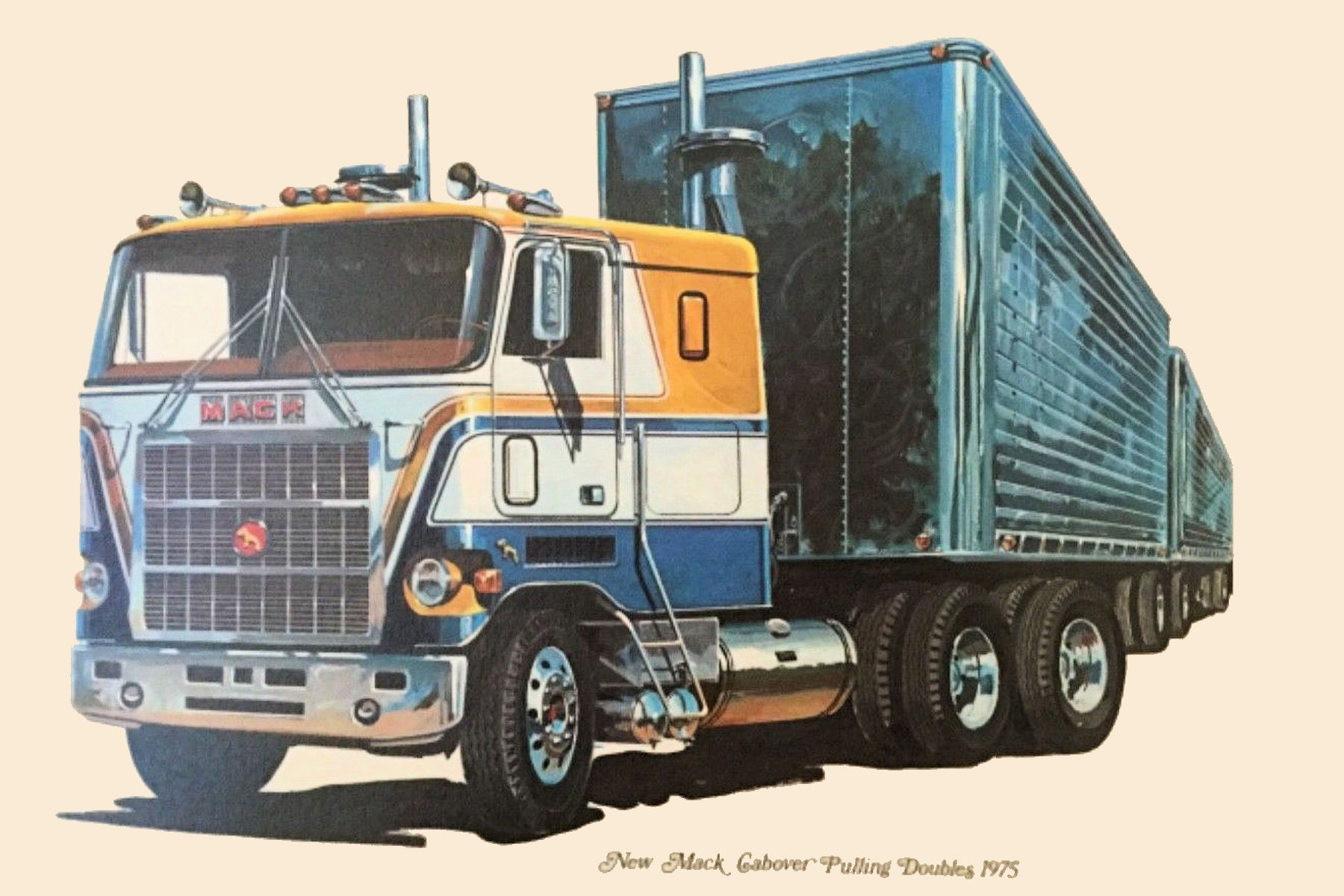
“If you got it, a truck brought it.” In this concise manner did Jimmy Hoffa once characterize the economic significance of the trucking industry and the potential power that could result from organizing it. According to the US Census and the Bureau of Transportation Statistics, of the roughly $18 trillion worth of commodities transported in the United States in 2022, about $14 trillion traveled by truck at some point. Highways are the primary circulatory system of the American economy, with rail, water, and air transportation playing only subsidiary roles.
As Hoffa well understood, the ubiquity of trucking since its emergence in the early twentieth century has offered great structural power to the truckers and warehouse workers in that industry. Making good use of secondary boycotts, made illegal with the Taft-Hartley amendments to the National Labor Relations Act in 1947, as well as tactics of more straightforward illegality, the International Brotherhood of Teamsters (IBT) achieved roughly 90 percent union density in long-haul trucking by the 1950s. Hoffa proudly told Life magazine in 1959 that, if he wanted to, he could “bring a major portion of U.S. transportation—and thus the entire economy—to a halt.”
Yet by 1994, when Teamsters president Ron Carey called a strike against all of the companies covered under the National Master Freight Agreement, the Los Angeles Times noted that “the public hardly noticed.” (The strike was more effective than the Times implies, but the resulting contract was a mixed bag.) Hoffa had used Teamster power to organize the National Master Freight Agreement in 1964, but in 1980 Congress deregulated trucking, breaking the union’s role in regulating the industry and ushering in an era of rapidly declining union density in the sector that matched the declining density of the private sector as a whole. The bleed slowed to a trickle in the twenty-first century, and for about a decade now, union density in transportation and warehousing has hovered between 13 and 14 percent.
A number of seismic developments in trucking have unfolded over recent years, including elevated demand from the staggering data center construction boom, anti-immigrant regulatory changes that have tightened the labor market, and an important Supreme Court decision. Together, these events and other regulatory developments offer an organizing opportunity for the Teamsters. After a brief overview of trucking in the United States, I will try here to describe the nature of that opportunity and to conclude with brief thoughts about taking advantage of it.
A brief primer on trucking
In 2024, trucking produced $906 billion in gross freight revenue, according to the American Trucking Associations (ATA), accounting for about 77 percent of the total freight market by revenue and 73 percent by weight. There are 14.89 million trucks registered in the US, more than 3 million of which are combination (tractor-trailer) vehicles. Unlike the parcel industry and Class I rail, which are both dominated by a small group of big players, trucking is quite geographically and economically fragmented. Last year there were more than 580,000 authorized interstate motor carriers registered with the Federal Motor Carrier Safety Administration (FMCSA), the Department of Transportation agency responsible for truck and bus safety, that owned or leased at least one tractor. Operation of the nation’s freight fleet is thus extremely decentralized: more than 90 percent of registered carriers operate fewer than ten trucks.
It wasn’t always this way. From 1935 to 1980, trucking was highly regulated under the Interstate Commerce Commission, which controlled market entry, licensed routes, and set minimum prices, encouraging the consolidation of the industry. Big less-than-truckload (LTL) companies like Yellow and Consolidated Freightways (both unionized) grew to dominate the market. The LTL designation refers to the service offered to businesses that cannot fill up a whole trailer with goods to move. In the for-hire (as distinct from private fleet) market, LTL companies are opposed to full-truckload (FTL) carriers, which, as the name implies, offer the service of moving full truckloads point-to-point.
In 1980, the Motor Carrier Act relaxed ICC restrictions, legalizing a flood of new entrants into the predominantly LTL market. That year, there were less than 20,000 registered interstate carriers, and, again, today there are more than half a million. Deregulation fragmented the market, first by breaking up the fleets as the number of carriers grew, but also by shifting the market away from LTL toward FTL carriers. The new entrants—basically anyone who could buy or lease a tractor-trailer and get a state-issued Commercial Driver’s License—lacked the logistical capacity and necessary distribution hubs to coordinate smaller shipments. Today, LTL services account for just 10 to 15 percent of for-hire freight volume, as FTL services have grown to 85 to 90 percent. One of the reasons that the Teamster’s 1994 long-haul trucking strike was less effective than earlier actions under Hoffa was that most of the companies covered under the National Master Freight Agreement were LTL carriers.
As the market shifted toward FTL dominance in for-hire freight, most small carriers lacked the ability to arrange their own shipments, and a transportation coordination problem ensued. Enter the brokers: companies that match shippers to carriers on the volatile “spot” market (as opposed to the more stable contract market). The growth of freight brokers was enabled by the Federal Aviation Administration Authorization Act (FAAAA, or “F Quad A”) of 1994, which preempted state laws around trucking, giving carriers a weapon to use in court against local regulations that impeded the new interstate trucking market. In 2000, dedicated brokerages like C.H. Robinson, TQL, and RXO handled about 6 percent of trucking shipments. Now they handle about a third.
Where LTL has remained, it continues as the more consolidated segment of the industry. The top five LTL carriers—FedEx Freight ($8.9 billion in annual revenue), Old Dominion ($5.8 billion), Estes ($5 billion), XPO ($4.9 billion), and R+L ($3.8 billion)—account for about 40 percent of the LTL segment’s revenue. FTL, by contrast, remains comparatively decentralized, with its much larger share of shipping conducted by a galaxy of smaller, and often shoestring, owner-operator firms. The FTL sales of the top FTL carriers—including Knight-Swift ($5 billion), J.B. Hunt ($4.1 billion), TFI ($2.9 billion), Landstar ($2.4 billion), and Ryder ($2.4 billion)—account for only about 4 percent of total FTL revenue. Within these companies, FTL sales are often part of a mix of corporate operations: J.B. Hunt, for instance, has FTL, LTL, intermodal, and freight brokerage services.
The for-hire market, however, is just one segment of the trucking industry, the other being private carriers. The largest private fleets in the United States in terms of power units are Walmart (12,663 tractors in 2024), PepsiCo (11,618), Sysco (9,218), Performance Food Group (6,231), and US Foods (5,983). For some points of comparison, the for-hire carrier FedEx Freight has approximately 29,000 tractors, while J.B. Hunt has 20,000, Knight-Swift has 19,000, and Old Dominion has 10,200. The ATA estimates that private fleet revenue is about the size of the FTL and LTL sub-markets combined.
Of course, tractor volume is only one way to measure the size of a logistics operation. Amazon, for instance, has about the same number of trailers as Walmart (approximately 80,000), but a fraction of the number of tractors (2,000). Most of those tractors appear to be operated by its local Transportation Operations Management (TOM) teams that do short hauls, rather than the inter-city freight services of other fleets. For long hauls, the Amazon Freight division uses third-party companies (much like the Delivery Service Providers it relies on for parcel delivery), and Amazon Relay, a proprietary platform for gig work in long-haul trucking available to an industry of owner-operators already atomized by the prevalence of FTL competition.
In this thoroughly reorganized industry, the Teamsters have maintained what is today a much diminished foothold. In the period of regulation, the consolidation of the industry, the growing size of LTL firms, and the regularity of LTL operations went hand in hand with stable, unionized employment. With deregulation, the big LTL firms have shrunken or disappeared, with Consolidated Freightways declaring bankruptcy in 2002 and Yellow in 2023. But the IBT still has a number of union shops: the Canadian carrier TFI International bought UPS Freight’s LTL division and its unionized workforce in 2021. The Teamsters retain contracts at such large carriers as Ryder and Estes, and all of the drivers at ABF Freight (a sizable LTL company, $2.7 billion in annual revenue) are unionized. From what I can tell, the IBT is even stronger in private carriage, with varying union penetration at PepsiCo, Sysco, Performance Food Group, and US Foods. Still, the heyday of Teamster power in trucking is but a distant memory for the nation’s 2.07 million heavy and tractor-trailer drivers.
The end of the freight recession and the push for regulation
After a surge in volume and revenue during the pandemic, freight has been in recession for the past couple years. For-hire trucking revenue declined by 11.2 percent in 2023, and then 10.2 percent in 2024. But since the last peak season (the winter holidays in the US), many in the logistics industry have been announcing this spring as a definitive end of the freight recession. On the demand side, business is booming, with every metric by which trucking demand is judged—volume, spot rates, tender rejections—higher year-over-year in the early months of 2026. The supply chain newsletter Freightwaves is fond of the “tender rejection rate,” the rate at which carriers are rejecting shipper requests, as the “cleanest signal” in freight. Tender rejections go up when, in the words of Craig Fuller, Freightwaves’s CEO, companies “have something better to do with that truck.” From 2023 to 2025, the tender rejection rate was on average below 5 percent; in February 2026, it was 14.3 percent.
The revival of trucking revenues has been pitched to investors, managers, and drivers as a “structural” inflection that will condition the trucking market for many years to come. The prevailing theory about the current elevated demand is that it’s the data center buildout, which requires not only chips and servers but also concrete, steel, copper, and any number of other bulky items that arrive at construction sites on a truck. From one angle, it’s concerning that flatbed volume, historically tied to the pace of housing construction, is feeding the AI demon instead of adding to American housing stock. But the trucking industry is not concerned with such things, and the fact that this demand surge is industrial rather than consumer-driven gives them a great deal of confidence. Amazon’s announced $200 billion of capital expenditure in 2026, Google’s $185 billion, and Meta’s $135 billion—all in defiance of Wall Street, and powered by a messianic belief in the AI revolution—represent enormous outlays from the largest corporations in the country. As the end of the investment boom is not currently in sight, it’s unsurprising that such spending should have positive downstream effects on the industries sustained by their project.
But demand is only one part of the structural shift. Even more important today is the “attrition in carrier capacity,” attributed partly to a delayed decline in the number of carriers after the pandemic surge but mostly to a new tightness in the driver labor market. One primary reason for this crunch has been the federal crackdown on “non-domiciled” commercial drivers licenses (CDLs), or CDLs issued to foreign nationals. In March 2026, California canceled 13,000 non-domiciled CDLs after a federal audit found that due to DMV errors, the licenses’ expiration dates extended beyond the period in which the drivers had legal work authorization. The same month, the FMCSA changed its rules regarding non-domiciled CDLs to mostly eliminate the lawful basis of this segment of the workforce altogether, such that an estimated 97 percent of the 200,000 people who have them will no longer satisfy FMCSA requirements going forward. “Dalilah’s Law,” named for a five-year old injured in a truck accident, is currently working its way through Congress and may ban non-domiciled CDLs altogether.
The FMCSA’s ruling follows on the heels of an April 2025 order from the Department of Transportation for stricter enforcement of English language proficiency for truck drivers. By the end of last year, the April order placed almost 10,000 truck drivers out of service. As a result of these changes to the English language proficiency enforcement and the new policy on non-domiciled CDLs, J.B. Hunt estimates that between 214,000 and 437,000 active CDL holders will be removed from the workforce over the next two or three years. That means that between 5.6 and 11.4 percent of heavy and tractor-trailer drivers will be put out of service during this time.
The FMCSA ruling and the DOT enforcement are in line with the broader immigration policy of the Trump administration (though the administration has facilitated the use of temporary foreign labor in other sectors, such as agriculture), and prior to the nationwide-ruling, US Transportation Secretary Sean Duffy had focused the non-domiciled CDL crackdown on blue states such as California and New York. Many commentators have been quick to point out that the FMCSA itself admits that there is not sufficient evidence to link non-domiciled CDLs to an increased risk of accident. In the absence of research, the agency is running with a few stories of non-domiciled CDL drivers causing major accidents to justify restricting first, and asking questions later.
Part of the reason this crackdown has, for the most part, been welcomed in the trucking industry is that it is seen as one component of a broader regulatory push that is long overdue. In April, 60 Minutes ran a story about “chameleon carriers,” or trucking companies that skirt bad safety records by changing their names to avoid detection. At present, anyone anywhere in the world can register a trucking company with the Department of Transportation and get it approved within a few weeks. Trucking consultant Rob Carpenter estimates that between 10 and 20 percent of registered motor carriers are such carriers.
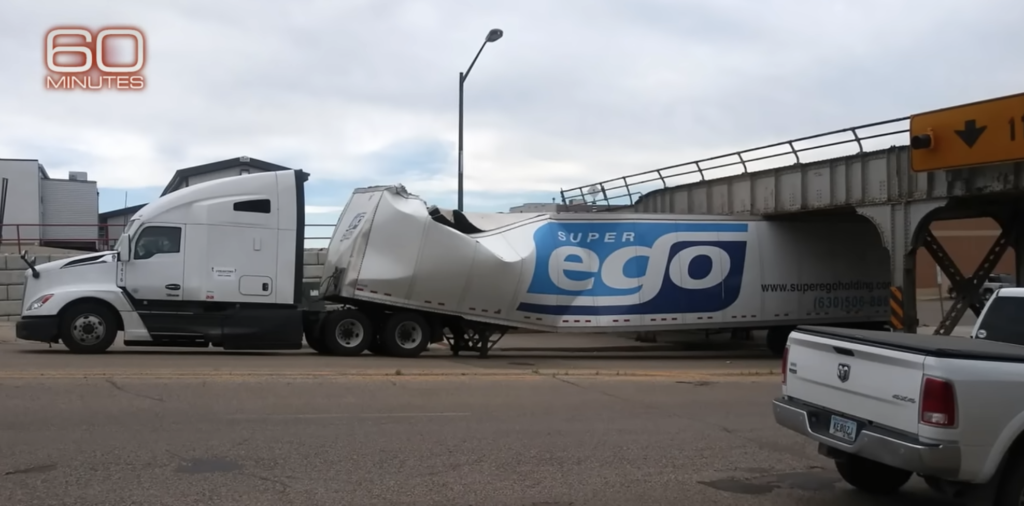
One of the shady practices that chameleon carriers have figured out is how to reset a driver’s electronic logging device (ELD), which keeps track of how many hours a driver has been on the road and (theoretically) caps them at eleven hours per day. Super Ego Holdings, the carrier highlighted in the 60 Minutes story, found a way to reset drivers’ clocks at the end of the day, so that they could pull eighteen-hour shifts, and they are not the only ones doing so. The safety implications of such practices needn’t be spelled out, but it’s worth noting that there were 321 aviation-related deaths in 2024, over 90 percent of which were related to non-commercial flights. Major airlines recorded precisely zero fatalities. The same year, there were 5,340 trucking-related deaths. As if to heighten concerns after CBS aired its trucking story, in May the DOT held its annual “International Roadcheck” blitz, conducting over 6,000 inspections. A whopping 32 percent of trucks inspected were put out of service for safety and compliance violations.
For all of these reasons, many in the trucking industry are predicting, and indeed hoping for, increased regulation on the roads—and tying such regulation to the transformation and revival of a growing industry. Trucking company Werner Enterprises has said that we’re only in the “early innings” of heightened regulation. Freight broker RXO said that “We believe this represents the biggest structural change to the U.S. carrier market since industry deregulation in 1980.” Though low-road carriers in the industry rightfully fear the consequences of heightened regulation, most are cheering it on, and for the bigger players in a fractured market, it’s not difficult to see why. Sketchy fly-by-night operations like Super Ego are a safety concern, but they are more immediately competitors, and with unions beaten back, the established carriers have a free hand to make new rules.
Montgomery v. Caribe Transport II, LLC
As if these broad regulatory changes weren’t enough, the Supreme Court shocked the supply chain industry on May 14th, 2026, when it issued its decision in Montgomery v. Caribe Transport II, LLC, allowing states to hold freight brokers liable for accidents caused by the carriers they work with. This decision has also been described as the most significant shift in trucking since deregulation, and one which will qualitatively heighten the capacity crunch that the industry is already experiencing.
In a remarkable 9-0 decision, the justices decided that while the 1994 Federal Aviation Administration Authorization Act holds for actions related to “price, route, and service” of trucking companies, it does not stipulate safety as a pre-empted category. So if a broker knowingly hires a carrier with a poor safety record, states can hold not only the carrier but also the broker liable for any accidents caused by the negligent carrier.
Fuller estimates that insurance costs for brokers are now going to be raised by 5 to 10 times. Deutsche Bank said that 60 percent of the brokerage industry is in peril (again, the brokers handle about a third of freight shipments). The small FTL carriers are more or less completely reliant on the brokers to book loads, and any consolidation in the brokerage industry will likely be matched by some consolidation among dependent carriers. Before Montgomery, the structural shift toward tighter capacity was already notable; after Montgomery, short of swift congressional action to protect brokerages, it appears to be a paradigm shift.
The future of trucking
A tighter labor market, heightened industrial demand, a new push for regulation that drives out some of the worst low-road operations, a likely shift toward larger firm size, a decimation of the brokerage industry—these are the ingredients of a unique organizing opportunity in trucking, one that unfolds against a broad demoralization amongst truck drivers.
Here I have limited myself to describing the mere existence of an organizing opportunity in trucking, and what I think is a quite massive one at that, but not how or if it can be taken advantage of. That is a question for the International Brotherhood of Teamsters. But in conclusion, it might be worth a few brief comments about how this opportunity could be broached.
Time is of the essence. Many states, including Arizona and Texas, have already created friendly regulatory environments for autonomous trucking startups such as Aurora and Kodiak. In April, a major roadblock lifted when the state of California allowed for testing of autonomous trucks in preparation for eventual commercial deployment. California is a key domino to fall, as companies can now imagine automated journeys from the Inland Empire to Fort Worth, a key trucking corridor.
However, I do not expect autonomous trucks to be meaningfully deployed for at least five years or so (for reasons that I hope to elaborate elsewhere). While the autonomous trucking push is picking up steam, it is not moving so quickly as to spoil the window of organizing opportunity in trucking. Indeed, an organizing blitz could even foreground this moment as a unique situation not only of labor market tightness, where motor carriers desperately need drivers, but also in which workers might assert enough control over the industry to capture their share of productivity gains when the autonomous revolution gains momentum.
Major resources would be needed to make the Teamsters the collective masters of the highways once again. But it also matters how their organizers are approaching this work. Shop by shop organizing can be successful, as I showed in my March column on Home Depot’s new last mile. But the National Labor Relations Board election is too fraught and too slow a process to be of much use when scale and speed are of the essence.
Hoffa’s power was first established in the Central States Drivers Council, a body organized by a key leader in the Minneapolis general strike of 1934, Farrell Dobbs. Dobbs taught Hoffa the importance of leverage, i.e., using existing union drivers to lever their structural power to make the organization of other non-union drivers easier, and Hoffa exercised that leverage with exacting clarity. Union drivers leaving one transit hub would arrive at another hub, hold the goods they were carrying from delivery, picket non-union facilities, and generally cause a ruckus until the workers at their destination hub were organized. The destination hub would become a union stronghold, and they’d leapfrog to the next city.
While the Teamsters today are much diminished in the trucking sector, they still have many key power centers from which drivers could again exercise leverage. In a tight labor market in a structurally shifting industry, that leverage is bound to have more impact today than at any point in the last few decades. Though what is considered “unlawful” in persuading workers to take concerted action against their employer has widened significantly since the 1930s and 1940s, particularly the restriction on the “secondary boycotts” that were the source of Teamster power, the NLRB is today also effectively a dead letter, with the legality of its rulings currently challenged in multiple circuit courts. I don’t know if the political will is there within the IBT to pursue such an endeavor, but the objective conditions are there. And as Dobbs would say, when the tinder begins to accumulate, any spark can light a conflagration.