May 15, 2026
Analysis
After Brent
The future of Europe’s largest declining hydrocarbon basin
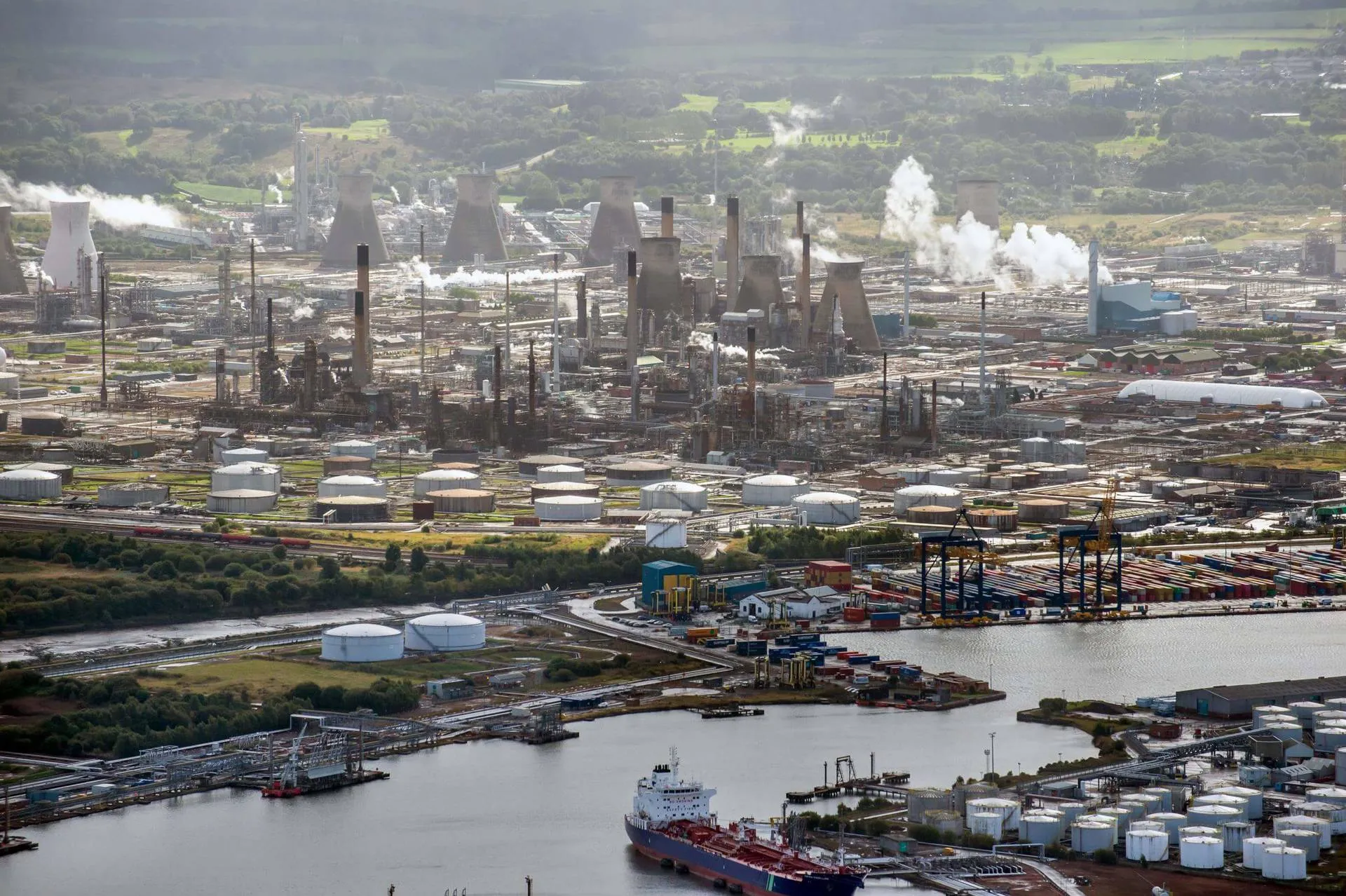
On November 26, 2025, the United Kingdom did something no major fossil-fuel producer has done before: it chose to voluntarily and unilaterally stop looking for more oil and gas. The Labour government announced it would issue no new North Sea exploration licences, effectively drawing a line under the long-term future of a hydrocarbon basin that has pivotally shaped Britain’s economy and politics for more than half a century. In May 2026, the UK government put this ban into law through its Energy Independence Bill.
The decision is necessary for the UK to meet both its domestic and international climate commitments. But the history of UK energy transitions issues a sharp warning: such decisions made without adequate industrial planning have, historically, transferred their adverse social and economic costs onto workers and communities. This is precisely what is happening again. Unless the policy can deliver concretely and immediately—in the form of jobs, investment, and cheaper energy—pressure will grow on the Labour government to abandon the ban on North Sea licensing and retreat from other net-zero commitments. Even before energy prices began to rise under the constraint of reduced supplies from the Persian Gulf, that process may already have begun.
In the foreword of the November 2025 North Sea Future Plan, Energy Secretary Ed Miliband promised a “global blueprint for a fair, managed and prosperous transition,” backed by a more interventionist state deliberately building the new energy system as it phases out the old. This marked a quiet but potentially radical shift in intent, from the government standing as a passive bystander to a declining hydrocarbon basin towards the government actively engineering an industry’s exit and transformation, guided by the imperative of mitigating climate change.
So far, however, Miliband and the government he serves have shown themselves to be capable only of putting out fires in selected political and industrial emergencies. The challenge facing the current British government is not without precedent. During the 1960s, the state managed a relatively successful transition of workers from a terminally contracting coal industry into emergent assembly-goods sectors. In the 1970s, Harold Wilson and James Callaghan’s Labour governments operated an Offshore Supplies Office (OSO) that directed private capital into British oil-services yards—some of them former shipyards and collieries—as the North Sea came online. What set these precedents apart from the destruction and violence of the 1980s was the state’s capacity and willingness to steward investment and workers into emergent industries. What has changed since is not the technical feasibility of such intervention, but the political will to exercise it. Recovering that will, and deploying it with urgency, coordination and coherence, is the central challenge facing the UK today, as well as other states seeking prosperity beyond—and ultimately after—the extraction of fossil fuels.
The rise of Brent
The UK’s North Sea is one of the most mature and explored hydrocarbon basins on earth. Production peaked around the turn of the new millennium at 4.5 million barrels of oil equivalent per day, falling to around 1.4 million barrels a day in 2023—a decrease of 69 percent. The decline is irreversible: in projections for a maximum production scenario, where new licences are granted and investment continues, production still falls by around 7 percent a year until 2050. In 2025, offshore exploration fell to zero for the first time since the 1960s. Jobs reliant on North Sea production have halved, from 441,000 in 2013 to 214,000 in 2023, and the contraction appears to be accelerating.
The extended Energy Profits Levy (EPL), which now sits at 38 percent and pushes the total tax rate on North Sea producers to 78 percent, has triggered an unprecedented wave of consolidation and retreat. In the past twelve months alone, major operators have merged to pool assets defensively rather than for growth. The EPL was initially introduced under the Conservatives, following the oil price spike after Russia invaded Ukraine in 2022, but it has remained in force under Labour and attracted the growing ire of industry and its political allies.
In the meantime, production continues to contract as leading companies downsize, merge, and even exit. Harbour Energy, originally an energy brokerage, has acquired the production facilities of Waldorf. Shell and Equinor, the state-owned Norwegian energy company, are combining their UK holdings into a joint venture, NEO. The new venture will also subsume the North Sea operations of Repsol, the Spanish-headquartered energy company privatized during the 1990s, comprising upon completion a quarter of North Sea production. Shell’s divestment from the North Sea is particularly significant, as one of Britain’s two oil majors will no longer be present in the hydrocarbon basin, bringing down the curtain on more than fifty years of drilling.
Government policy is still lagging behind this reality. With over 500 wells already past their decommissioning deadlines and more than one thousand due for abandonment between 2026 and 2030, the North Sea is entering a phase where dismantling the old infrastructure is becoming the dominant activity in the basin. Decommissioning costs have skyrocketed, reaching a record £2.4 billion in 2024 and exceeding new investment for the first time. These costs are expected to reach £3 billion annually by 2028.
The implications of all this are felt most keenly in Scotland, where almost the entire British North Sea fossil fuel industry is based. Employment in the industry is concentrated in Aberdeenshire in North East Scotland, as well as in the Highlands and in the Northern Isles. Petroleum has long been a major battleground in the constitutional arguments of the Scottish National Party, which, following the discoveries of the early 1970s, championed an oil-fuelled vision for independence and which has governed Scotland’s devolved government since 2007. Following the release of Scottish energy proposals in 2023 which presumed an end to licensing, there appeared to be a shift away from these previous presumptions in Scottish policymaking of maximum economic recovery from the North Sea. But more recently, SNP politicians have sought to dissociate themselves from oil and gas job losses by joining the campaign against Whitehall’s EPL. In May 2025, Stephen Flynn, the SNP’s Westminster leader and MP for Aberdeen South, claimed that “the Labour Government’s fiscal regime puts energy security in jeopardy,” causing “mass redundancies.”
An end to future fossil fuel exploration will ripple southwards from Scotland, impacting public sentiment towards the energy transition and reshaping political debate in Westminster and beyond. The Labour Party’s move in the North Sea is therefore a strategic gamble: that it can confront the legacies of deindustrialisation while offering a credible path forward. Whether that gamble pays off depends entirely on whether the government can move from reactive crisis management to something that resembles a plan.
A declining hydrocarbon basin
The broad pattern in the ownership of North Sea assets has been one of change: oil majors such as BP, Shell and Total have been exiting, replaced by smaller independent companies. Often backed by private equity and geared towards sweating ageing assets while they still can, these firms aim to sell on assets before decommissioning costs bite. Of the 314 operational licenses, almost 30 percent are owned by ventures currently or previously-backed by private equity firms—with the UK government shouldering the majority of decommissioning costs.
These trends are exemplified by the fate of the Forties, perhaps the most famous oil field in the North Sea. Discovered by BP in 1970, triggering the beginning of the North Sea oil rush, the Forties remains in operation today. But ownership has long since passed to Apache, a Delaware-headquartered independent that has downgraded their expectations of Forties’ lifespan and plans to close it before the end of the decade. Apache blamed Ed Miliband for this planned closure, arguing that windfall taxes made the continued operation financially unviable. Apache’s strategy, however, fits a much longer pattern of private retrenchment.
The Forties is also a crucial node in North Sea infrastructure. The Forties Pipeline System, sold by BP to privately-owned petrochemicals company INEOS in 2017, still carries almost one third of North Sea production and links fields to the Kinneil terminal at the Grangemouth complex, where INEOS had earlier purchased BP’s petrochemicals plant and refinery. The pipeline’s future remains deeply uncertain. The Brent field, in production from 1976 to 2021 and once among the basin’s most well-known (its name still denotes the region’s reference price), connects to market via a pipeline system now owned by Abu Dhabi state-owned Taqa Bratani, who bought it from Shell in 2009. These are not incidental details. They illustrate the complex tapestry of the basin’s highly integrated infrastructure, in which the closure of one asset determines the fate of others.
Current approaches to winding down production have not adequately considered these network effects. If left to the whims of private equity, an incoherent sequencing of decommissioning North Sea assets could cause significant disruptions—to commodity flows, wider British industry, investor sentiment and appetite, as well as employment—with sizable political implications. Harbour Energy alone has cut approximately 600 jobs since 2023—roughly half its workforce— including 100 offshore jobs in December 2025. Contraction is particularly visible in support and ancillary sectors: the 2020 closure of Scatsta airport on Shetland increased consolidation of helicopter crews. Similar trends are visible in the hollowing out of Aberdeen’s labour market. Aberdeen is one of the few local authorities in Scotland to have fewer jobs now than in 2010. When leading oil services firm Petrofac entered administration in autumn 2025, its 2,000 Aberdeen workers were briefly at risk before an acquisition by American firm CB&I secured their jobs.
Petrofac is emblematic of the broader political-economy challenges. The UK’s Serious Fraud Office opened investigations into the company in 2017 that are ongoing and have already resulted in one conviction for bribery, with more trials pending. The investigations illustrate the corruption risks posed by the current shifting pattern of ownership amid unplanned decommissioning and asset-stripping. The complex interdependencies of North Sea infrastructure make clear the critical importance of state intervention, but also the challenges of forming sustained state-employer partnerships in an increasingly dire sector.
Nor are alternative projects likely to emerge on the initiative of entrepreneurs alone. Just seven out of 87 oil and gas operators within the basin plan to invest capital into renewable energy technologies by 2030. Industries intrinsic to the Labour government’s ambition to become a Clean Energy Superpower—offshore servicing, geology, maintenance and repair—have been hit hard by this pullback of private capital and will continue to be so. The window for a managed exit from the fossil fuel industry is rapidly narrowing.
Rescuing ownership
The human cost of this managed retreat is being distributed with brutal unevenness. The refinery complex at Grangemouth, for example, has become widely held in Scotland as a failed litmus test of government commitments to a just transition. Richard Hardy is the National Secretary of the Prospect union in Scotland and Ireland, and was President of the Scottish Trades Union Congress from April 2025 to April 2026. In January, he told the Scottish Affairs Committee at Westminster that the Grangemouth closure amounted to a “shining example of how not to do anything.”
When the closure of Grangemouth refinery was confirmed in late April 2025, workers were notified by Petroineos—a joint venture between the British INEOS and the Chinese state-owned PetroChina—via email. It reportedly took Scottish First Minister John Swinney two and a half months to secure a 30-minute Teams call with Sir Jim Ratcliffe, INEOS’s chief executive, to discuss safeguarding jobs at the refinery. More than 2,800 jobs dependent on the refinery are under threat. The closure and replacement with a fuels import terminal reduced the core workforce from 500 refinery workers to just 100, with far greater losses rippling through the supply chain. According to trade unions, the displaced workers have already begun taking jobs in the North Sea, which are themselves precarious, or found employment abroad in more prosperous basins.
The workforce had demonstrated a willingness to transition. Unite, the main union at the plant, developed a plan for sustainable aviation fuel (SAF) production. Instead, the UK and Scottish governments collaborated with Petroineos to produce the Project Willow report—a prospectus of possible future greener manufacturing options without timetable or plan for production. In July 2025, the Labour Party leadership temporarily removed the whip from Scottish Labour MP Brian Leishman, who represents the Alloa and Grangemouth constituency, after he repeatedly criticized the government’s approach with the owners. In making his criticisms, Leishman had been holding his party to promises made by Scottish Labour leader Anas Sarwar during the 2024 general election campaign. The lesson for any such future attempts to challenge the prerogatives of existing ownership is clear.
Grangemouth is not an isolated case. In November 2025, ExxonMobil unexpectedly announced the closure of its Fife Ethylene Plant at Mossmorran, across the bay from Edinburgh. Contracted workers were reportedly locked out of the site overnight, with permanent staff unaware of redundancy conditions before the news broke. Closure followed in early February 2026, faster than anticipated, ending more than forty years of petrochemicals manufacturing at what had been one of Europe’s largest cracking facilities. Earlier in 2025, the government was forced to rapidly take over British Steel’s plant at Scunthorpe in Lincolnshire to prevent its imminent closure. Already, in late 2024, Indian multinational Tata shuttered the penultimate blast furnaces at Port Talbot in South Wales. These closures—in different sectors but following the same logic—are the accumulating face of deindustrialization that the government has not yet found a way to abate.
In December 2025, following the Mossmorran closure, the Labour government announced a £120 million bailout for INEOS chemical operations to preserve Britain’s last ethylene production site and safeguard the strategically pivotal ethylene pipeline system. These are urgent steps for preserving the industrial base. But they compound dependency on actors who have closed plants in the recent past, provoked major conflicts with their workers, and remain committed to retaining and expanding fossil fuel production. While intervention at Scunthorpe demonstrates that a more assertive state is not only possible but necessary, so far that assertiveness has been reserved for firefighting rather than planning.
The future of energy
Will an end to the old be accompanied by the ushering in of the new? Labour’s Clean Power 2030 Mission aims to almost completely decarbonize the UK grid within five years. GB Energy, a publicly-owned energy company symbolically headquartered in Aberdeen, could reestablish the state as an active participant within the electric power system. A new National Wealth Fund, with a capital limit of £7 billion, is expected to stimulate £70 billion in private investment to transform Britain into a Clean Energy Superpower.
The prospect of these institutions delivering is doubtful. While GB Energy was promised £8.3 billion before the next general election in 2029, it is actually receiving a capitalisation of just £100 million for its first two years of operations. More recently, £2.5 billion of the initially promised funding has been reallocated from GB Energy’s budget to small modular nuclear reactors. This is not a serious level of funding to reach forecast investment targets—or even to leverage private sector activity through the dominant approach of derisking. For the state to achieve its own targets, it needs to be a powerful presence deploying public capital to direct and discipline private investment.
The UK’s offshore wind sector has seen meteoric growth over the past decade, second only to China. But employment in the UK’s renewable industry is predominantly concentrated in the construction phase, as wind farms require less labor-intensive maintenance and operations than oil and gas facilities. The industrial footprint mismatch is stark. While oil and gas purportedly supported 214,000 jobs in 2023, the renewables sector offers a fraction of that despite its rapid growth. It is also geographically dispersed outside traditional energy communities. Scotland’s renewables industry directly employed approximately 8,450 workers in the early 2020s, for example. By contrast, Denmark—with a similar-sized population and comparable share of renewables within total generation—supports 44,000 jobs, of which 33,000 are in wind alone.
The British government is in part providing the demand for this growth: Danish wind giant, Orsted, secured 70 percent of the projects in the most recent UK government Contracts for Difference (CfD) auction, benefiting from consistent backing by the Danish Export Credit Agency. Orsted’s subsequent withdrawal from the massive Hornsea 4 project, citing increased risk and cost of capital, signals the limits of this outsourced approach. Critically, the UK is currently among the world’s largest net-importers of renewable wind technology, with similar patterns in solar panels and energy storage. Its ability to become a Clean Energy Superpower is therefore entirely reliant on global supply chains and private capital. Grangemouth refinery workers articulated this frustration plainly in 2024. They want to use their skills to transition but face redundancy and possibly emigration to obtain comparable jobs in the Middle East, Asia, or Australia. Nine out of ten supply chain companies are now looking overseas due to lack of UK work.
Even before Trump’s tariffs and heightened trade wars, the wait for key technologies such as transformers is around four years for businesses in the UK. An industrial strategy worthy of the name would treat this as a strategic vulnerability to be addressed, not a given to be worked around. Instead of giving GB Energy the funds required to establish a foothold in the energy system, however, the government has chosen to back carbon capture and storage (CCS). Almost £22 billion in government commitments over the next 25 years is to be invested in CCS clusters in Teesside and North Wales. The project promises to remove more than 8.5 million tonnes of CO2 per year —roughly 2 percent of the UK’s 2022 annual emissions—and represents a doubling down on an industry known for its scandalous over-promising. Prime Minister Keir Starmer has denounced those noting the record of CCS investments as “drum-banging, finger-wagging net zero extremists.”
The ghost of coal
Resistance to ending new licences for oil and gas in the North Sea is both explicitly and implicitly shaped by Britain’s recent history of deindustrialisation. When coal, steel, and shipbuilding were dismantled and destroyed in the 1980s and 1990s, the energy transition was brutal and unjust, wounding communities across Britain’s industrial heartlands. Despite the promises of consecutive governments, regional inequality has only worsened. Britain now stands among Europe’s most geographically unequal countries.
It is little wonder that some of the UK’s biggest trade unions have accused the government of turning oil and gas workers into “the coal miners of our generation.” Although communities dependent on oil and gas extraction are smaller and more geographically diffuse than historic coal communities, the precarity they face is significant. The persistent reference to coal miners—across the political debate and throughout the British media—is revealing. The ghost of coal continues to torment industrial relations and weigh on climate, energy, and industrial policy well into the 2020s.
These fears have been politically mobilized. Nigel Farage’s far-right party, Reform, has repeatedly stated its intent to scrap net zero, though there are diverging sentiments at the regional level. In Scotland, the SNP has in recent years shifted back towards supporting a longer life for the North Sea, criticising windfall taxes and the employment effects of an end to licensing. This is, in part, responding to pressure from Reform, particularly in the oil-dependent North East of Scotland. Reform’s Scottish leader, former Tory Lord Malcolm Offord, stressed that his party “would rather end subsidies for offshore wind and other forms of renewable energy” in order to concentrate on “extracting the most from the UK’s remaining fossil fuel reserves.” In the Holyrood debate over the future of Mossmorran, both Conservative MSPs and SNP First Minister John Swinney condemned the EPL, with Swinney presenting the tax—originally introduced under the Tories—as a snub to Scottish workers.
The Labour government itself faces growing internal tensions. Former Labour Prime Minister Tony Blair, who remains perplexingly influential to this day, has recently insisted that any policy program hinged on phasing out fossil fuels was a “pursuit of symbolic purity” doomed to fail. The risk to the government of a protracted industrial crisis could not be clearer as century-old political allegiances dissolve in the acid of deindustrialization. Labour stagnated in the recent Scottish Parliament elections, winning just seventeen seats and tying with Reform, a further retreat from 2021 when the party set its then-record lows in vote share and seats. In Wales, the electorate pushed Labour into third place, a historic event ending more than a century of the party’s political hegemony in the geographic stronghold. In England, both the Greens and Reform prospered to Labour’s left and right, respectively.
This is not an inevitable political and economic trajectory. And there is a history more hopeful than the destruction of the 1980s. During the 1960s, the British state managed a relatively successful transition of workers from contracting coalfields into emergent assembly-goods sectors—automobiles, commercial vehicles, household appliances. The number of miners in Britain declined from around 700,000 in the late 1950s to fewer than 300,000 in the early 1970s, but this shedding of jobs in one sector was accompanied by the creation of new industrial employment in the same communities. Hoover employed thousands in Merthyr Tydfil, South Wales, and Cambuslang in Lanarkshire, a coal and steel settlement on the edges of Glasgow. Caterpillar, the tractor and bulldozer manufacturer, operated plants in Birtley in County Durham and at Tannochside in Lanarkshire, a site which repurposed land cleared of derelict miners’ housing. Rootes was obliged to build a large car factory at Linwood outside Paisley, employing former Clydeside shipbuilders, Glasgow locomotive engineers, and Lanarkshire miners.
In the 1960s and 1970s, Labour governments used the state’s capacity to compel capital to locate private investment in regions marked for manufacturing expansion. The British state stewarded investment into emergent industries where disinvestment appeared inevitable, and coordinated the transition between them. This makes these earlier decades stand apart from what followed under Tory rule and New Labour in the 1980s, 1990s and 2000s. Cumulatively, these changes created a more balanced and equitable labor market, including new centers of manufacturing and white-collar work for women in areas where such jobs had previously been scarce.
The North Sea petroleum complex was itself a creation of the planning state of British social democracy. During the 1970s, the Labour governments of Harold Wilson and James Callaghan operated an Offshore Supplies Office (OSO) alongside the nationalized British National Oil Corporation. The OSO applied pressure on oil majors to place orders at British yards—including converted shipyards on the Tyne and the Clyde, and at Burntisland in Fife. In Fife, itself a contracting coalfield, a large oil rig fabrication yard was built at Methil on the former site of Wellesley colliery. This precedent demonstrates that the state capacity to direct private capital and coordinate industrial transition exists within living memory.
Political credibility
In Ed Miliband’s Department for Energy Security and Net Zero, there comes across through commitments to planning a coordination a clear nostalgia for Harold Wilson’s 1960s phrase, the “white heat of technology.” What has resulted, however, is not more than back-footed responses to decisions already made by oil majors and privatized electricity companies. Moving beyond this nostalgia-coated window dressing will require concrete steps.
The UK has used Contracts for Difference successfully to drive renewable energy deployment; the same mechanism could incorporate domestic content requirements to rebuild supply chains at home. An OSO equivalent for renewables, directing inward investors to locate manufacturing and maintenance operations in North Sea communities, would apply tried-and-true statecraft to new industries. Licensing agreements should be used to broker guarantees for employment numbers and labor standards subject to bargaining with unions. GB Energy needs to be funded at a level commensurate with its stated ambition: not £100 million for two years, but the billions required to take equity stakes in supply chains and anchor value in the UK. And the government must engage seriously with union transition plans of the kind Unite developed at Grangemouth, rather than substituting reports of possibilities for actual commitments to produce.
The political stakes could not be higher. Arguments around energy security, maximum production of fossil fuels, and tax receipts will be mobilized by incumbents digging in their heels, as they have done before. Answering them requires proving results: demonstrating that an expanded industrial base oriented towards renewables is delivering prosperity and economic security. Scunthorpe emphasizes the potential for state intervention to preserve strategic capacity. But Grangemouth and Port Talbot remain the dominant face of Britain’s manufacturing jobs crisis, encouraging oil and gas workers to cling to what they have.
Without a shift in industrial policy and investment to create the value chains and supportive ecosystems around replacement industries, those industries will not deliver the secure and skilled jobs to match what is being lost. In turn, to achieve these steps, the commitment of considerable public resources will be required—but so too will an important assertion of control, coherence, and sovereignty over the UK’s industrial future.
Otherwise, the transition currently unfurling is likely to be experienced as it has been so far: as an extension of decades of redundancy and restructuring at the expense of workers, their communities, and the climate. The ghost of coal is not just a metaphor, but a political warning about what happens when a government gets the direction of policy right and the execution catastrophically wrong. There is still just about time to avoid repeating that mistake. But not much.
Further Reading

Oil in the Imperial Periphery
Brunei’s unlikely path to independence
The majority of the nearly two hundred sovereign states that exist today were born through decolonization following the end of the Second World War. With...

Against Carbon Shock Therapy
Building a toolkit for decarbonized sovereignty
Two months into the US-Israeli war on Iran, fifty-nine countries attended the first high-level conference on transitioning away from fossil fuels. The attendees who gathered...

Hot Oil
Gardiner Means, administered prices, and why the Texas Railroad Commission should regulate oil production again.
Even at the depth of the Great Depression, oil producers were always paid a positive price for their product. But on April 20 of this...