Issue 1, June 2026
Analysis
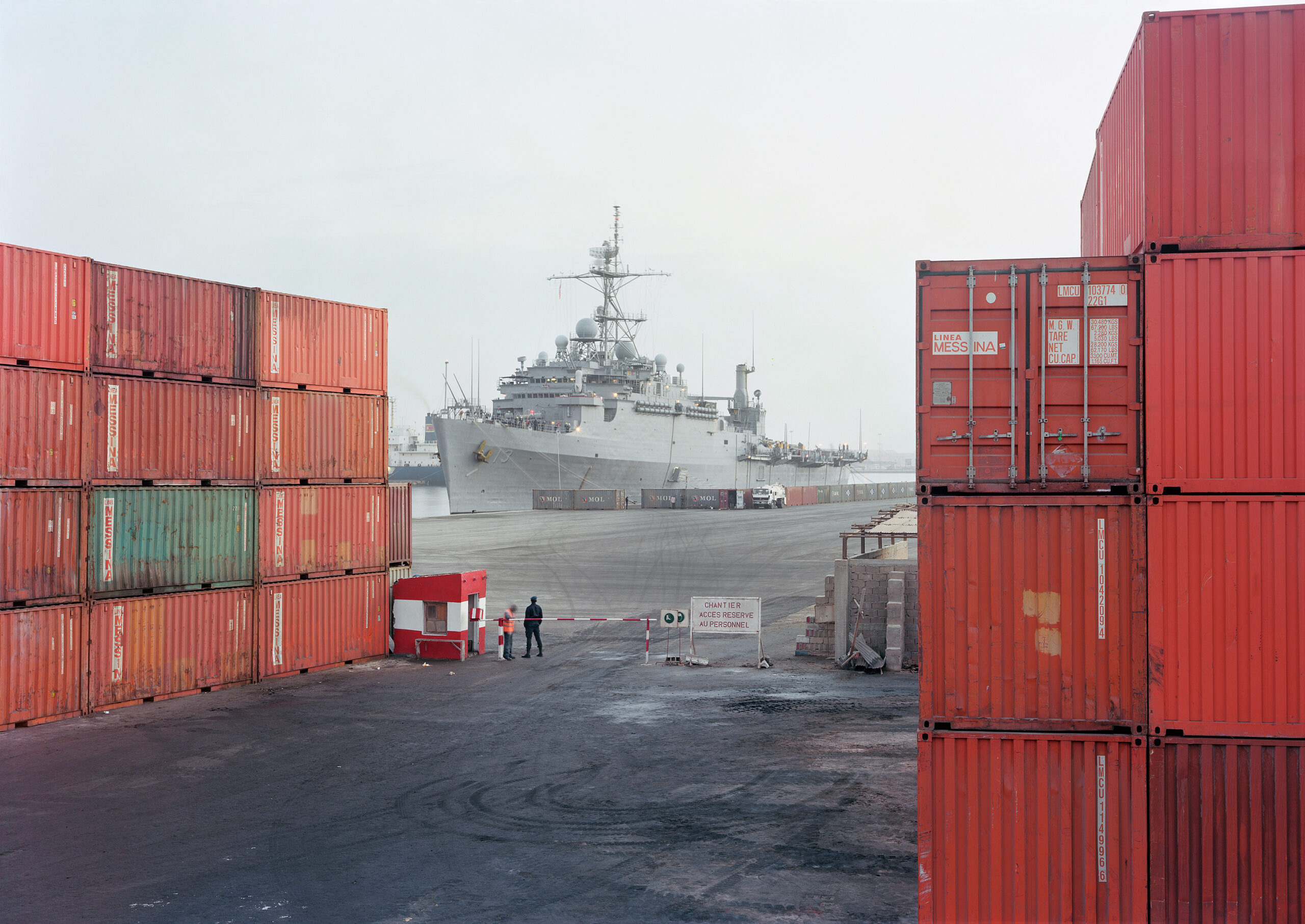
Are we at the end of the American Century? The question looms over the turbulent global politics of this millennium—and, over the past eighteen months, has yielded answers that take the form of a seeming paradox. On the one hand, the United States appears as a waning hegemon, accelerating the transition away from its own unipolar era. On the other, each unprecedented shock reaffirms Washington’s unique privilege to directly reshape the world.
Open any newspaper and you will be confronted by these twinned narratives. The United States is “forfeiting its role as the leader of the free world,” practicing an “inefficient, unstable, and self-destructive” imperialism all while “termites are slowly feasting away at the foundations of the dollar’s dominance”—it is “officially an empire in decline.” On the other side of the ledger, a parade of extraterritorial military and economic violence coincides with blissed out financial returns, a $1.5 trillion dollar defense budget proposal, the largest IPO in history, and related dreams of a new era of AI-induced primacy. The empire is in free fall, but also hanging steady; its claim to legitimacy has been shredded, but its extreme authority prevails.
Embarrassments of a sundowning autocrat, ruptured diplomatic alliances, and strategic defeat in Iran notwithstanding, who but Uncle Sam could incinerate girls’ schools, assassinate cabinets, bankrupt aid organizations, kidnap sitting presidents, and wage world-bending economic war? Attempts to make sense of this procession of events produces something like cognitive dissonance: the very signs of America’s relative decline are also the horror-inducing indices of its unparalleled strength.
***
The first issue of Phenomenal World addresses these apparent contradictions, examining the contemporary contours of American power and its various expressions around the world.
In considering this issue’s framing, we discussed the various terms currently circulating to describe the present disorder and its agents: retrenchment, overreach, isolationism, hegemonic transition, and so on. In transatlantic foreign-affairs journals, analysts produce new phrases and debate old concepts to attempt to capture the moment. But the consensus revelation of a shift in the world order can be so general as to obscure the present. Cascading events undermine and outpace our attempts to grasp the breadth, persistence, and variations of American empire, and the equally varied resistance, adaptation, and vassalization it continues to summon.
The essays in this issue remind us of the concrete political and economic processes that produce such questions—and clarify the distance between continuity and rupture. The authors assess American power as a quantity produced by design and path dependency, experienced as economic and military brutality, and through the distorted domestic political economies of semi-sovereign nations.
***
The main constant in global affairs is erratic escalation. The Trump-Xi Summit in May might have signalled “fragile détente,” and perhaps a fracturing of bipartisan support for export controls and trade warriors, but it ultimately raised more questions than answers. Following the activation of the “Hormuz weapon,” an energy shock has kickstarted a potentially transformative race among states and consumers to secure green-energy supply. Corruption in the White House stretches from Trump’s flagrant self-dealing to grotesque evidence of insider trading on war policy. At the time of writing, pretext for a US military attack on a besieged Cuba is being assembled and, further south, Standard Oil’s former reserves in Venezuela promise to be restored to colonial ownership.
Two essays in this issue explore the latter two countries. Lourdes Regueiro and Claudia Marín, and Luis Bonilla-Molina, respectively, examine Cuba and Venezuela—connected by revolutionary histories, contests over oil and sovereignty, and by the slow (and then spectacular) brutality unleashed on them by the United States. To grasp the new and the old within Trump’s so-called Donroe Doctrine, Jaime Preciado and PW editor Pablo Uc present five phases of hemispheric power projection, and the attendant episodes and counter visions of anti-imperialist resistance.
Lurking behind the new US violence in the Caribbean is the growing importance of China in Latin America. The sociologist Ching Kwan Lee outlines China’s expanding global presence in production, multilateralism, and knowledge production, examining its growing coalitions in the formerly colonized world. In Brazil, the US is now second to China as chief trading partner, a reversal in position that PW editors Hugo Fanton and Maria Sikorski suggest has attenuated Brazil’s dependency on the US, allowing for a tariff conflict in which “Trump made Lula great again.” Expanding on this theme and summarizing Brazil’s place in the world diplomatic game is an interview with Celso Amorim, former Minister of Foreign Affairs and present Chief Advisor to President Luiz Inácio Lula da Silva.
On the topic of US declinist narratives, Tim Barker identifies waves of threat inflation from US security planners that date back to the Cold War—and Samuel Huntington’s famous 1988 argument that these were scenes of necessary crisis manufacturing. Is our moment of “imperial decline” any different?
One need look no farther than the war on Iran to begin to speculate. The history of oil and empire shows important continuities among the states currently in the crosshairs. Just as the history of Venezuela is defined by US giant Standard Oil’s jealous guarding of its hydrocarbons in the twentieth century, the fate of modern Iran is difficult to grasp without reference to the legacy of British imperialism, the founding of British Petroleum to farm its oil, the Shah’s US-backed regime, and the Islamic Revolution against it.
Eskandar Sadeghi-Boroujerdi traces US foreign policy since 1979, and the transformations of the Iranian state under pariah status, resulting in the present ruling business and military alliance—which has shown itself capable of resisting the designs of a United States bent on using war to resolve its internal political problems, and a genocidal Israel seeking lasting regional hegemony. On the other side of the Persian Gulf, writes Colin Powers, the old alignment between the Arab monarchies and the US government may be evolving into a new era of commercial diplomacy with client states, as Silicon Valley firms strike deals with the GCC to create new client-partners in the AI race with China.
China’s capacity to develop—now perceived as an epochal challenge in Silicon Valley, Langley, and Washington—has not been unrelated to US strategy. Surveying the political conditions for China’s world-historical economic transformation is an essay by Yueran Zhang. His essay studies the domestic impacts of the post-1989 reforms to suggest that the elimination of worker control during the explosion of China’s productive power represents a neglected story of class-political transformations that attended Global China’s rise.
What does US power consist of? Historian Catherine Schenk offers an account of the rise of the US dollar as the world’s dominant currency and the reasons for its likely persistence, despite proliferating incentives to “derisk” from the hegemon. Meanwhile, as Anna Stavrianakis shows, instability has bred securitization, resulting in the largest ever global military expenditures—in a world weapons market overwhelmingly dominated by the United States, but increasingly involving new players and state-corporate strategies.
Finally, in a sweeping interview, Herman Mark Schwartz provides a rich tour of the component parts of imperial power, the particular forms and innovations of the US’s historic dominance, and the endogenous sources of the present chaos, alleging the empire can be placed on “suicide watch.”
***
Empires defying their decline have often been more dangerous than those willing to accept it. The Austro-Hungarian struggle to maintain hegemony within Europe lasted a full century after written constitutions and citizen-subjects overtook the age of Kings. The final two decades of Hapsburg rule, grappling with the Ottomans and the Russians for territorial control, produced three Balkan Wars. The first carved out Albania from Turkish rule; the second liquidated Turkish government in Macedonia; and the third we remember metonymically by the assassination of Archduke Ferdinand. What followed was a scale of devastation and bloodshed never before produced by humanity. Could any acknowledgement of Austro-Hungarian weakness have prepared contemporary thinkers for the horrors to come?
It may be inarguable that the second Trump administration’s dramatic, imperial use of force is self-undermining. The question is how much, on which axes, and whether the apparent crisis in American power can be reduced to this latest sequence of catastrophes.
The essays here aim to address these questions and more, and reflect a pessimism of the intellect. But there is also optimism and will among the authors. If American power is undergoing an epochal transformation, it is doing so in a world order that, as the late Mike Davis wrote in 2022, “we must diagnose [as] . . . a ruling class brain tumour”—the absence of strategy among a fractious sliver of elites wielding near-absolute power over the majority of humanity. Organization and sense-making will have to come from other corners.
— The Editors (in New York City, Hermosillo, São Paulo, Bogotá, San Cristóbal, Porto Alegre, and London)
More from this Issue
Histories of Decline
Politics and economics in American “declinism”
American elites have raised the question of US decline periodically for most of the last sixty years. What can we learn from this march of...
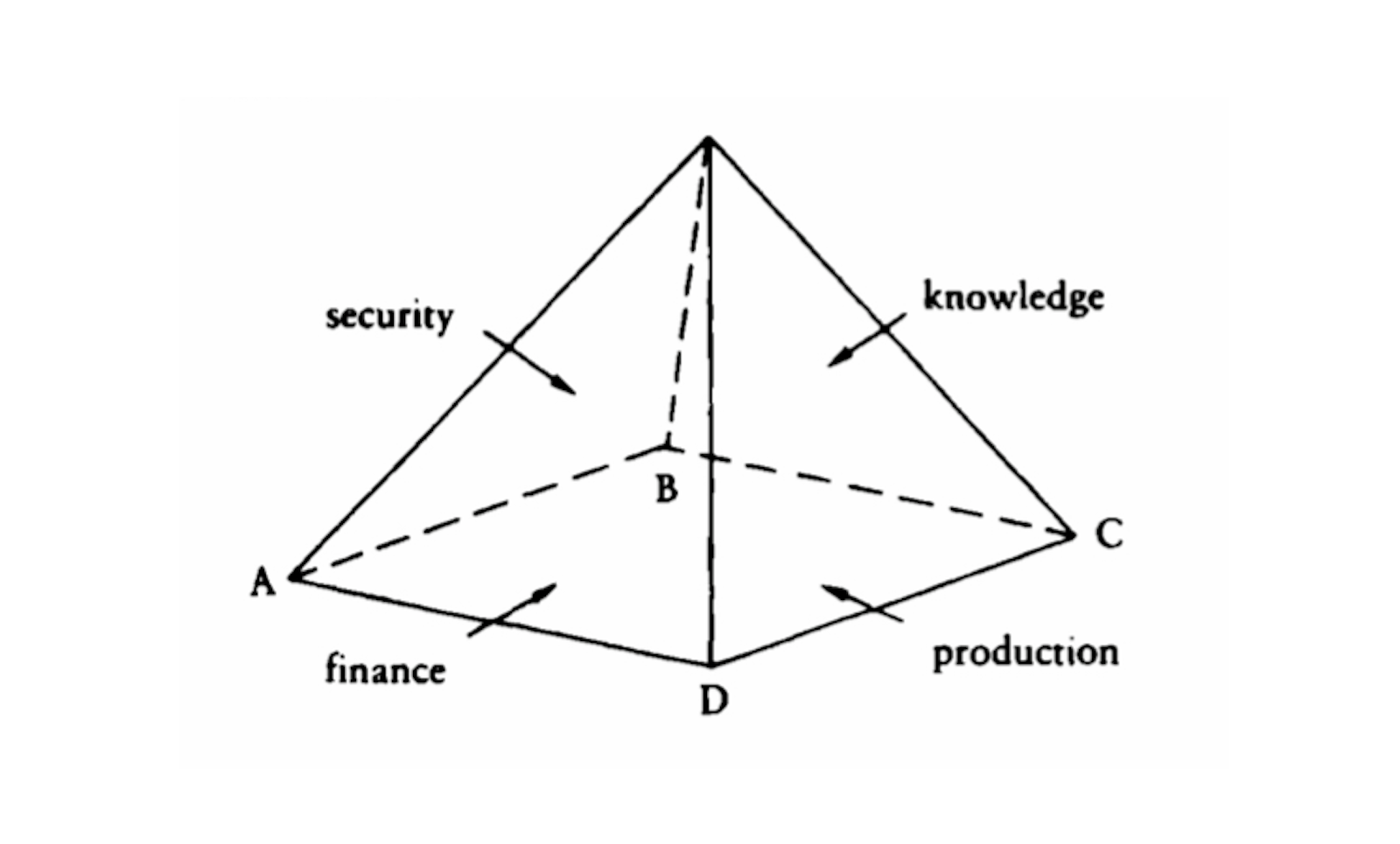
Empire Suicide Watch
Examining the anatomy of US power
What kind of empire is American empire? Does Trump's belligerent protectionism mark a break in American hegemony, or the reconstitution of a prior era of...
Mosaic of Deterrence
Iranian resilience in the face of US-Israeli assault
The US-Israeli war on Iran has foregrounded a question that has become increasingly urgent since the onset of the genocide in Gaza: how should we...