March 11, 2026
Analysis
Drones Like Bicycles
The cost of a Shahed-136 kamikaze drone
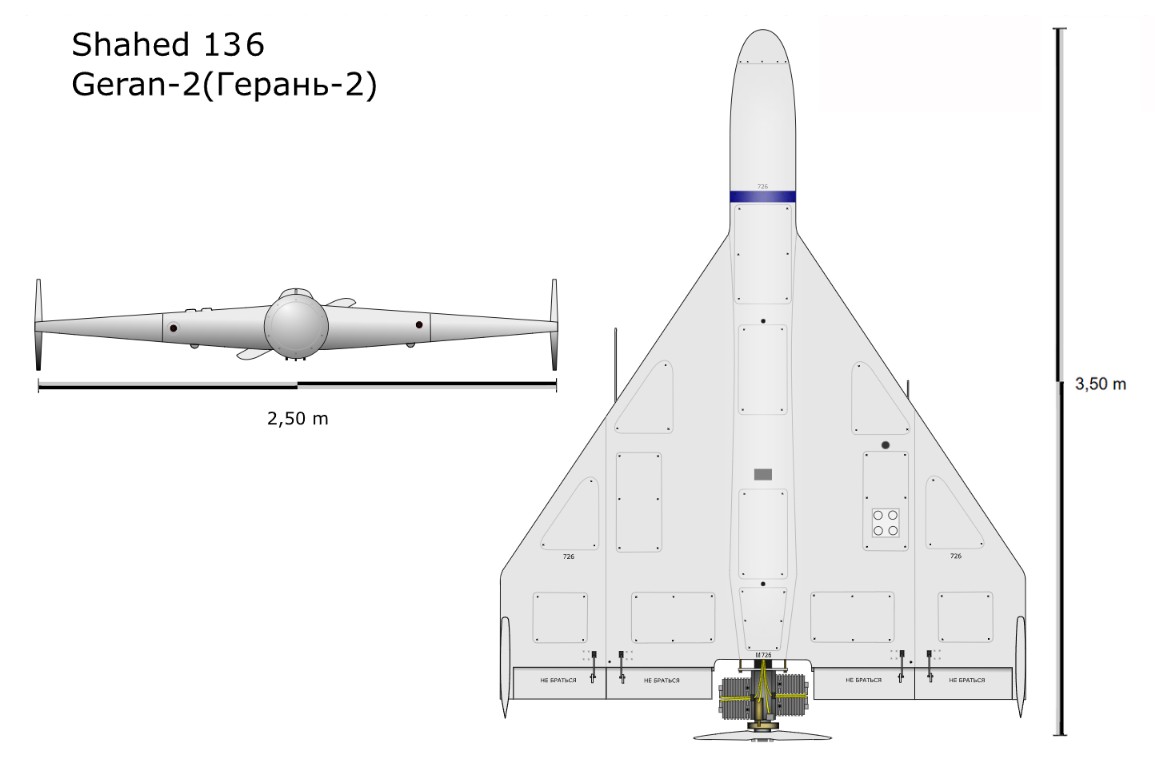
An Iranian-made Shahed-136 drone is a simple weapon. The delta wings, which span 2.5 meters, are made of fiberglass and end in two fixed vertical stabilizers. The rear control fins are operated by simple servos. The drone carries an autopilot system, a global positioning receiver, and a data module. Propulsion is provided by a basic air-cooled four piston motor, made of cast aluminum, producing 50 horsepower to drive a pusher propeller. While built to aviation specifications, the motor is not unlike that found on a small motorcycle. The drone can fly at a speed of 185 kilometers per hour while carrying a 40-kilogram warhead over a distance of 2,000 kilometers.
This simple weapon has thrown the global economy into disarray. Since the US and Israel started an illegal war against Iran on February 28, Iranian forces have responded by launching thousands of Shahed-136 drones at targets across the region. These have struck not just military sites, but also civilian infrastructure, including refineries, power plants, airports, hotels, and ships; the drones have comprised a central element of Iran’s retaliatory strategy, and brought maritime and air traffic to a halt. Gulf Kingdoms, Israel, and the US have expended scarce and expensive interceptor missiles to repel drone attacks. Most interceptions have been successful, but the sheer volume of launches means Iran has hit many of its targets.
To make sense of the long-range air weaponry that defines the widening devastation and the havoc produced by Iranian drones, reporters have fixated on the cost of the Shahed-136 platform. Dozens of articles cite the cost of the drones as somewhere in the $20,000 to $50,000 range—a mere fraction of the cost of interceptor missiles, whose price tag can reach up to $3 million. The price juxtaposition is getting a lot of attention, as an evocative illustration of fast-evolving contemporary warfare.
But is the comparison accurate? An analysis by the think tank CSIS on the price of the Russia’s Shahed-136 variant explains the unscientific way these estimates are usually devised:
It is difficult to precisely know the per-unit cost of Russia’s Shahed-type drones, which Russia manufactures domestically as the “Geran-2.” One Israeli missile expert, writing in January 2023, estimated as little as $20,000–$30,000 per drone. Later, a British analyst put the figure closer to $80,000, based on his personal inspection, in October 2022, of the components of a captured Shahed-136. Forbes Ukraine has used $50,000 per Shahed to calculate the cost of Russian attacks… Nevertheless, for our calculations, we used a conservatively high unit cost of $35,000—the midpoint between the lowest cost estimate and the more often cited $50,000.
Most of the estimates of the cost of the Shahed-136 are based on analysis of the Russian variants and none of the public estimates appear to be derived from an actual breakdown of the components of an Iranian-made drone. The real costs of Iranian drones could be dramatically cheaper than assumed—the cost asymmetry more extreme. The US and Israel have installed an ever escalating sanctions regime and a still-escalating military assault with the ostensible aim of making the conduct of war too “expensive” for Iran. As the war of choice engulfs the region and sows chaos in the global economy, it is imperative to understand how “cheap” a war can now be.
The cost of a Shahed
If Iran were assembling the Shahed-136 at a unit cost of $35,000, it would represent a major failure of the country’s defense industry, which has prioritized developing inexpensive platforms that can be serially produced within limited dependence on imported components. Iranian media has not reported the production cost of the Shahed-136. Interestingly, when costs are cited in Persian-language reports, they use the same $20,000 to $50,000 range seen in media reports.
The United States recently unveiled its version of the Shahed-136, called the Low-cost Uncrewed Combat Attack System, or LUCAS. CENTCOM has briefed reporters that the LUCAS has a production cost of $35,000. This is the clearest evidence that the widely reported cost estimates for the Shahed-136 are incorrect. While slightly smaller, the LUCAS is a more advanced drone, produced with composite materials, greater precision, and more features, including an integrated Starlink terminal. Even if the LUCAS were more rudimentary, and thereby more like a Shahed-136, the inherent differences in factor costs involved in defense production—equipment, materials, and labor, especially skilled labor—between the United States and Iran necessarily means that the two drones cannot have the same production cost.
I found this perplexing. Producing a kamikaze drone in Iran cannot be the same cost as producing a similar drone with more expensive labor, more-advanced materials, and more-advanced technology in the US. So I asked an academic in Tehran with knowledge of Iran’s defense industry whether he had ever come across an estimate for the production cost of a Shahed-136. He asked around. The number he came back with was IRR 6 billion, or around $4,000 at the current main exchange rate. While verification of this figure is beyond the scope of this piece, it provides a clue that the Shahed-136 must be cheaper to produce than has been reported.
A unit cost of $4,000 is obviously far lower than most of the widely circulated estimates for the cost of the Shahed-136. On one hand, the dollar price reflects the significant devaluation of the Iranian rial, which has been driven by the pressure of sanctions on Iran’s foreign exchange market. In this sense, the exchange rate may be making the drones seem cheaper than they really are. On the other hand, the low price could reflect the significant indigenization of Shahed-136 production. More than the actual currency requirements, it would represent the relative availability of the materials, equipment, and labor necessary to manufacture these drones. My contact insisted that the production of the Shahed-136 was now fully indigenized, meaning key components are domestically assembled.
It has been widely reported that the MD-550 motor used in the Shahed-136 is fully produced in Iran. Electronic componentry could be assembled domestically using imported antennae, microcontrollers, voltage regulators, and oscillators. Domestic assembly of the electronic components not only reduces costs, but also aids in maintaining supply chains in the face of sanctions. Complete components such as autopilot systems can be flagged as “dual use” and may be difficult to source. Iranian experts advised on the establishment of the Russian Geran-2 drone production line at Alabuga industrial park, offering a view into the production practices likely being used in Iran. The director of the Russian factory has publicly described a highly efficient production process: “Aluminum bars come in, engines are made from them; microelectronics are made from electric chips; fuselages are made from carbon fiber and fiberglass — complete localization.” According to the Institute for Science and International Security, the Alabuga facility currently reports producing somewhere between 18,540 and 24,460 drones per year.
Given the dynamics around the exchange rate and likelihood that the Shahed-136 has limited imported parts content, the best way to understand the affordability of drones within the context of Iran’s defense industrial base is to compare the production cost with the cost of other manufactured products, especially products that are also manufactured in the United States. This analysis can help reveal the differences in the factor costs underlying defense production in the United States and Iran.
Tractors
The warring countries have large agricultural sectors and both produce tractors domestically. For example, the John Deere 5075M manufactured in Augusta, Georgia has similar capabilities and features to the Iran Tractor Company ITM 475 tractor made in Tabriz, Iran. Both use gasoline or diesel powered internal combustion engines, producing around 75 horsepower and driving four wheels. The John Deere tractor has better electronics and uses a turbocharged engine, but the two tractors are of similar size, produce similar power, and offer similar functionality.
At the beginning of last year, the manufacturer invoice price for the ITM 475 was IRR 8.5 billion. After stripping VAT and accounting for Iran Tractor Company’s gross margin, which is typically around 13 percent based on company filings, the production cost of the ITM 475 can be estimated at IRR 6.8 billion. Using the main exchange rate in early 2025, that means the production cost of the ITM 475 was around $7,000. By comparison, the list price of the John Deere 5075M was around $50,000 in that same period. Accounting for a gross margin of around 25 percent seen in John Deere’s filings and dealer margins of around 8 percent, the manufacturer invoice price is probably around $35,000. In other words, the factor costs for a serially produced tractor are about five times higher in the United States than in Iran.
The tractor math and the drone math line up nicely. Applying the five-to-one ratio in manufacturing costs revealed by the tractor comparison to the $35,000 production cost of the LUCAS platform puts the price of an Iranian-made Shahed-136 at $7,000. Put another way, for the resources that the US expends to make one LUCAS, Iran can produce five Shahed-136s.
Because of the exchange rate dynamics, citing a dollar price to explain the production cost of Iranian drones can be misleading. The Iranian price should be compared to that of a similar American system in order to reveal the difference in factor costs. Ultimately, the key finding here is that the production of a Shahed-136 drone is only as resource and labor intensive for Iran as the production of a basic agricultural tractor. As such, the pecuniary comparison understates the feasibility for Iran to continue its current drone campaign. The Iran Tractor Company produces 35,000 tractors a year, even under the significant restrictions of “maximum pressure” sanctions. But a drone is also not much more complex to produce than a small car and Iran’s automotive sector produces over 1,000,000 passenger vehicles annually, supported by a large steel and aluminum industry and ample domestic parts manufacturers. In short, Iran boasts prodigious industrial capacity and materials inventories that can be shifted from civilian to defense production under the urgencies of war.
Economic sanctions and export controls failed to impinge on Iran’s ability to produce drones given the low cost of the platform and the move towards indigenization. Now, American and Israeli forces are left to use military force to hit back at Iran’s drone arsenal. Airstrikes have targeted facilities belonging to the maker of the Shahed-136, the Iran Aircraft Manufacturing Industrial Company, also known as HESA. But Iran will respond by dispersing drone production across numerous facilities, including underground locations. US authorities are also in discussions to procure Ukrainian interceptor drones as a more cost-effective means to defend against the Shahed-136. But these systems, while cheaper than using Patriot or THAAD batteries, will only offer a marginal improvement in interception rates, which are already near 100 percent.
General Hossein Salami, who led the Islamic Revolutionary Guard Corps until his death in an Israeli airstrike last summer, once told an audience that advances in Iran’s defense industry had made manufacturing weapons systems “as easy as producing bicycles.” The real production cost of the Shahed-136 suggests Salami’s statement was closer to the truth than many would like.
Further Reading
War on Iran
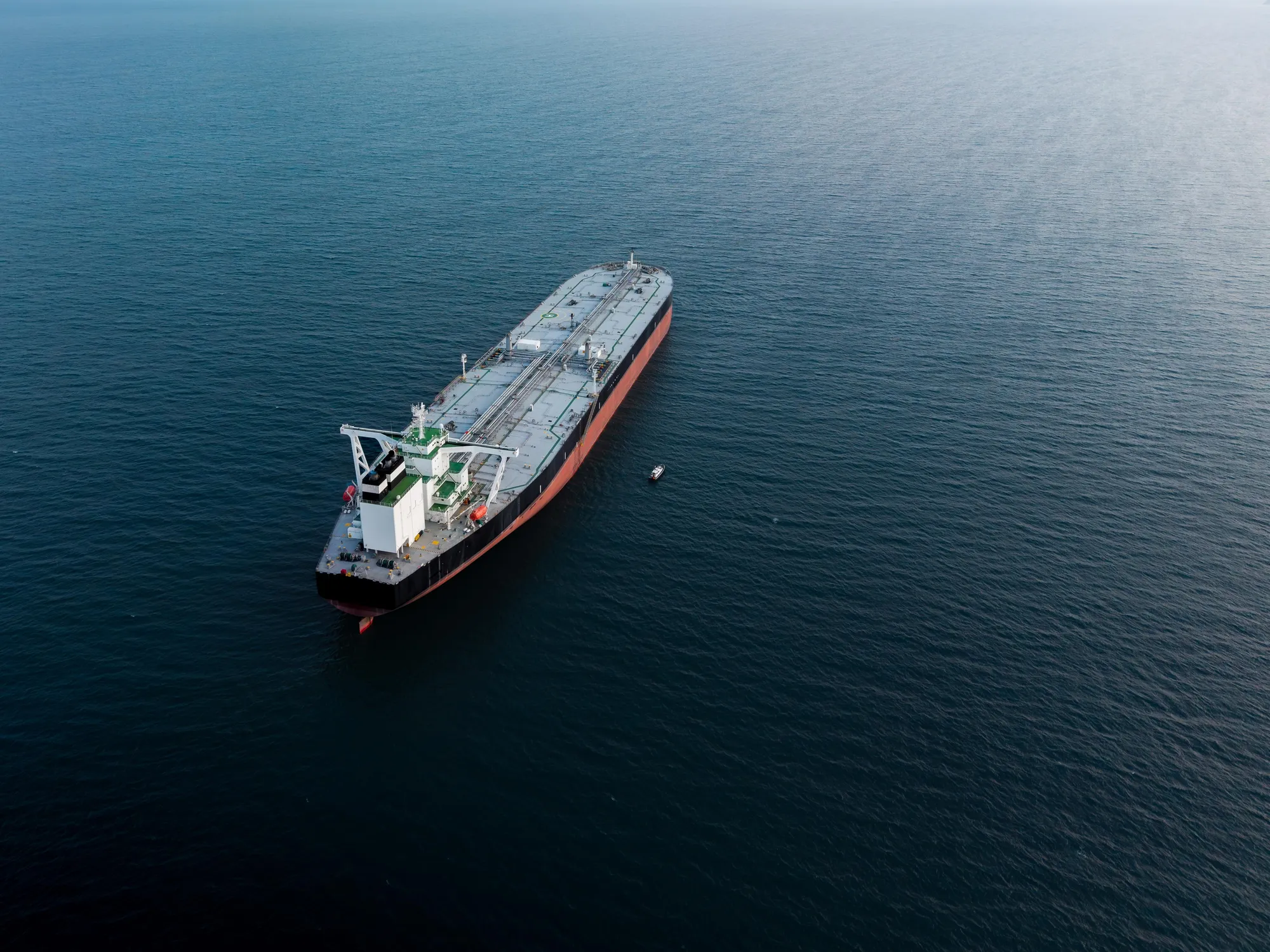
The illegal war launched by the United States and Israel against Iran has triggered the mother of all commodity-supply shocks. In response to the unprovoked...
Economic Resilience
Iran’s economy in the aftermath of the June bombing
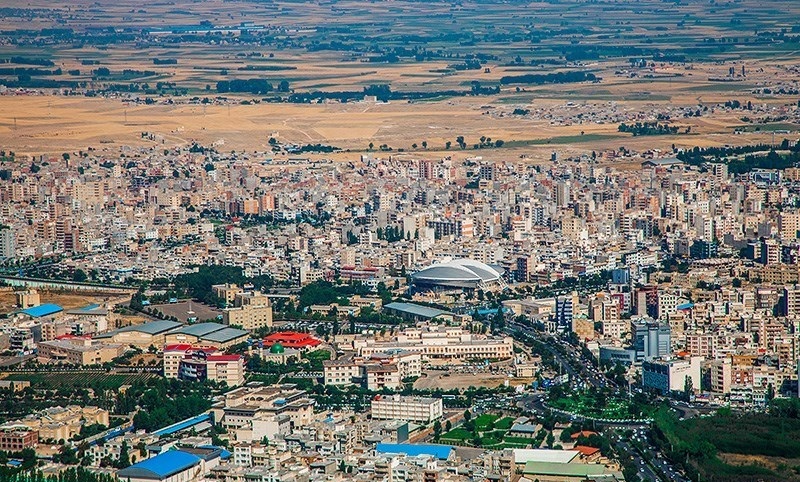
Years of international isolation and sanctions have prompted Iran to structure its economy to survive various kinds of onslaught. Though it remains exposed to further...

Adaptation in the Sanctioned Economy
Domestic manufacturing, overcapacity, and the limits of Iran’s economic resilience
The oil boom of the late 2000s created significant headwinds for Iranian manufacturers. As the value of oil exports surged, the Iranian rial appreciated, real...