September 8, 2025
Analysis
Mining After Apartheid
South Africa’s New Black Capitalists
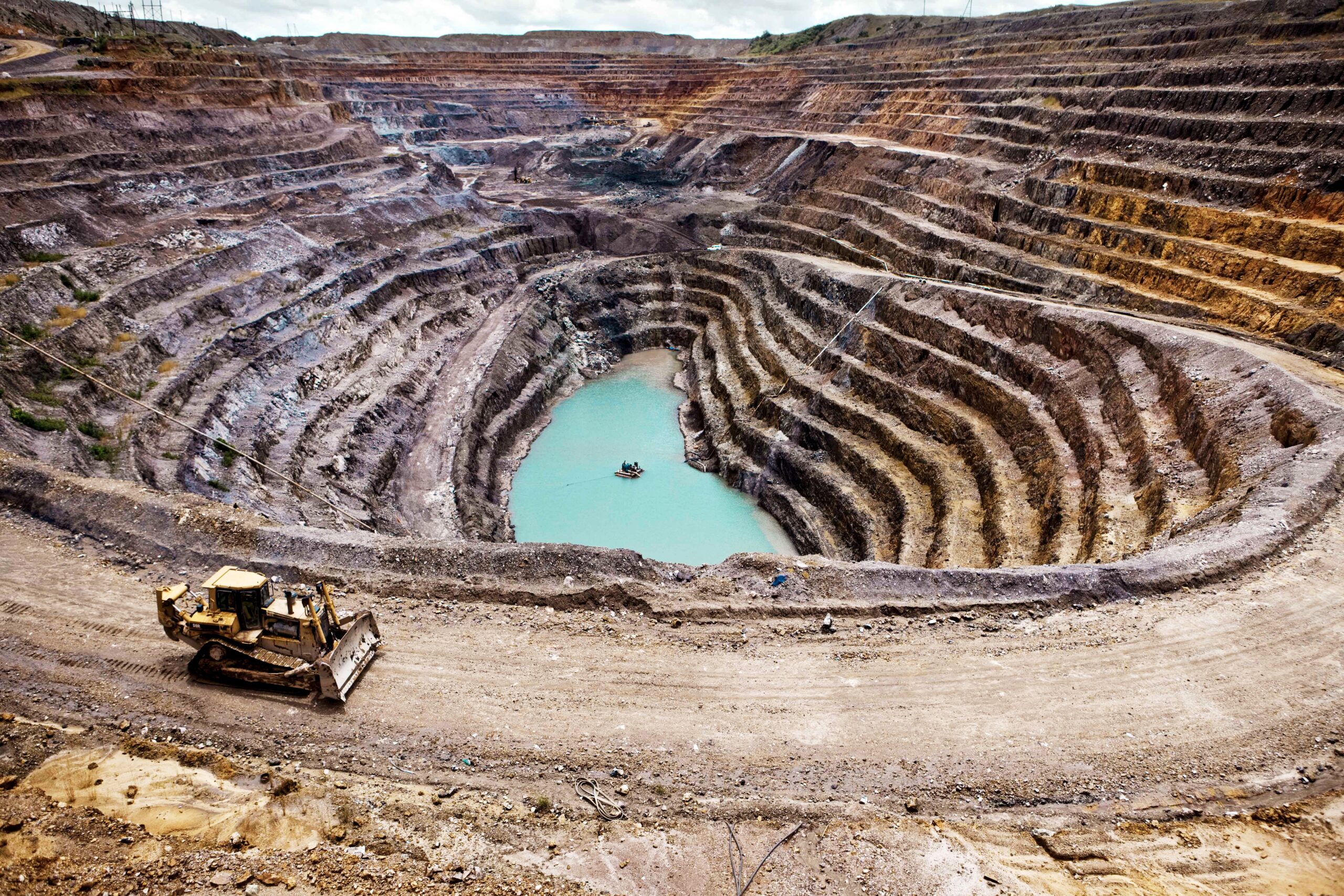
The mining industry has long been considered the fulcrum not only of South Africa’s economy, but of its social and racial order as well. With the discovery of gold in 1886, the mineral revolution turned the disparate colonies under Boer and British rule into the beating heart of the global economy, drawing in black and white workers from across the world and developing new forms of racial labor. As the industry churned out profits, it reshaped South Africa’s economic landscape, providing remittances for the impoverished countryside while spawning secondary industries that absorbed new waves of workers.
The industry’s critical role in South Africa’s racial capitalism made it a key target for the African National Congress upon coming to power in the mid-1990s. The possibilities appeared profound: here was a large, resource rich country on the brink of social and economic transformation. Were it to successfully restructure the mining industry, the ANC hoped, it would provide a model for dismantling the racial inequalities underpinning the rest of South Africa’s economy.
Ambitions to radically re-order the mining sector, however, soon fell short. Instead of pursuing a program of mass redistribution as many had expected or hoped, the ANC ultimately pursued a far more neoliberal project, most carefully documented by Gavin Capps. At times in conflict with the old levers of mining capital, at other times shaped by the power they wielded, the ANC came to shelve any proposals to meaningfully nationalize the industry. Instead, it opted for a “custodianship” model, which hinged on a program of black capitalist empowerment—with no effective levers to enforce any trickle down to the majority of South Africans.
Racial capitalism
The pre-1994 mineral laws were maddeningly complex. Even before the introduction of apartheid in 1948, property laws had varied significantly, often determined by race but also by the different legal systems in South Africa’s British and Boer colonies in the nineteenth century. In the late nineteenth century, the colonial governments of South Africa started cordoning off “reserves” for African occupation, the predecessor to full-blown segregationist policies that restricted where Africans could and could not live.
In the coming decades there were moments of interest in the minerals on this “reserve” land, most notably in the 1920s with the discovery of platinum in South Africa’s northern territories, but there was much uncertainty about what property form these minerals would take: were they private property that could be purchased on the free market, or were the minerals held in communal ownership structures, as the surface land had been designated? The question played out differently depending on the local politics and administrative structures, but once the platinum market went bust in the 1930s, the urgency to confirm the nature of mineral property on the reserves subsided. When the apartheid government formalized the reserves into Homelands—ethnically defined territories, supposedly with self-governing powers—there was little done to standardize or clarify the nature of mineral property in these spaces. Only in the late 1960s did platinum mining begin in earnest in South Africa and a series of deals were struck between the newly established Homeland governments and platinum mining companies, but these were mired in contest and confusion over the nature of the mineral rights.
Instead, for much of the twentieth century, gold was the focus of mining in South Africa. It so happened that the 1886 discovery of gold on the Witwatersrand was on a white-owned farm and later discoveries were classified as falling under land that could easily be transferred to white ownership. This was significant as it created a relatively simple mineral property regime for gold. Minerals could be cordoned off as private property and sold through a land market. As Keith Breckenridge explained, this made access to gold mining licences relatively simple, precise and consistent.1Keith Breckenridge, “Special rights in property: why modern African economies are dependent on mineral resources” (working paper, Brooks World Poverty Institute, 2008), 3.
Much has been said about the role of gold mining in the racial capitalism that came to define twentieth-century South Africa. In short, it was in the late nineteenth century that English mining magnates were able to secure finance from the imperial center to initiate large-scale underground operations that made significant profits. Over the decades that followed, Afrikaans-owned companies entered the sector too; it was the combination of cheap black labor and the ability to raise capital that turned the mining industry into the fulcrum of the apartheid economy, allowing for the consolidation of enormous profits in white hands. The British multinational Anglo American held a noteworthy concentration of South African wealth, controlling not only several mining companies but a range of other industrial-sector companies too. This reflected the monopolistic nature of the apartheid economy. By 1990 Anglo American, and two insurance companies—Sanlam and Old Mutual—owned 75 percent of the Johannesburg Stock Market’s total capitalisation.2Roger Southall, (<)em(>)The New Black Middle Class in South Africa(<)/em(>) (Johannesburg: Jacana, 2016), 85..
Redistribution and its discontents
The radical break that the 1994 democratic elections presented thus offered an opportunity to standardize mineral laws and, with greater ambition, to give Africans access to the enormous wealth generated by the mining industry. In some of the first policy documents of the time, the ANC gave the impression that it intended to do just that. The Reconstruction and Development Programme (RDP), widely understood as the highpoint of ANC redistributive and progressive policy-making, stated that, South Africa was “one of the richest countries in terms of minerals” but that hitherto,
this enormous wealth has only been used for the benefit of the tiny white minority. The minerals in the ground belong to all South Africans, including future generations. Moreover, the current system of mineral rights prevents the optimal development of mining and the appropriate use of urban land. We must seek the return of private mineral rights to the democratic government in line with the rest of the world.3African National Congress (ANC), 1994. The Reconstruction and Development Programme, Johannesburg: Umanyano.
At the same time however, there were equally powerful forces within the ANC alliance pushing in the opposite direction. In the constitutional negotiations leading up to the first democratic elections, the ANC agreed to the sanctity of private property. They feared that radically reconfiguring property relations would jeopardize not only investment in the country, but also the delicately negotiated peace deal itself. The contradictory pull was encapsulated in a 1995 discussion document, co-authored by representatives from government, business, and labor. On the one hand, it stipulated that “mineral rights must be returned to the state.” On the other, it insisted that “the existing system of public and private ownership of mineral rights should be retained.”4Fred Cawood and Richard Minnitt, “A Historical Perspective on the Economics of the Ownership of Mineral Rights,” (<)em(>)The Journal of South African Institute of Mining and Metallurgy(<)/em(>) 98, no. 7 (1998): 375. There were other concerns too. As early as 1990, the General Secretary of the South African Communist Party Joe Slovo recognized the lesser discussed dangers associated with nationalization: “We do not believe that the transfer of ownership from a board of directors to a board of bureaucrats will solve our economic problem,” he said.5Joe Slovo, Interview with Padraig O’Malley, 1990. Archived at http://www.omalley.org.za.
Concurrent to these developments were efforts to develop a black capitalist class in the new South Africa. This was especially the case after the 1997 Asian stock-market crash sent shockwaves through South Africa’s first cohort of democratically-made black shareholders. Leading ANC figures like future President of the Republic Thabo Mbeki felt it was necessary for the state to take a far more interventionist role in reconfiguring racial ownership across the economy, especially within the white-dominated mining sector. A volatile market and structural barriers to black entry required a stronger hand in forcing racial transformation. Long convinced that a black “patriotic bourgeoisie” was necessary for democratic South Africa’s developmental goals, under Mbeki’s reign the ANC adopted an explicit and expanded commitment to the making of black capitalists.
These seeming contradictions between the ANC’s commitment to equitable redistribution of resources and its turn to the market has been referred to, by some, as an “elite pact.” As the argument goes, in the dying days of apartheid and in secret meetings, ANC leaders cut themselves into the profits of white capital. This placated the concerns of white business, which feared at best nationalisation and at worst reprisal for their role in propping up the apartheid economy. As such, it had worked hard from the 1980s to forge links to ANC leaders and shape a peaceful path out of apartheid. At the same time, the relationship with white capital provided a cushy landing for the leaders of the new South Africa, many of whom had been in exile and were disconnected from the struggles on the ground.6Patrick Bond, (<)em(>)Elite Transitions: From Apartheid to Neoliberalism in South Africa(<)/em(>) (University of Natal Press, 2000).
More convincingly, however, Vishnu Padayachee and Robbie van Niekerk have argued that the ANC found itself positioned in a “neoliberal milieu” that shaped both the ideological framework of the ANC’s negotiators and their sense of what was practically possible. As the ANC had spent much of the struggle focusing on the political question of liberation, and not on economic issues, its negotiators were not sure-footed enough to present viable economic alternatives.7Vishnu Padayachee and Robert van Niekerk, (<)em(>)Shadow of Liberation(<)/em(>) (Wits University Press, 2019). At the same time, the ANC was a broad church, representing various concerns and interests, including those of black and aspirant capitalists. It was in this messy and ideologically fraught environment that a new minerals policy was forged.
From Bill to Act
In 2000 the Draft Minerals Development Bill was placed on the table for public comment with the backing not only of the ANC but of a broader alliance including its trade-union partners. The Bill retained some of the ethos of the 1994 RDP statement on mining, but there had been a number of very important shifts in emphasis. While the Bill still recommended the centralization of mineral rights in the hands of the South African state, it now spoke of state “custodianship” rather than nationalisation, making the state the administrator rather than owner of mineral property.. While Dineo Skosana has suggested that, in effect, this created a form of state-led privatisation, the concept remained opaque and did not placate mining executives’ fears.8Dineo Skosana, (<)em(>)No Last Place to Rest: Coal Mining and Dispossession in South Africa(<)/em(>) (Wits University Press, 2025), 29.
The Bill took an equally unclear stance regarding the choice between elevating an elite Black capitalist class and redistributing mining profits. On the one hand, it required a percentage of all mining companies be reserved for “black economic empowerment partners”; on the other, it ringfenced mining royalties for local and rural development. The latter, the ANC hoped, would give mining affected communities a stake in mineral-resource development and contain protests that had previously endangered mining operations, especially in the platinum rich northern provinces.
As the Draft Bill was converted into law, three major developments shaped the final legislation. The first was the knock to investor confidence that the Draft Bill posed. In the courts, in the media, and behind closed doors, powerful actors in the mining industry worked hard to build a case for the possibility of capital flight if nationalization was passed. This was largely successful. South Africa’s premier progressive newspaper at the time, the Mail and Guardian, ran story after story foregrounding the industry’s fears about the Bill. On the eve of attending a mining conference in Canada in 2001, the Minister of Mineral and Energy Affairs, was reported to have been reduced to offering “discreet but emphatic opinions” on the matter.9David le Page and Mungo Soggot, “Mining Companies fight for their rights,” (<)em(>)Mail and Guardian, (<)/em(>)15 March, 2001.
The second development was, perhaps, less expected. In the late 1980s the powerful mining company Johannesburg Consolidated Investments (JCI) made three dubious deals in Lebowa, one of the platinum rich ethnically-defined Homelands in the north of the country. Unbeknownst to its top political leaders, JCI signed a deal with the Lebowa Development Corporation to secure near unfettered access to mineralized land across the territory. In a confidential commission of inquiry, it was stated that “the consequence of the … agreement is that virtually all platinum reserves in Lebowa are controlled by the JCI group without clear indications of when mining must begin and what royalties will be paid.”10“Oelef Abram De Meyer, “Geheime Verslag Uitgebring Deur Die Kommissie van Ondersoek Na Die Aanwending van Die Lebowa-Inkomstefonds En Beweerde Wanbestuur in Lebowa,” 1991, 26, K428, 1-9, 6/3/1, National Archives of South Africa. The deals soon became an open secret both within the Homeland government and among incoming ANC officials, though they were never officially exposed or taken to court. Along with many other monopoly companies, in 1995 JCI restructured and unbundled, selling off non-core business to streamline its market offerings. As a result of JCI’s break up, Amplats (Anglo American) took over the company’s pre-1994 mining licences.
This was a double-edged sword. Anglo got access to a vast expanse of platinum in the northern part of the country but they now had to fight to hold on to these resources and its competitors saw an opportunity in the proposed legislation to wrest some control from Anglo’s hands. Rearranging mineral ownership would, they hoped, undermine Anglo’s inherited monopoly. This, in many ways, explains the restrained challenge to the nationalisation of the minerals. If, as the argument went, a gentle form of state-centralisation took the previously held mineral rights out of the hands of Anglo American, other mining companies might be allowed to bid for those resources. As platinum prices began to surge, this became an increasingly appealing idea. The result was a fractured mining lobby, speaking with more than one voice on the question of nationalisation.11Gavin Capps, “A Bourgeois Reform with Social Justice? The Contradictions of the Minerals Development Bill and Black Economic Empowerment in the South African Platinum Mining Industry,” (<)em(>)Review of African Political Economy(<)/em(>) 39, no. 132 (2012): 326.
The third factor shaping the final legislation was the imposition of racial quotas on the mining industry. In the post-apartheid period black economic empowerment and racial transformation were well understood to be non-negotiable. It would be blindingly short-sighted for any mining company to argue against the need to diversify and transform the ownership structures of an industry which had come to represent the brutality of racial capitalism. A more politically palatable line of argument however did present itself to these companies. They argued that it was not the state that should drive the process but mining companies themselves. These companies, it was argued, were best placed to transform the industry and champion racial diversity. Anglo American and others tried hard to demonstrate their clear commitment to this project, hoping to show there was no need for legislative constraint. Anglo American went into partnerships with prominent black businessmen, opening up high-profile mining companies with racially diverse board members and owners. One of the best-known deals from this time was with Patrice Motsepe, Cyril Ramaphosa’s brother-in-law, who went into a 50-50 Joint Venture Agreement with Anglo to establish African Rainbow Minerals. On its own, this did not convince the ANC to dilute the “empowerment” requirements, but combined with another investor panic it gave pause to those arguing for the maximalist position.
The outcome of both this public and closed-door politicking led to the final version of the Minerals and Petroleum Resources Development Act (MPRDA) of 2002, a major break in South Africa’s law, which has set the measure for all subsequent mineral legislation and policies. Custodianship remained the core thrust of the 2002 Act, turning the South African state into an administrative and regulatory body for private access to minerals.12Dineo Skosana, (<)em(>)No Last Place to Rest(<)/em(>), 29.
Racial transformation remained present in the letter of the law, but the demands on the sector had been watered down. To secure mining rights, companies would need to demonstrate just 15 percent “empowerment” in the first five years following the passing of the MPRDA, and 26 percent in the decade thereafter. Importantly, ownership was not the only measure of “empowerment”; “employment equity” and “corporate social responsibility” were added to the “scorecards.” Social and Labour Plans were required for the issuing of a mining licence too, which, the MPRDA’s proponents hoped, would also put pressure on mining companies to interact sensitively with “communities,” contribute to local development, and reconfigure the relationship between mining and exploitation.
The ringfenced royalty also remained in the final version of the MPRDA but it was of a reduced amount and earmarked for the mining-affected community, rather than contributing to a broader tax base. Working in conjunction with a raft of laws empowering rural chiefs to act as “community representatives,” royalties were soon caught up in the politics of “traditionalism” in the countryside. As Gavin Capps has argued, this was based on an effort to create “community stakeholders” in a mine, a particularly neoliberal logic ripe for corruption and mismanagement.
While quibbles remained, the general consensus from both black and white mining companies was that the MPRDA was a valuable piece of legislation that would facilitate relatively smooth access to South Africa’s rich mineral resources. Though there have been several updates to the law and its associated Mining Charter, public opinion has been far less enthusiastic. Across the platinum belt in particular, as well as in South Africa’s north-eastern province of Mpumalanga and on the coast of the Eastern Cape, mining-affected communities fought tooth and nail against the MPRDA, arguing that it overrode residents’ surface rights and would lead to a wave of post-apartheid “dispossessions.”13Sonwabile Mnwana et al., “Chiefs, Land and Distributive Struggles on the Platinum Belt, South Africa,” in (<)em(>)Traditional Leaders in a Democracy: Resources, Respect and Resistance,(<)/em(>) (Johannesburg: Mistra, 2019), 128–52; Skosana, (<)em(>)No Last Place to Rest(<)/em(>). Black mine owners and rural chiefs have been fingered for cashing in on the dividends of a de-racialized capitalist order at the expense of poor, rural, black South Africans, while protests and political assassinations on the mines have become the norm. Despite the PR around the supposedly successful model of the Royal Bafokeng in the North West Province, the vast majority of “community trusts”—established to distribute mining profits—are at best defunct and at worst, corrupt.14An example of the tensions in community trusts is found in this report: https://amabhungane.org/malema-buddys-mine-leaves-community-reeling/
But even on its own terms, it’s unclear how successful the legislation has been at nurturing a black capitalist class. In 2015 the Chamber of Mines reported that, on average, 32.5 percent of all mining companies were black owned, but this figure was misleading, as it erroneously included employment in the ownership calculation.15Duma Gqubule, “Transformations in South Africa’s Mining Industry,” in (<)em(>)The Future of Mining in South Africa: Sunset or Sunrise?(<)/em(>) (MISTRA, 2018), 131. In 2018 economist and journalist Duma Gqubule was much more pessimistic about black ownership. He did concede that there was significant public ownership (through South African parastatals such as the Industrial Development Corporation and the Public Investment Corporation) but insisted that less than the 26 percent target of the industry was in black hands.16Andrew Bowman, “Black Economic Empowerment Policy and State–Business Relations in South Africa: The Case of Mining,” (<)em(>)Review of African Political Economy(<)/em(>) 46, no. 160 (2019): 133, https://doi.org/10.1080/03056244.2019.1605587.
Contemporary developments
In recent months the MPRDA has been in the news yet again, as a new set of amendments have been under discussion. At the centre of the most recent reporting has again been the empowerment requirements attached to mineral prospecting and extraction. Concerned about the new criteria for prospectors in the latest amendments, senior mining officials in the private sector blasted the Minister of Mineral Resources and Energy, Gwede Manatashe, for creating uncertainty, instability and a fresh set of bureaucratic requirements for the industry. Equally concerning to mining companies is Mantashe’s threat to erode the industry’s gains in a 2021 court case often referred to as “once empowered, always empowered.” As ruled by the Pretoria High Court, mining companies would retain their empowerment status if their black shareholders sold off their shares.
How this will be resolved is uncertain. Though South Africa can now showcase a relatively robust black elite thirty-one years after the end of apartheid, it is still comparatively small and has done little to reduce the shocking levels of over 50 percent unemployment and inequality in the country. The ANC’s hope that the MPRDA would drive black capitalist accumulation has fallen short and “transformation” remains a much-contested political project. As Gavin Capps has argued, the legislation has been a “bourgeois reform” at best.17Gavin Capps, “A Bourgeois Reform with Social Justice?”. At worst, it has been mired in contradiction, elite interests, and corruption. Dogged by rent-seeking, violence, and now Trump’s interest in critical minerals, there is little reason to hope that mining in South Africa will be the engine of redistribution of the country’s enormous mineral wealth.
Further Reading

Patronage Partitions
South Africa after the 2024 elections
In South Africa’s watershed election last May, the African National Congress (ANC) failed to secure an outright majority for the first time in the country’s...

Closing the Extractive Frontier
An interview with Andrés Camacho, Colombia’s former Minister of Mines and Energy
With more than half of Colombia’s export revenues coming from coal and fossil fuels, Colombian President Gustavo Petro’s plan to end domestic fossil fuel production...

The Sacrifice Zone
Mining communities in the wake of Chile’s constitutional referendum
In September 2022, 62 percent of Chilean voters rejected the country's proposed new constitution. The defeat took many by surprise—the demands to rewrite the existing...