September 21, 2026
Analysis
Construction’s Data Center Gamble
Is the data center boom the solution to the problems faced by buildings trades unions?
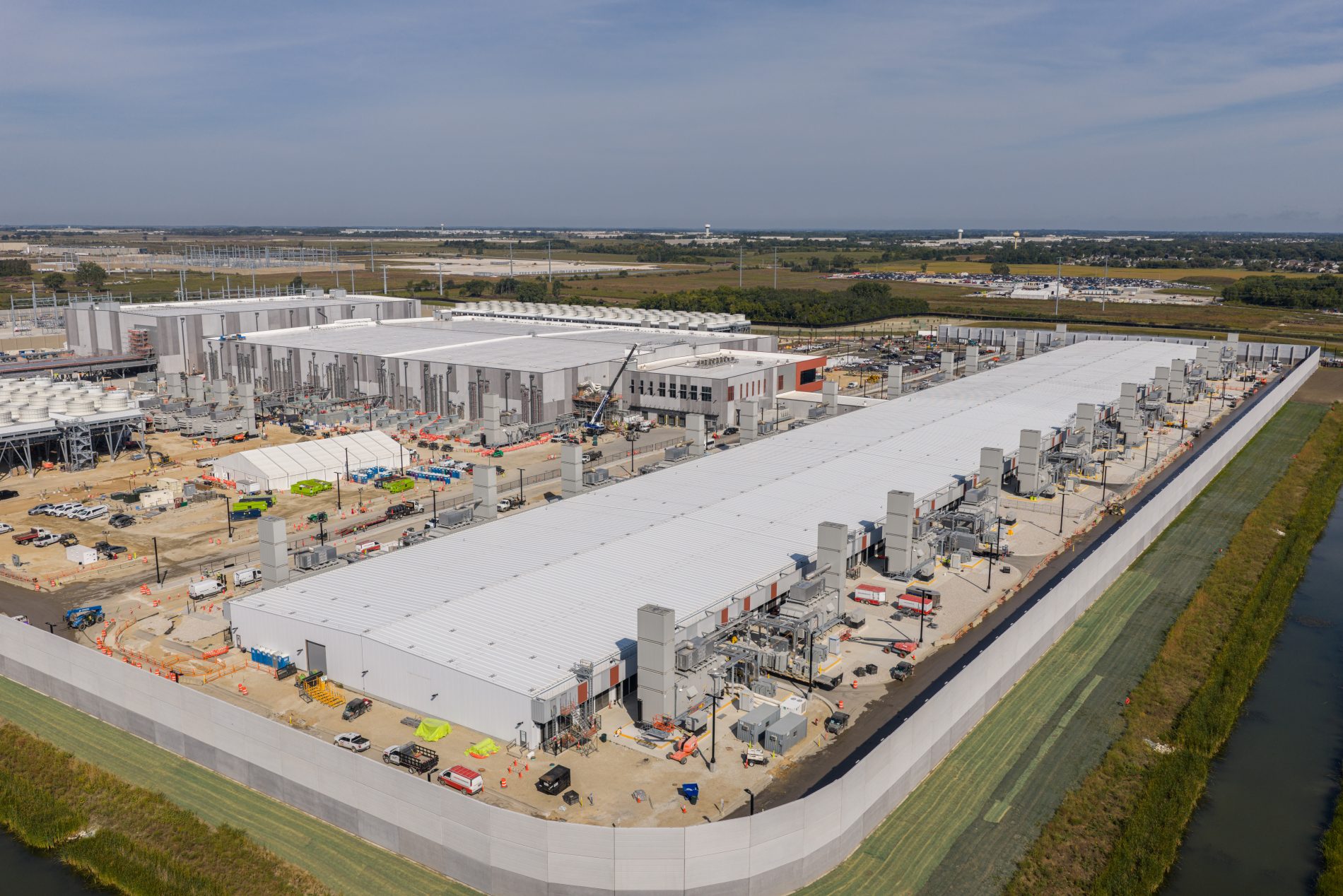
Once touted as a transformational boon to regional economic development, data centers have become one of the few issues that have generated overwhelming bipartisan opposition in communities across the country. A recent series of surveys conducted by Heatmap/Embold found that respondents’ views have moved by sixty-one points in twelve months, such that 75 percent of Americans opposed data center construction as of this August. Michigan Senate candidate Abdul El-Sayed reflected the shifting winds when he told an audience at a rally in late July, “People really effing hate data centers.” The excessive demands on water and electricity, loss of prime farmland, overly generous tax incentives, and concerns about the impact of AI have all sparked this astonishing swing. The recent alarm bells sounded by Anthropic CEO Dario Amodei and other tech insiders about rogue AI models have only added fuel to the fire.
Building trades workers and their unions have been among the last reliable supporters of these massive projects: electricians, carpenters, plumbers, and other trades workers regularly turn up at city council hearings and town permitting meetings to advocate for the jobs these megaprojects will create. This enthusiasm stems from the fact that the data center buildout constitutes one of the few expanding sources of contract construction spending. According to the US Census Bureau, total private construction spending peaked two years ago in the summer of 2024, and activity has been declining in the general office, manufacturing, and commercial sectors. Data center construction, by contrast, has tripled in scope in two years to now make up nine percent of all private nonresidential construction spending. In the month of July, data center construction spending reached over $6.5 billion, the largest month on record, with the past twenty-four months totaling $133 billion. Describing a proposed data center in Westfield, Massachusetts, Michael Langone, business manager of Plumbers and Pipefitters Local 104, told The Boston Globe, “It would be an absolute game-changer. This goes above and beyond any construction project we’ve ever seen. This would be hundreds and hundreds, thousands of construction jobs.”
Building trades workers recognize that their occupations are inherently unstable and precarious, one well-paid step up from a gig existence. While the hourly wage may be lucrative, the annual income can be highly variable, dependent on the boom and bust nature of a cyclical industry. Projects start and end. Workers have no guarantee of lasting the duration of a particular job, let alone being moved by their employer to the next job. Contractors win and lose bids, resulting in fluctuating labor needs. Layoffs are routine and always around the corner. The old trope—“the first day on the job is one day nearer to layoff”—is not just a bitter aphorism. During construction booms, the drumbeat for skilled labor eases the level of anxiety in the workforce but the long-term insecurity built into the industry often drives workers from construction into lower paid but less stressful positions.
Megaprojects like data centers not only provide opportunities for employment, but continuous work. Landing a job on a data center construction project is a trades worker’s equivalent of hitting the lottery. The daily routine of going to work at the same location for months or even years is a welcome alternative to the less secure short- and medium-term job hopping that characterizes much of construction. Big Tech companies have the resources to hire the most experienced supervision available, paying superintendents and project managers above industry norms. As a result, the jobs tend to be well-managed and more likely to emphasize quality and safety over risk and speed. The promise of six day work weeks and ample overtime can generate six-figure compensation. Robert Wilson, an electrician for thirty-nine years who is closing in on retirement, told the Globe that the Westfield data center was “a generational project,” an opportunity for his younger colleagues “to be able to save money for a down payment on their first home.”
The surge in hours worked from the data center projects also benefits the health of unions: it not only means regular paychecks for members and their families, but significant contributions to the unions’ training, health and retirement funds. These programs are a central part of the union mission and their financial stability ebbs and flows along with the other barometers of the industry.
Tech companies, too, realize the utility of a relationship with unions. Technology writer Jasmine Sun claims that data center representatives believe the resistance is merely a marketing problem, to be cured by the infusion of a sufficient amount of cash to win local hearts and minds. Union workers’ support is a far more effective, authentic, form of promotion than the tech companies’ frequently condescending and obtuse PR methods in rural communities. “Those industries did a really bad job of stopping the rhetoric and educating communities,” Anthony Abrantes, assistant executive secretary-treasurer for the Eastern Atlantic States Regional Council of Carpenters, told The New York Times. “It’s almost like we’re doing their advocacy and business development for them.”
In April, the North America’s Building Trades Unions (NABTU)—the umbrella organization of the individual craft unions—announced a Memorandum of Understanding to build a data center for OpenAI in Michigan that is projected to serve as a template for similar projects around the country. In June, Google unveiled a $50 million initiative to train over 300,000 skilled workers in conjunction with union training programs. In August, NABTU and Meta agreed on a partnership to create a workforce pipeline. While these programs reflect a welcome expansion of union membership, such plans may be overly optimistic: there are some signs that the AI bubble may burst. For now, construction continues apace, but according to Data Center Watch, at least seventy-five data center projects—together, worth approximately $130 billion—were already blocked or delayed in the first quarter of 2026, the result of a combination of equipment supply chain logjams and the swelling ranks of opponents. Rather than seeing the data center boom as a panacea for the ills that have troubled the industry, buildings trades unions need to continue to compete aggressively for the standard sorts of projects that make up the bread-and-butter of construction work, while also seeking to grow their ranks and regain market share from non-union contractors.
The state of the building trades
The building trades’ support of data centers comes in the wake of fifty years of decline in the union share of the nonresidential construction market. Through the 1960s, nearly 80 percent of the nation’s construction dollar was spent on projects built with union labor. The combination of an overheated war economy and labor shortages caused by the overseas military deployment of young men who were likely entries into the trades created an inflationary environment toward the end of that decade. Wages rose rapidly and strikes became increasingly common. Corporate leaders and large private owners formed the Construction Users Anti-Inflation Roundtable (later renamed the Business Roundtable, a potent policy entity to this day) in 1969 to combat what they saw as the excessive power of building trades unionism. The application of a determined corporate influence in the context of a growing anti-labor political environment altered the landscape. The percentage of workers in the industry who were union members declined from 42 percent in 1970 to 22 percent in 1992. The result was a deterioration of working conditions that persists to this day. Collective bargaining resulted in only modest wage increases during the period, and as a result non-union wages plummeted like a lead weight, such that construction workers overall—union and non-union— experienced a 17 percent drop in real wages between 1980 and 1992. Noting the transformation, Roundtable leader Charles Brown, formerly CEO of DuPont, declared victory as early as 1982, saying that “the capitalist system worked again.”
The corporate assault took an earlier generation of union leaders by surprise. A false sense of security—the product of decades of market control—fostered a complacent corps of union officers unfamiliar with and opposed to notions of organizing and growth. In fact, leaders and members alike advocated for keeping the ranks restricted, seeing it as the best route to securing member employment and limiting their pain in business cycle downturns. In the 1972 words of AFL-CIO chief (and former Plumbers Union head) George Meany: “We didn’t want the people…we merely wanted the work.” Country club unionism, with its racial and gender exclusionary practices, was a tried and true formula for keeping wages high and unemployment low for members in a strong union market. But that formula was no longer effective as union market share declined dramatically.
Today, building trades unions remain relatively strong in metropolitan areas in the Northeast, Midwest, and West Coast. But buildings in the South, Southwest, and Rocky Mountain states—among the country’s most active markets—are erected largely with non-union labor frequently defined by low wages, unsafe conditions, and wage theft. Certainly, many of the data centers under construction or in the pipeline are being built with non-union labor, especially if they are located below the Mason-Dixon line. According to an effusive press release from the chief economist of Associated Builders and Contractors (ABC), the industry’s militantly anti-union trade association: “42 percent of [ABC] contractors with more than $100 million in annual revenues are under contract to work on data center projects.”
Activist voices in the union trades have decried the degraded standards in the contemporary industry and have called for the incorporation of organizing strategies into what had once been a servicing model of unionism, in which the union focuses on aiding existing members. But organizing in the building trades is unlike most other labor, political or community organizing. Workers are mobile and employers are mid-sized or small. According to 2023 US Census Bureau data, fewer than two percent of the country’s 815,000 construction establishments have fifty or more employees. There are no permanent workplaces. Given the highly competitive nature of the industry, enterprise organizing (achieving a contract with a single firm) is generally impractical since the additional labor costs would immediately place the newly signed contractor with an insurmountable competitive disadvantage against existing rivals. Whole sub-market organizing (identifying and then organizing a particular geographical industry sector) of both companies and workers is the only workable option. Yet there is a complex hierarchy of general contractors and multiple subcontractors and fifteen trades each with their own union and jurisdiction, further complicating innovative strategies.
The industry’s workforce, physically demanding and with low barriers to entry, has always been made up of immigrants or their descendants. That is still true but today’s non-union trades workers frequently do not speak English as a first language. Many of the unions are now far more diverse and have hired Spanish- and Portuguese-speaking organizers, but the challenge remains daunting. Contrary to Meany’s assertion, effective construction organizing involves both the people and the work. The traditional top-down approach of advocating for upcoming projects to be built with existing union labor remains an essential component, but its success rests on a foundation of the kind of bottom-up organizing that includes advocating for the non-union workforce on jobsites. Salting, stripping (in which a union tries to poach a non-union contractor’s best workers), and pursuing regulatory enforcement are among the tools necessary to undertake this project. Until each of the trade unions is seen by workers as aspiring to represent all the members of their craft, not just those already holding membership in local unions, the current market share is likely to be unchanged.
The opportunity and threat of megaprojects
Since the majority of the nation’s contract construction spending has moved from union to non-union firms, union leaders welcome the assurance of the data centers’ long-term stable employment for their members, and are more willing to expand their ranks in light of the swelling demand for labor. In fact, for the first time since 2016, the percent of construction workers who are members of labor unions increased in 2025, from 10.3 to 11.1 percent, representing 79,000 new union members. Agreements with large construction users reinforce the concept of developing relationships with a smaller number of large clients rather than constantly repeating the daily and sometimes unproductive grind of advocating for a handful of jobs on less significant projects. And yet, a cautionary note is important. At times, megaprojects have produced a sense of euphoria that obscured long-range implications. All projects, even megaprojects, eventually come to an end, and the rising level of opposition to these projects may hasten quicker-than-anticipated endings.
Tina Williams, who was hired by the International Brotherhood of Electrical Workers (IBEW) to manage training grants from the tech giants, recognizes that her mandate is to bring in enough workers to fulfill the perceived need but, as she told the Times, realizes the union also needs to maintain “our core work in each of these locals.” Unfortunately, Williams’ observation is not always shared or heeded. The allure of the “big job” obscures the reality that draining union labor from the routine and ongoing construction of office buildings, schools, hospitals, and commercial projects may create a vacuum which risks being filled by aggressive non-union contractors that might not have the capacity for a quantum leap into the requirements of the data center world but can take the next step up the business development ladder and win contracts for jobs that might have been built with union labor.
Some megaprojects, indeed, have a history of leaving a transformed industry in their wake. The creation of the Washington, D.C. Metro system in the 1970s was the single largest project in the history of the city. At the time, construction work in the nation’s capital was largely carried out with union labor. Attracted by the influx of long-term and plentiful jobs, union contractors and members flocked to the tunnels and stations of the new transit system. The union halls were empty as trades workers in the region enjoyed an extended period of full employment. But the magnet of the Metro meant that there were not enough union workers to fill the sites of conventional construction projects. With the active support of an increasingly hostile and anti-union coterie of owners and developers, non-union firms emerged from the margins to the center of the industry. By the time the last ribbon was cut on a new Metro station, Washington D.C. was on track to becoming a non-union city.
A similar dynamic occurred when the Seabrook, New Hampshire nuclear power plant was built in the late 1970s and early 1980s. The massive project sucked all the union contractors and labor from the smaller cities and towns in the Granite state, as well as workers from surrounding states. While it lasted, Seabrook was a bonanza for the hundreds of workers on the job and for local small businesses, but when the final piece of finish hardware was applied in 1986, New Hampshire’s regular construction market was dominated by non-union firms.
Jobs, politics, and organizing
The emergence of the data center market has the potential to create an immense number of high road, well-paid long-term jobs and introduce a new generation of men and women to the trades. Working in the unionized trades is a significant pathway for a diverse group of young people without college degrees toward a meaningful and gainful set of occupations. Construction has served, and can still serve, as a singular conduit out of poverty. The union sector represents one of the best options for a blue-collar version of dignity and respect at work.
As the mid-term elections approach, the political resistance to data centers is only hardening. Uncertainty and skepticism about the broader consequences of AI amplify the fears about the disruption these monoliths bring to local communities. When even industry leaders like Microsoft founder Bill Gates claim that “the transition to the AI era will be one of the most turbulent times in human history,” and suggest that adequate preparatory measures are not in place, the pressure to slow or stop the construction of data centers will likely increase. Most contemporary union leaders have recognized the need to change, organize, and grow. Now they will have to manage the tension that comes with advocating for the windfall of new data center job opportunities in such a climate.
Even if the projects move forward, unions will need to be on guard to avoid repeating the historical pattern in which megaprojects can derail the mission to reassert overall union strength. By serving as unintended vehicles for the loss of future market share, megaprojects hold as much risk as opportunity. The road to re-organizing the industry will require both union leaders and members to navigate the complicated world of the data center explosion while maintaining a focus on holding and extending their presence on less high-profile projects, combined with a commitment to reaching out to the large non-union workforce, in order to transform conditions in the broader construction world.
Further Reading
Built Trades
Employer claims of unavailable labor are rooted in an unwillingness to raise wages and the long-term decline of the nation’s system of training and allocating labor
Experiments in American Unions
An interview with Ben Fong
Governing the Grid
The data center boom has exposed decades of deferred choices about who plans and finances America’s electricity infrastructure
Further Reading

Built Trades
Employer claims of unavailable labor are rooted in an unwillingness to raise wages and the long-term decline of the nation’s system of training and allocating labor
As the American economy reopened in the first half of 2021, reports of a “labor shortage” spread throughout US industries. But there was one sector...

Experiments in American Unions
An interview with Ben Fong
What is the future of labor organizing under Trump? Despite the apparent upsurge in labor militancy in recent years, the share of the US workforce...
Governing the Grid
The data center boom has exposed decades of deferred choices about who plans and finances America’s electricity infrastructure
Americans’ electricity bills are at historic highs and rising. In 2025, utility companies filed a record $31 billion in rate increase requests. A report early this...