August 31, 2026
Analysis
Governing the Grid
The data center boom has exposed decades of deferred choices about who plans and finances America’s electricity infrastructure
Americans’ electricity bills are at historic highs and rising. In 2025, utility companies filed a record $31 billion in rate increase requests. A report early this year found that about one in six households was behind on its utility bills—even before the war in Iran sent energy costs soaring. Electricity is rising faster than inflation, and as of June, the rising cost of energy alone has erased a year and a half of wage gains for the average American worker.
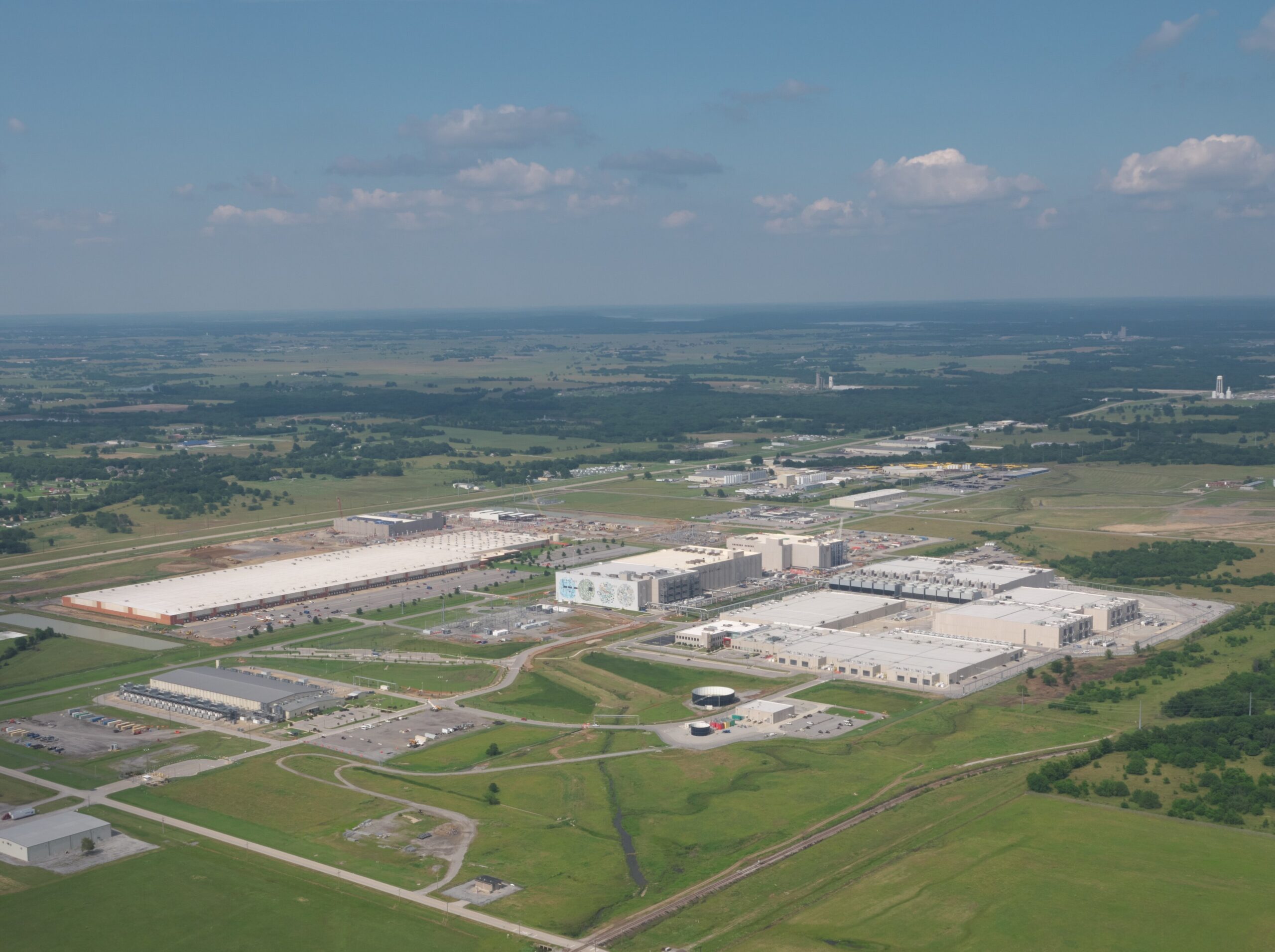
One particularly noticeable driver of this trend is the data center boom. After decades of flat electricity demand, peak load—the maximum demand for electricity at any given moment—is projected to grow by anywhere from 103 to 197 gigawatts by 2030, with data centers the single largest source of that new consumption. In total, this represents the equivalent of adding the electricity needs of several new states to a grid already struggling with current demand. In electricity markets where supply is short, that demand is showing up directly in wholesale prices and, downstream, in household bills. For example, in Pennsylvania, where the data center buildout has accelerated sharply, average electricity bills rose 13 percent in a single year.
These numbers have generated popular political opposition to data centers. Sixty-five percent of Americans oppose the construction of new data centers in their community, with many citing energy costs as a chief concern. The concerns are legitimate. Data centers are arriving at a moment when the grid is already strained, and absent intervention, the energy price increases they will cause will land hardest on the people with the fewest options. But the affordability crisis did not begin with the data center boom, and its roots run deeper than any single category of new load.
The reason the data center buildout is landing with such potential pain for household energy bills is that the grid has, for decades, been operated by a deregulated patchwork of rent-seeking private companies who have insufficient incentives to build ahead of demand. Whether or not the data center boom continues apace, without dramatic changes to the structure of grid planning and grid governance, that status quo will persist. However, the combination of growing political pressure on AI companies and their need for a reliable and quickly expanding grid presents an opportunity—and the leverage—to change who plans and finances American power.
The compact’s decay
The American electricity system—composed of electricity generation, high-voltage transmission, and low-voltage distribution—has never been a free market. It is the product of a longstanding bargain: investor-owned utilities (IOUs) receive exclusive franchises to serve defined service territories and, in exchange, state public utility commissions set the rates they can charge. This regulatory regime is the product of over a century of struggle between the private utility lobby and the state.1Before state public utility commissions extended jurisdiction over electric companies, competition was limited by the municipal franchises authorizing their operation.
In the decades after Edison opened the Pearl Street Station in Lower Manhattan in 1882—the world’s first central power plant—there was a contest over who would own the pieces of this burgeoning electric system. Cities and towns electrified via both small municipally- or privately-owned utilities. As private firms engaged in chaotic competition, their overbuilding and subsequent financial instability gave way to the consolidation of ownership under sprawling monopoly holding companies. The incumbent power of these early monopolies to set prices was threatened by a political movement for municipal ownership of utilities. State-level regulation of private utilities—the ‘regulated monopoly’ model—was thus pushed by the utility industry to ward off this danger. In 1910, Samuel Insull, utility magnate and mentee of Thomas Edison, wrote about state regulation, arguing that “the obligations of monopoly must be accepted” in order to prevent municipalization.
It was not until the New Deal that federal regulation was implemented. Utility holding companies had become adept at operating pyramid corporate structures that forced risk onto mom-and-pop investors and evaded state jurisdiction. During the Great Depression, the biggest holding companies collapsed into bankruptcy (forcing Samuel Insull to flee to Europe on charges of larceny and embezzlement). In the years following the Great Crash of 1929, investor-owned utilities, facing intense national scrutiny, organized their own trade association in 1933—the Edison Electric Institute, which still exists today—to improve public relations and attempt to influence the policy changes on the horizon. This change arrived in 1935 when Congress passed the Public Utility Holding Company Act, which broke up the holding companies and pulled the industry under federal regulation.
Out of that crisis emerged a federal government willing to plan and finance the expansion of the grid. The New Deal not only empowered the Federal Power Commission (FPC, later the Federal Energy Regulatory Commission, or FERC) to regulate interstate power sales, but also created a constellation of public institutions to plan and drive cheap public financing for generation and transmission capacity in regions the electric companies had written off. This included building capital-intensive hydropower projects and electrifying rural America—which had for decades been without the lightbulbs or radios available in cities—in roughly fifteen years. (Many of these institutions still anchor the electricity system today, including the Tennessee Valley Authority and the Bonneville Power Administration.)
That planning capacity continued into the postwar decades. Through the 1960s, as economic expansion and rising electrification drove load growth, the FPC coordinated reliability standards and construction across the country. By ensuring a guaranteed rate of profit via regulation, utilities had the certainty to build transmission and coal-powered generation ahead of demand, in turn driving lower electricity prices throughout the 1950s and 1960s. But this managed equilibrium between capital and the state was a far cry from the New Deal’s planning ambition. Instead, the era saw the gradual corrosion of New Deal planning as the gas lobby worked to expel New Dealers like Leland Olds from the FPC during the Red Scare.
This corrosion would soon give way to an entirely new philosophy of governing the grid based on market competition. As the 1970s and the 1980s brought deregulation to railroads, airlines, and other once-regulated industries, electricity was soon to follow. Facing cost increases, capacity constraints, and a need to improve energy efficiency due to the 1970s oil crises, a bipartisan coalition wagered that markets could do what planners had done half a century before, only better. The Public Utility Regulatory Policies Act of 1978 (PURPA) required utilities to purchase power from independent generators at the “avoided cost” of not having to produce energy themselves, calculated by regulators based on hypothetical fuel and construction costs. Although this scheme was intended to introduce competitive discipline in electricity generation, instead, as fuel prices fell below the forecasts embedded in those contracts, utilities were locked into above-market purchase obligations for years, passing the costs to ratepayers (a dynamic that required legislative correction in the Energy Policy Act of 2005).
This trend toward competition continued into the new millenium. Beginning in the late 1990s, at the initiation of another bipartisan coalition, FERC ordered utilities to let competitors ship power over their transmission lines and encouraged the creation of Regional Transmission Organizations (RTOs) and Independent System Operators (ISOs) to oversee wholesale electricity markets, auctions where suppliers would compete to sell electricity. Free-market conservatives argued that competition would lower costs, while environmentalists bet that markets would favor cleaner energy for electric generation, leading the nation to retire polluting plants faster. Following suit, roughly half of states restructured electricity sales by creating new electricity markets. Lawmakers also moved to open new retail choice programs for consumers, which enabled households to choose which company supplied their electricity. Following the trend PURPA set two decades earlier by establishing independent generators, these reforms fully split generation from transmission and distribution, which were understood as natural monopolies and thus difficult to deregulate, and created a new class of third-party power producers and retailers, many of which operated with less oversight and regulation than their vertically integrated counterparts.
Today’s electric grid consists of a patchwork of approaches to planning, financing, and operating the grid, sedimented with time. In all fifty states, utilities that generate, transmit, and/or distribute energy sit under the jurisdiction of state regulatory commissions and, in all but one (Nebraska), IOUs distribute electricity as regulated monopolies with a guaranteed rate of profit. In all the lower forty-eight states but Texas, the federal government regulates the interstate sale of electricity. In a majority of states, some combination of wholesale and retail markets for electricity has been opened to competition. Nearly all states are covered by an overlapping patchwork of regional “balancing authorities,” responsible for balancing supply and demand across the grid. Some of these—such as the RTOs and ISOs—oversee wholesale markets in deregulated states. Others—such as the Tennessee Valley Authority and the Bonneville Power Administration, the largest of the four Power Marketing Administrations—continue to operate as public power relics of the New Deal era.
Competition and its limits
The founding theory of regulated monopoly is that, absent public ownership, regulation acts as a substitute for competition that cannot exist in a natural monopoly, keeping prices at a level that covers costs without generating excess returns. In the standard version of this model, a utility’s authorized profit is calculated as a return on the value of its physical assets, known as the “rate base.” Following precedent set by the Supreme Court, utilities’ rate of return must be “commensurate with returns on investments in other enterprises having corresponding risks.” This means that—despite the fact that utilities have captive customers, no default risk, no competition, and very low demand risk—returns are calculated on an approximation of standard business risk (when in fact the main risk they face is the regulatory risk of commissions not approving their returns).
Another result of this system is that every dollar invested in infrastructure in the rate base generates a guaranteed return and every dollar withheld does not. This structure was famously critiqued by the economists Harvey Averch and Leland Johnson, who argued in 1962 that this arrangement creates a perverse incentive to choose capital-intensive solutions over cheaper ones (to “gold-plate”) and to resist regulatory reforms that would reduce asset deployment or lower asset costs.
Today, the rate gap between publicly-owned utilities and their IOU siblings is evident, though there is active debate over whether the Averch-Johnson effect is responsible for the discrepancy. Between 2000 and 2024, residential rates at IOUs rose 93 percent, from 8.53 cents to 16.50 cents per kilowatt-hour. Publicly-owned utilities delivered lower rates in every one of those years, and since 2020 the gap has widened sharply. A peer-reviewed study from Lawrence Berkeley National Laboratory has since confirmed that prices from IOUs are not only higher but have also risen faster than those of their publicly-owned counterparts. Another recent analysis found that IOUs kept about fifteen cents of every dollar collected as profit in 2025, up from thirteen cents over the preceding four years.
IOUs’ high prices are further compounded by the regressiveness of their pricing system. Most utilities spread costs through volumetric pricing models in which the cost per kilowatt-hour of electricity is the same across households, regardless of income. As a result, very low-income families spend roughly 16 percent of what they earn on energy—over five times the burden facing median income households. And unlike large commercial or industrial customers, who can negotiate individual contracts, switch suppliers, or credibly threaten to relocate, residential ratepayers have nowhere to go.
The impulse to further inject competition into the system is understandable given the limits of the regulated monopoly model. Following decades of wholesale and retail deregulation that unleashed the market on the generation portion of the grid, proposals to inject competition into the distribution portion of the grid are today being floated by both sides of the aisle. Meanwhile, the neo-Brandeisian left has proposed injecting competition into utility equity valuations to lower the cost of capital.
However, dismantling vertically-integrated utilities never delivered the savings that were promised. Restructured states have not consistently delivered lower residential prices than regulated states, and households in deregulated states pay six percent more than their regulated peers. A peer-reviewed assessment from UC Berkeley found that the past two decades of restructuring have “generally been viewed as a disappointment because the price-reduction promises made by some advocates were based on politically unsustainable rent transfers” between ratepayers and capital.
Deregulation has produced a risk profile defined by boom-bust investment cycles, thinner reserve margins, and—in some cases—spot market structures that respond to scarcity by producing price spikes. But the grid is full of assets with long revenue horizons and high up-front costs—such as nuclear facilities and high-voltage transmission lines—so high prices during supply shocks are seldom enough to smooth the financing and completion risks of these long-lead assets. Rather than incentivizing supply, high prices leave captive ratepayers paying a premium as scarcity persists.
Deregulated markets are also crisis-prone. In their early days, deregulatory efforts were most infamous for producing the California electricity crisis of 2000–2002, when Enron and other market actors gamed the state’s brand-new spot market to drive prices up, triggering rolling blackouts, $40–50 billion in damages, and punishing bills. In 2021, Texas’ competitive market failed catastrophically during Winter Storm Uri, leaving more than 4.5 million homes and businesses without power for days. In January 2026, Texas’ grid held through Winter Storm Fern, not because the market had self-corrected, but because the Texas legislature had in the interim mandated weatherization requirements that the market had failed to produce voluntarily. The lesson is the same in all cases: grid reliability requires some degree of regulation and public planning.
The fundamental issue at the core of the competition argument is that the electricity system has the characteristics of a natural monopoly, not unlike airports or the Interstate Highway System: namely high fixed costs, substantial coordination needs, and long-term planning and revenue horizons that make it cost-prohibitive for competitors to enter.
The deeper, larger cost of deregulation is only now being exposed in this moment of rampant load growth, which demands a significant expansion of transmission and generation capacity. By deferring planning to the marketplace, the country has surrendered the one capacity a natural monopoly cannot do without in times of demand growth: the ability to coordinate and build ahead of need. The question of how to finance and govern the grid is therefore not one that market design or deregulation alone can answer. What the grid requires is an institution with the authority to plan it, the mandate to build it, the power to prevent institutional capture, and a financing structure that does not extract unnecessary returns from the public.
Coordination and finance
The United States has built these types of institutions before. The New York Power Authority, created in 1931 by then-Governor Franklin Roosevelt, is today the largest state public power organization in the country. Financed entirely through bond revenues, it operates over 1,500 circuit-miles of transmission and provides the lowest-cost electricity in New York State. The Tennessee Valley Authority (TVA) offers retail rates that are lower than those charged by roughly 80 percent of the top one hundred US utilities. The Rural Electrification Administration achieved near-universal rural electrification in under two decades. The Bonneville Power Administration knit together a seven-state regional electricity market in the Pacific Northwest that continues to deliver cheap electricity to some of the country’s largest industrial customers.
The state has effectively planned ahead of need in the twenty-first century as well. In 2005, confronting a lack of transmission capacity that was strangling the state’s wind resources, the Texas legislature authorized its utility commission to designate “Competitive Renewable Energy Zones”— regions of the state dense in wind resources—and directed $7 billion in public investment to build transmission infrastructure to connect them to demand centers. Wind generation capacity grew from under 5 gigawatts at the time to nearly 22 gigawatts by 2018. The Electric Reliability Council of Texas estimated the buildout would save ratepayers $2 billion per year, paying back the full construction cost within a few years and delivering net benefits for decades. The program was done in the name of competition given that it left the generation market to private developers—and indeed resulted in an explosion of private investment—but would not have been possible without public planning and public capital.
I have previously proposed the creation of a “National Power Authority,” which would model Texas’ approach to transmission planning at a federal scale. However, rather than exclusively connecting private generation markets to the grid, it would also finance and build the large-scale clean firm assets like geothermal, battery storage, and nuclear that today’s load growth demands. Structured as a government corporation, like the TVA, the National Power Authority would be invested with a number of powers that no existing national institution combines.
One such ability would be the issuance of Treasury-backed bonds. Treasury-backed public debt is cheaper than IOU equity by a substantial margin. Where IOUs must deliver shareholders an authorized return in the range of 9.7 percent, Treasury yields currently sit around 5 percent. Given that utilities currently spend roughly $35 billion on transmission each year—and the DOE National Transmission Planning Study finds that the transmission network has to grow to between two-and-a-half and three-and-a-half times its present footprint by 2050 in order for the country to decarbonize—the difference between public and private borrowing costs for infrastructure upgrades compounds into hundreds of billions of dollars in savings that ratepayers would otherwise transfer to shareholders.
Just as the TVA and the REA built infrastructure in rural regions of the country that private utilities—operating under a more myopic incentive structure—had written off, the National Power Authority will need its own valuation metrics and final say in where to build infrastructural projects. This could involve leveraging various portions of the Department of Energy (DOE) and FERC’s existing code. DOE already has authority to designate National Interest Electric Transmission Corridors (NIETCs)—capacity-constrained regions within which public and private transmission operators can already access federal funding and expedited permitting. Moreover, FERC has the authority to issue permits for these regions if states fail to act on a private developer’s application, but no transmission line has ever been constructed within a NIETC. This is in part because the authorities to plan, permit, finance, and build within these corridors are spread across DOE, FERC, state governments, and the private sector. As the need for new transmission becomes an increasingly bipartisan consensus, an NPA would solve FERC’s reactivity by aligning incentives within an independent entity with a proactive mandate to site and build.
Beyond its borrowing capacity, the National Power Authority would also manage liquid capital via a “Grid Trust Fund,” which would be modeled after other federal trust funds for public infrastructure such as highways, airports, and ports. Capitalized via general fund transfers and an excise tax on data centers, this fund could provide public equity stakes and grants for infrastructure buildouts, workforce development, ratepayer relief, and green investments, among other things.
It is worth mentioning that the current congressional debate on permitting reform, such as the Energy Permitting Reform Act, introduced last Congress by Senators Manchin and Barrasso, and the package currently being negotiated there, would all streamline regulatory processes, but are only intended to clear the path for what private capital has already decided to build. Recent history has illustrated that interregional transmission will not develop without an entrenched institution incentivized to coordinate it: the Inflation Reduction Act delegated the pace and geography of clean energy investment to private actors optimizing for their own returns, which meant benefits accrued unevenly and interregional transmission went largely unbuilt. As a result, utilities in states with renewable portfolio standards were unable to access the necessary clean capacity, leading to price increases. Moreover, a recent MIT analysis from Lily Bermel found that, even had the One Big Beautiful Bill Act (OBBBA) not gutted the IRA’s core provisions, supply-side barriers and transmission bottlenecks would have significantly limited the IRA’s projections.
As a result, Democrats must recognize that the next legislative moment requires grappling with the investment and coordination problem that currently acts as a ceiling on climate action, rather than only derisking the current market by streamlining regulatory risk or “re-running” the IRA via another package of subsidies.
A data center compact
Traditionally, utilities have offered their cheapest electricity to large, industrial consumers. By attracting larger industrial users of electricity (such as aluminum smelters), utilities and developers were guaranteed the “anchor” demand necessary to justify large capital investments in power plants and the grid. But lower industrial rates rely on an informal compact between utilities and residential and commercial ratepayers: by paying higher rates to subsidize their industrial counterparts, residential ratepayers would be compensated with good jobs, economic development, and sizable tax revenue. But, as the corporate tax base has weakened over decades, and as large consumers have shifted from steel mills employing thousands of people to data centers and crypto mining facilities that employ few, this informal compact makes increasingly less sense.
Among industrial electricity customers, data centers are a category unto themselves. While their electricity footprint is not dissimilar to other industrial facilities, they are backed by historic levels of private capital from hyperscalers (the Big Tech companies which develop and operate data centers), have stringent reliability and urgency (“speed-to-power”) needs, bring very few jobs apart from their initial construction, and are broadly and intensely unpopular. All of these factors must be considered as politicians and the state determine how to govern their interaction with the energy system.
Most data center regulations rightfully focus on protecting ratepayers from rising costs. Today, the majority of these proposals revolve around two solutions: requiring “build your own generation” (BYOG) contracts—in which hyperscalers pay for the grid infrastructure necessary to accommodate their facility, either colocated on-site or interconnected elsewhere on the grid—or by applying dedicated “large load tariffs” that require data centers to pay a dedicated, higher electricity rate.
The political asymmetry between residential ratepayers and other customers is important for understanding the data center moment. When policymakers propose that hyperscalers pay their way through BYOG contracts or state large load tariffs, they are proposing to settle the question of cost allocation through a regulatory regime in which hyperscalers hold overwhelming structural advantage. Most hyperscalers develop data centers and sign private power purchase agreements (PPAs) through a special purpose vehicle (SPV), a legally separate entity that is able to make capital commitments off the parent company’s balance sheet. Beyond the opacity of these private contracts, tasking state utility commissions, which are often subject to regulatory capture, and consumer advocates, often sorely underresourced, with negotiating against counterparties with the financial and legal resources to wait them out or credibly threaten to leave is aspirational at best.
However, data center operators share an interest in strengthening and expanding the grid, which means there are opportunities for a new compact if the public and the state can muster sufficient political power. AI companies are poised to invest $1.7 trillion in data centers globally by 2030, but power is only a sliver (5 to 8 percent) of what a data center costs to build, with chips and cooling absorbing the majority of investment. This amount of hyperscaler investment in the grid is both transformative when compared to existing utility expenditure, and small enough that hyperscalers may accept meaningful public discipline if they get their reliability and speed-to-power needs met.
Hyperscalers’ willingness to fund expensive, behind-the-meter generation in order to sidestep the process for interconnecting with the grid already indicates that they will pay a premium for their unique reliability and speed-to-power needs. The White House’s March 2026 Ratepayer Protection Pledge, as well as the subsequent bipartisan advancement of the Ratepayer Protection Act through the House Committee on Energy and Commerce, indicates that these firms view some form of regulatory constraints as inevitable. However, just as Samuel Insull only accepted the “obligations of monopoly” when municipalization became a credible threat to his business, history teaches us that the strength of regulation depends entirely on the organized force and friction applied to capital.
While corporate taxes should undoubtedly remain the centerpiece of any fiscal demand on Big Tech, I propose that a federal excise tax on data center energy usage would price in the specific externalities of new data center energy usage while raising significant revenues for grid improvement via the Grid Trust Fund. Even a modest per-megawatt-hour consumption tax would raise tens of billions in federal revenue for infrastructure investment, ratepayer relief, and stranded-asset insurance. At 1.5 cents per kilowatt-hour, a loose approximation of the costs currently being shifted onto households and approximately 15 to 30 percent of base data center electricity costs, this levy would raise nearly $100 billion over ten years. In exchange for shifting investment decisions into the public’s hands and enabling grid modernization for public benefit, data centers would receive regulatory certainty.
An excise tax would be fairer than the “fair payment” alternatives that are currently on offer. First, by centralizing funds within a Grid Trust Fund—rather than across a suite of bespoke BYOG contracts or tariffs that require a myopic calculation of cost-causation—these dollars would leverage the efficiencies of economies of scale and centralized coordination. Second, an excise tax would enable the government to raise revenues beyond the costs new data centers incur on the grid, since the IRS is not bound by the revenue-limiting cost-of-service principles that state commissions are. Third, a federal floor for large load energy taxation would remove the exit threat that currently enables Big Tech firms to perform regulatory arbitrage across states and regions. Fourth, by funding a Grid Trust Fund via both an excise tax and general fund transfers from existing income and corporate taxes, we would shift grid investment from the regressive, volumetric rate base model to a progressive tax base model. Lastly, by making data centers pay their fair share via the IRS, rather than through state commissions, we would put a stronger cop on the beat and make the auditing process more efficient and transparent.
The old industrial compact, which asked residential ratepayers to subsidize the largest users, held because those users paid the favor back via payrolls and the tax base. Data centers have inherited the privileges of that arrangement (volume discounts and bargaining leverage) while shedding the obligations to provide employment or tax revenue. A federal levy that channels their spending into transmission and ratepayer relief corrects this and revives the principle that the system’s largest beneficiaries owe something back to the households who underwrite it.
Toward public power
The nation’s grid has, for decades, been the sclerotic domain of balkanized interests. If we continue to treat the grid as a private commodity governed by private utilities and regional authorities, the incentive structure we have created will cause costs to compound on the households least able to bear them. If we instead treat the grid as a national public platform—a commons for electricity—the logic inverts. A grid planned for public good via public capital would leverage progressive financing mechanisms and spread costs efficiently, lowering prices and encouraging growth across its vast network.
None of this is a fringe proposition. The constituencies for public power are broader and larger than past coalitions that sought climate investment through tax policy and derisking. They include working-class households seeking lower costs, climate advocates, union workers seeking jobs in construction or manufacturing, American enterprise seeking speed-to-power and regulatory certainty, and red states sitting on vast renewable resources. But this window, which sits at the confluence of load growth, inflation, and near-universal distrust of utilities and Big Tech, will not stay open for long.
When President Roosevelt addressed Congress to suggest the formation of the Tennessee Valley Authority, he said “many hard lessons have taught us the human waste that results from lack of planning.” Faced now with the largest load growth in a half-century, we would be wise to avoid further hard lessons.
Further Reading

Selling Power
The design of energy finance, from the New Deal to the IRA
A comparison of the New Deal power program and the IRA exposes key design questions regarding the financing of power systems.
Dismantling an Energy Giant
The cost of privatizing the energy sector in Costa Rica
Since assuming office in May 2022, Costa Rican president Rodrigo Chaves has announced his intentions to revamp the country’s electricity sector. By October, his government...

The First New Deal
Planning, market coordination, and the National Industrial Recovery Act of 1933
The National Industrial Recovery Act is commonly counterposed to antitrust. But at the time, the antitrust camp had little truck with the self-coordinating market ideal....